
Blog
The Best Kitchen Knife Set for Home Cooks in 2025
Buying Guide
Choosing the Perfect Kitchen Knife Set
A good kitchen knife set is the backbone of any home kitchen, making prep work faster and safer. Whether you’re slicing vegetables or carving meat, the right knives can transform your cooking experience.
Why a Quality Kitchen Knife Set Matters
Investing in a quality kitchen knife set is one of the best decisions you can make for your cooking. Dull or poorly balanced knives can lead to accidents and uneven cuts, while a sharp, well-designed set gives you precision and control. A good set typically includes essential knives like a chef’s knife, paring knife, and bread knife, plus a few specialty blades. You don’t need a dozen knives – just versatile ones that cover most tasks.
Think about the materials. Stainless steel is common and rust-resistant, but carbon steel holds a sharper edge longer and is easier to sharpen. However, carbon steel requires more care to prevent staining. Handles matter too: ergonomic designs reduce fatigue during long prep sessions. Look for a full tang (the blade extends through the handle) for balance and durability.
Key Features to Look For
When shopping for a kitchen knife set, pay attention to these features:
- Blade Material: High-carbon stainless steel is a popular choice for its sharpness and stain resistance. Some prefer ceramic for its lightweight feel, though it can be brittle.
- Handle Design: Non-slip handles, like those with rubberized coatings or textured surfaces, provide a secure grip even when wet. Ergonomic shapes help prevent wrist strain.
- Edge Retention: A blade that stays sharp longer means less frequent sharpening. Look for knives with a Rockwell hardness of 56-58 for a good balance.
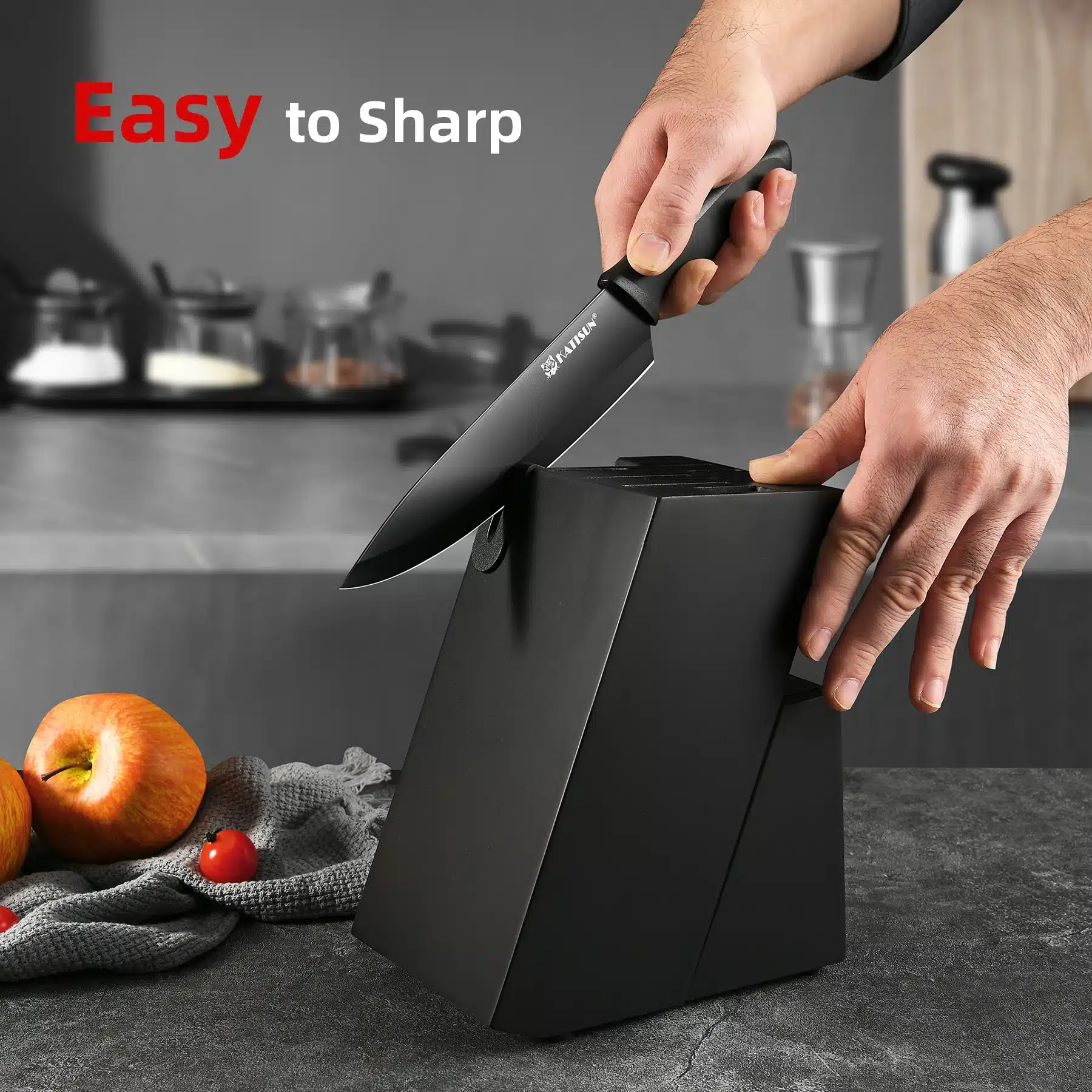
- Included Accessories: Many sets come with a sharpener, honing rod, or kitchen shears. A built-in sharpener can be convenient for maintaining edges.
Another important factor is the set’s composition. A typical 15-piece set might include a chef’s knife, slicing knife, bread knife, utility knife, paring knife, steak knives, and shears. Think about what you cook most often. If you rarely carve meat, you might not need a carving fork. Prioritize knives you’ll use daily.
Blade Materials Compared
The blade is the heart of any kitchen knife set. Here’s a quick comparison of common materials:
- Stainless Steel: Affordable, rust-resistant, easy to maintain. May not hold an edge as well as carbon steel.
- Carbon Steel: Very sharp, easy to hone, develops a patina over time. Requires drying immediately to avoid rust.
- High-Carbon Stainless: Combines the best of both – sharpness of carbon steel with stain resistance of stainless. Often found in premium sets.
- Ceramic: Extremely hard and lightweight, stays sharp for a long time. Can chip if used on hard surfaces or bones.
For most home cooks, a high-carbon stainless steel blade offers the best balance. It’s tough enough for everyday tasks and doesn’t require special care.
Handle Comfort and Safety
A knife’s handle is just as important as its blade. A comfortable, non-slip handle reduces hand fatigue and improves control. Common handle materials include:
- Wood: Classic look, comfortable grip, but can absorb moisture and require oiling.
- Plastic or Resin: Durable, easy to clean, often textured for grip. Some can feel slippery when wet.
- Rubberized or Silicone: Excellent grip, even with wet hands. They’re often found on anti-slip knives.
- Stainless Steel: Sleek and hygienic, but can be slippery and cold to hold.
For safety, look for a bolster (the thick band between blade and handle) that provides a finger guard. A full tang and well-balanced weight also contribute to safer cutting.
How to Maintain Your Knives
Proper maintenance extends the life of your kitchen knife set. Here are essential tips:
- Hand Wash Only: Dishwashers can damage blades and handles. Wash with mild soap and dry immediately.
- Use a Cutting Board: Avoid cutting on glass, stone, or metal surfaces. Wood or plastic boards are best.
- Hone Regularly: Use a honing steel to realign the edge between sharpenings. Do this before each use for best results.
- Sharpen When Needed: Depending on use, sharpen every few months with a whetstone or professional service.
- Store Properly: Use a knife block, magnetic strip, or blade guards to protect edges and prevent accidents.
Many sets include a sharpener, which makes maintenance easier. A built-in sharpener can be a handy feature for keeping blades in top condition.
Choosing the Right Size and Weight
Knife size and weight affect control and comfort. A chef’s knife typically ranges from 6 to 10 inches. For most home cooks, an 8-inch blade is versatile. Heavier knives provide more cutting force, while lighter ones offer better maneuverability. Test the balance by holding the knife – it should feel comfortable and not tip forward or backward.
Similarly, a paring knife (3-4 inches) is ideal for detail work, and a bread knife (8-10 inches) with a serrated edge handles crusty loaves without crushing them. A kitchen knife set usually covers these sizes, but check that the lengths suit your hands and cooking style.
What to Avoid When Buying
Be wary of sets with too many knives you won’t use. Also avoid cheap sets with stamped blades and hollow handles – they often lack balance and durability. Look for forged blades (made from a single piece of steel) for better performance. And don’t be swayed by gimmicky features like laser-etched patterns that don’t improve cutting.
Another common pitfall is ignoring shears. Good kitchen shears are invaluable for cutting poultry, herbs, and opening packages. Some sets include them, but if not, consider buying separately. Speaking of which, a quality pair of shears can be a game-changer.
Final Thoughts
A well-chosen kitchen knife set is an investment in your cooking enjoyment. Focus on quality over quantity, and consider how each knife will serve your daily needs. Remember that proper care will keep your knives sharp and safe for years. For more on knife history and craftsmanship, learn about knives on Wikipedia.
We hope this guide helps you find the perfect set for your kitchen. Happy cooking!
15 Pieces Black Anti-Slip Handle Carbon Steel Blade Kitchen Knife Set with Sharpener Chicken Bone Scissors
If you’re looking for a practical option, the 15 Pieces Black Anti-Slip Handle Carbon Steel Blade Kitchen Knife Set with Sharpener and Chicken Bone Scissors offers a solid combination of grip, sharpness, and versatility at a reasonable price.
Frequently asked questions
How many knives do I really need in a kitchen knife set?
A basic set of 8-10 pieces usually covers most needs: chef’s knife, paring knife, bread knife, utility knife, and a few steak knives. Specialty knives like a boning or carving knife are optional. Focus on versatility.
What’s the difference between forged and stamped knives?
Forged knives are made from a single piece of heated steel that is shaped under pressure, making them heavier, more balanced, and durable. Stamped knives are cut from a sheet of steel, lighter, and more affordable. Forged is generally better for performance.
How often should I sharpen my kitchen knives?
It depends on usage. For home cooks, honing with a steel before each use and sharpening every 2-3 months is typical. If you notice resistance when cutting tomatoes or onions, it’s time to sharpen.
Can I put my kitchen knives in the dishwasher?
No. Dishwashers can dull blades, damage handles, and cause rust. Always hand wash with mild soap and dry immediately to extend the life of your knives.
