
Blog
The Ultimate Guide to Choosing Kitchen Placemats
Buying Guide
Your Complete Kitchen Placemats Buying Guide
Choosing the right kitchen placemats can transform your dining experience. The perfect kitchen placemats protect your table while adding warmth and personality to your meals.
Why Kitchen Placemats Matter
Kitchen placemats serve a dual purpose: they protect your table from heat and spills, and they add a layer of decorative charm. Unlike tablecloths, placemats are easy to swap out for different seasons or moods. They also define each diner’s space, making meals feel more intentional. For families, they reduce mess and cleanup time. In short, a good set of kitchen placemats is a small investment with big returns in both function and aesthetics.
- Protect surfaces from scratches and stains
- Enhance dining decor effortlessly
- Easy to clean and store
Materials: What to Look For in Kitchen Placemats
The material of your kitchen placemats determines durability, ease of care, and style. Common options include cotton, linen, vinyl, and bamboo. Cotton placemats are soft, absorbent, and machine-washable, making them a popular choice. Linen offers a more textured, upscale look but may wrinkle. Vinyl is waterproof and easy to wipe clean, ideal for households with kids. Bamboo placemats are eco-friendly and add a natural touch, but they can be less forgiving with spills. For heat resistance, consider placemats with thermal insulation, like those made from rope-woven cotton, which combine durability with a cozy aesthetic.
Cotton Placemats
Cotton kitchen placemats are breathable and come in endless patterns. They absorb moisture well, so glasses won’t leave rings. Wash them on a gentle cycle and tumble dry low to maintain shape.
Vinyl Placemats
Vinyl placemats are virtually indestructible. They repel liquids and can be wiped clean with a damp cloth. Perfect for everyday use, though they may lack the warmth of fabric.
Bamboo Placemats
Bamboo placemats are sustainable and add an organic feel. They’re heat-resistant but can warp if left wet. Seal them with a food-safe finish for longevity.
Size and Shape: Finding the Right Fit
Kitchen placemats come in various sizes and shapes. Standard rectangular placemats measure about 12×18 inches, while round ones typically have a 13-inch diameter. Ensure the placemat extends at least 2 inches beyond the plate on all sides. For a modern look, consider oval or square placemats. Measure your table and account for overhang: placemats should not hang over the edge of the table, as they can catch on clothing. If you have a round table, curved placemats complement the shape better than rectangles.
- Rectangular: classic, versatile
- Round: softens angular tables
- Square: contemporary, stackable
Style and Color: Complementing Your Decor
Your kitchen placemats should harmonize with your existing decor. Neutral tones like beige, gray, or white blend seamlessly, while bold colors or patterns can serve as an accent. For a cohesive look, match placemats to your napkins or runner. Seasonal placemats (e.g., autumn leaves, winter plaids) let you refresh the table without a full makeover. Remember, lighter colors show stains more, while darker hues hide wear. If you love changing decor often, invest in a few basic sets that you can mix and match.
Care and Maintenance: Keeping Placemats Clean
Proper care extends the life of your kitchen placemats. Fabric placemats like cotton and linen should be washed in cold water with mild detergent, then air-dried or tumble-dried low. Avoid bleach, which can weaken fibers. Vinyl and bamboo placemats need only a quick wipe with a damp cloth and mild soap. For stubborn stains on cotton, pretreat with a stain remover. Rotate your placemats to ensure even wear. Store them flat or rolled to prevent creases. With regular care, quality placemats can last for years.
Heat Resistance: Protecting Your Table from Damage
Hot pots and dishes can leave permanent marks on wood or laminate tables. That’s why heat-resistant kitchen placemats are essential. Look for placemats with built-in thermal insulation, such as those made from thick cotton or rope weaving. The Wikipedia article on place mats notes that materials like cork and silicone also offer heat protection. Always check the manufacturer’s temperature rating. A good rule: if you can hold the placemat in your hand without feeling heat from a hot dish underneath, it’s safe.
Budget and Value: Investing Wisely
Kitchen placemats range from budget-friendly to luxury. A set of four basic vinyl placemats can cost under $10, while handwoven cotton or linen sets may run $30-$50. Consider how often you’ll use them: daily use justifies a higher investment in durable materials. The best value often comes from mid-priced cotton placemats that balance style, comfort, and longevity. Avoid extremely cheap options that may fray or fade quickly. Remember, a well-made placemat saves you from replacing your tabletop.
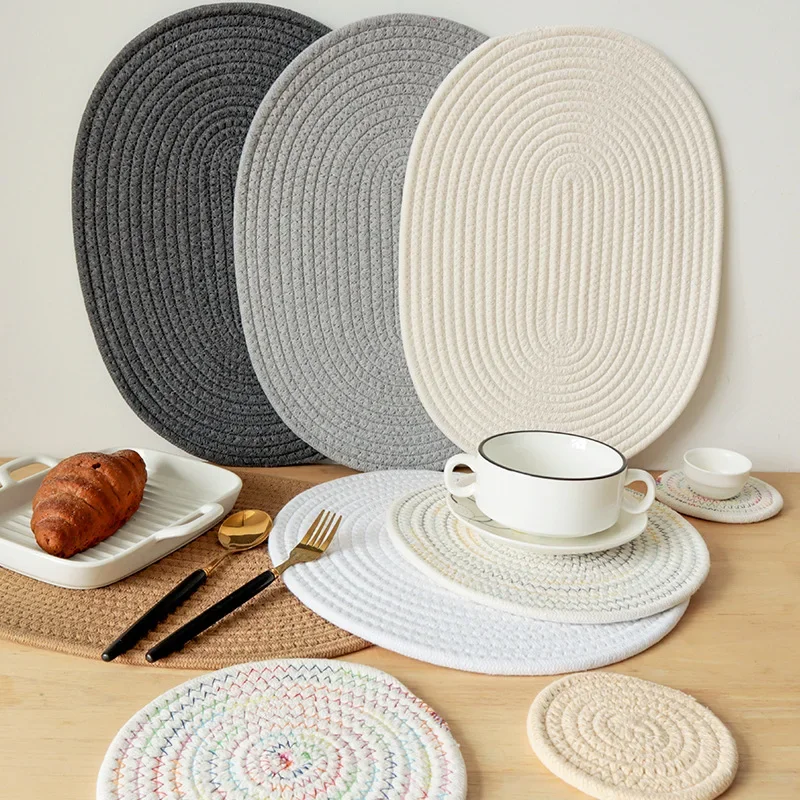
Rope Woven Thermal Insulation Placemat, Home Kitchen Cotton Meal Mat, Dining Table Decor, Cup Coaster, Pot Pad, Europe, America
For a blend of insulation and style, consider the Rope Woven Thermal Insulation Placemat, which combines durable cotton with a handcrafted look perfect for daily dinners.
Frequently asked questions
What size placemats do I need for a standard dining table?
For a standard 30-inch wide table, rectangular placemats measuring 12×18 inches work well. They should leave about 6-8 inches of table visible on each side for a balanced look.
Can I put cloth placemats in the dryer?
Yes, most cotton and linen placemats can be tumble-dried on low heat. Remove them promptly to minimize wrinkles. Air-drying is gentler and helps maintain shape.
Are bamboo placemats heat resistant?
Bamboo placemats offer moderate heat resistance, but they can scorch if exposed to very hot pots directly. Use a trivet underneath for extra protection.
How often should I replace kitchen placemats?
With proper care, fabric placemats last 1-2 years; vinyl and bamboo can last 3-5 years. Replace them when they show visible wear, stains, or fraying.
