
Blog
Ultimate Guide to Kitchen Storage Containers for 2025
Storage Solutions
Organize Your Pantry with Kitchen Storage Containers
Kitchen storage containers are the backbone of an organized pantry, helping you keep ingredients fresh and accessible. Whether you’re a meal prep enthusiast or just tired of cluttered shelves, the right containers make all the difference.
Why Kitchen Storage Containers Matter
Proper kitchen storage containers do more than just look tidy—they preserve freshness, prevent pests, and save space. Airtight seals keep dry goods like flour and sugar crisp, while clear containers let you see what’s inside at a glance. Studies show that organized kitchens reduce food waste by up to 30% (source).
Key Materials for Kitchen Storage Containers
Choosing the right material is crucial. Glass containers are non-porous and don’t retain odors, making them ideal for acidic foods. Plastic options are lightweight and shatterproof, perfect for busy households. Stainless steel is durable and airtight, great for long-term storage. Consider your needs: glass for visibility, plastic for portability, steel for longevity.
Size and Shape: Maximizing Pantry Space
Square and rectangular containers utilize shelf space more efficiently than round ones. Stackable designs are a game-changer for deep cabinets. A set of kitchen storage containers in graduated sizes—like 0.5L, 1L, and 2L—covers most staples. For bulk items like rice or pasta, larger containers (3-5L) reduce refilling frequency.
Sealing Mechanisms: Airtight vs. Standard
Not all lids are equal. Airtight silicone gaskets with locking latches provide the best seal for preserving freshness. Snap-on lids are convenient but may not be fully airtight. For items like coffee beans or nuts, an airtight container is essential to maintain flavor. Test seals by turning the container upside down—if no air escapes, it’s good.
Organization Tips with Kitchen Storage Containers
Group similar items together: baking supplies, grains, snacks. Use labels with contents and expiration dates. Clear containers make it easy to spot when you’re running low. For a cohesive look, choose a uniform style—like all glass or all BPA-free plastic—across your pantry.
Labeling Systems
Chalk labels, sticker labels, or erasable markers each have pros. Chalk labels are reusable, while stickers offer a clean look. Whichever you choose, consistency is key.
Eco-Friendly and Sustainable Options
Reusable glass or stainless steel containers reduce single-use plastic waste. Many brands now offer recycled materials. Consider buying in bulk and storing in reusable containers to minimize packaging. This small change can significantly lower your household’s environmental footprint.
Specialty Containers for Unique Needs
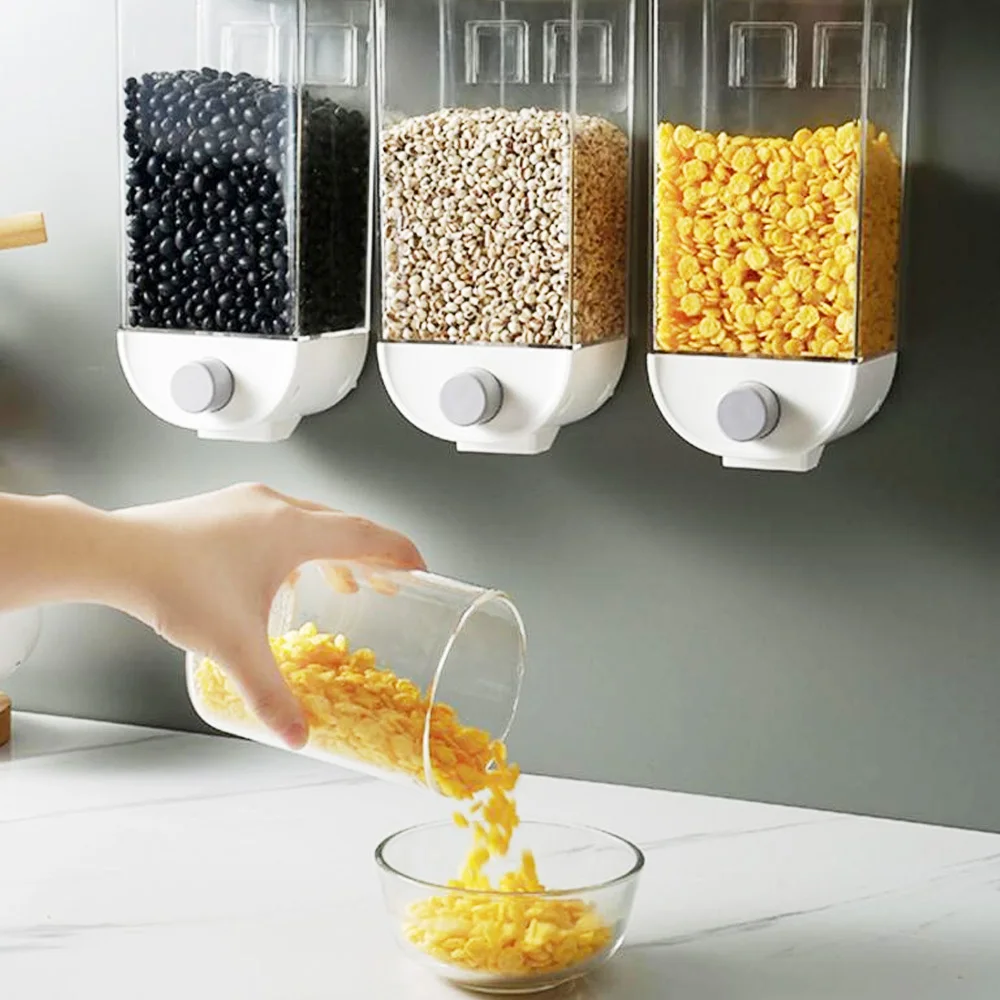
For items like flour, a container with a wide mouth makes scooping easy. Cereal dispensers with a spout are great for quick breakfasts. If you store baking soda or brown sugar, choose containers with extra-tight seals to prevent clumping. One versatile option is the Food Dispenser Kitchen Organizer Organization Box Jars for Bulk Cereals Organizers Storage Plastic Storage Container Grain, which offers a practical solution for bulk grains and cereals.
Food Dispenser Kitchen Organizer Organization Box Jars for Bulk Cereals Organizers Storage Plastic Storage Container Grain
For a versatile option, consider the Food Dispenser Kitchen Organizer that simplifies bulk cereal storage with its convenient spout and stackable design.
Frequently asked questions
What are the best kitchen storage containers for dry goods?
Airtight glass or BPA-free plastic containers are best for dry goods like flour, sugar, and pasta. They keep moisture out and maintain freshness.
Can I use kitchen storage containers in the freezer?
Yes, but ensure they are freezer-safe. Glass containers with wide mouths allow for expansion, while plastic containers should be labeled for freezer use.
How do I clean plastic kitchen storage containers without staining?
Wash with warm soapy water immediately after use. For stubborn stains, a paste of baking soda and water works well. Avoid harsh abrasives.
What size kitchen storage containers should I buy for a family of four?
Start with a set of 10-12 containers ranging from 0.5L to 3L. Larger containers (2-3L) for rice and pasta, smaller ones for spices and nuts.