
Blog
LED Pendant Light Buying Guide: Styles, Sizing & More
Lighting Guide
Find Your Perfect LED Pendant Light
Choosing the right LED pendant light can transform a room, but with so many options, it’s easy to feel overwhelmed. This guide will walk you through the key considerations to ensure you pick a fixture that’s both beautiful and functional.
Why Choose an LED Pendant Light?
LED pendant lights have become a staple in modern interior design, and for good reason. They offer energy efficiency, long lifespan, and a sleek, contemporary look that can elevate any space. Unlike traditional incandescent bulbs, LEDs consume up to 75% less energy and last up to 25 times longer, making them a smart choice for both your wallet and the environment. Additionally, LED pendant lights provide focused task lighting, making them ideal for kitchen islands, dining areas, and reading nooks. Their versatility in design—from minimalist to industrial—means there’s an LED pendant light to suit every aesthetic.
Determining the Right Size and Scale
One of the most common mistakes when choosing an LED pendant light is getting the size wrong. A fixture that’s too small gets lost in a large room, while one that’s too large can overwhelm the space. To find the right diameter, measure the width and length of your room in feet, add those two numbers together, and that sum in inches is a good starting point for the fixture’s diameter. For example, a 10×12-foot room would suggest a 22-inch diameter pendant. When hanging over a kitchen island or dining table, the pendant should be about 12 inches narrower than the surface to ensure even lighting. Also, consider the height: the bottom of the pendant should hang 28-34 inches above a tabletop for optimal illumination and sightlines.
Exploring Pendant Light Styles
LED pendant lights come in a wide array of styles, from classic to contemporary. Some popular options include:
- Linear pendants: Rectangular or bar-shaped fixtures that are perfect for long kitchen islands or dining tables.
- Globe pendants: Spherical shades that cast a soft, diffused glow, ideal for creating a warm ambiance.
- Multi-light pendants: Clusters of lights on a single canopy, offering dramatic visual interest.
- Mini pendants: Small fixtures that work well in groups, especially over breakfast bars or in hallways.
- Drum pendants: Cylindrical or tapered shades that provide a modern, clean look.
Think about the overall style of your room. A sleek, metallic linear pendant might suit a modern kitchen, while a rustic wood-accented globe pendant could enhance a farmhouse-style dining area.
Choosing the Right Color Temperature
Color temperature, measured in Kelvins (K), affects the mood and functionality of a space. Lower Kelvin numbers (2700K-3000K) emit a warm, yellowish light that feels cozy and inviting—perfect for living rooms and bedrooms. Mid-range (3500K-4500K) produces a neutral, bright light suitable for kitchens and bathrooms. Higher Kelvin numbers (5000K-6500K) mimic daylight and are great for task-oriented areas like home offices or garages. Many LED pendant lights offer a range of color temperatures, allowing you to adjust the ambiance to your preference. For dining areas, a warm light (2700K-3000K) is often recommended to create a relaxing atmosphere.
Understanding Dimming and Controls
Dimmable LED pendant lights provide flexibility to set the perfect mood, whether you’re hosting a dinner party or enjoying a quiet evening. Not all LEDs are dimmable, so check the product specifications. If you choose a dimmable fixture, ensure your dimmer switch is compatible with LED loads—older dimmers designed for incandescent bulbs may not work correctly. Some modern pendant lights come with remote controls, allowing you to adjust brightness and sometimes even color temperature without getting up. This convenience is especially useful for high ceilings or hard-to-reach fixtures.
Installation and Placement Tips
Proper installation is crucial for both safety and aesthetics. While some pendant lights are simple to install, others may require professional help, especially if you’re dealing with sloped ceilings or need to install a new junction box. Always turn off the power at the breaker before attempting any wiring. When hanging multiple pendants, space them evenly—typically 24-30 inches apart—to create a cohesive look. For a dramatic effect, consider hanging a single large pendant in a two-story foyer or above a staircase. Ensure the fixture is securely mounted and that the canopy covers the junction box neatly.
Energy Efficiency and Lifespan
LED pendant lights are renowned for their energy efficiency. They use up to 75% less energy than incandescent bulbs and last 25 times longer, reducing both your electricity bill and the frequency of bulb replacements. When shopping, look for the ENERGY STAR label, which signifies that the product meets strict efficiency guidelines set by the U.S. Environmental Protection Agency. Additionally, consider the lumens (brightness) rather than watts; a higher lumen count means a brighter light. For a standard dining area, you might need around 2000-3000 lumens, while a kitchen island may require 3000-4000 lumens.
Our Recommendation: A Modern Linear Pendant
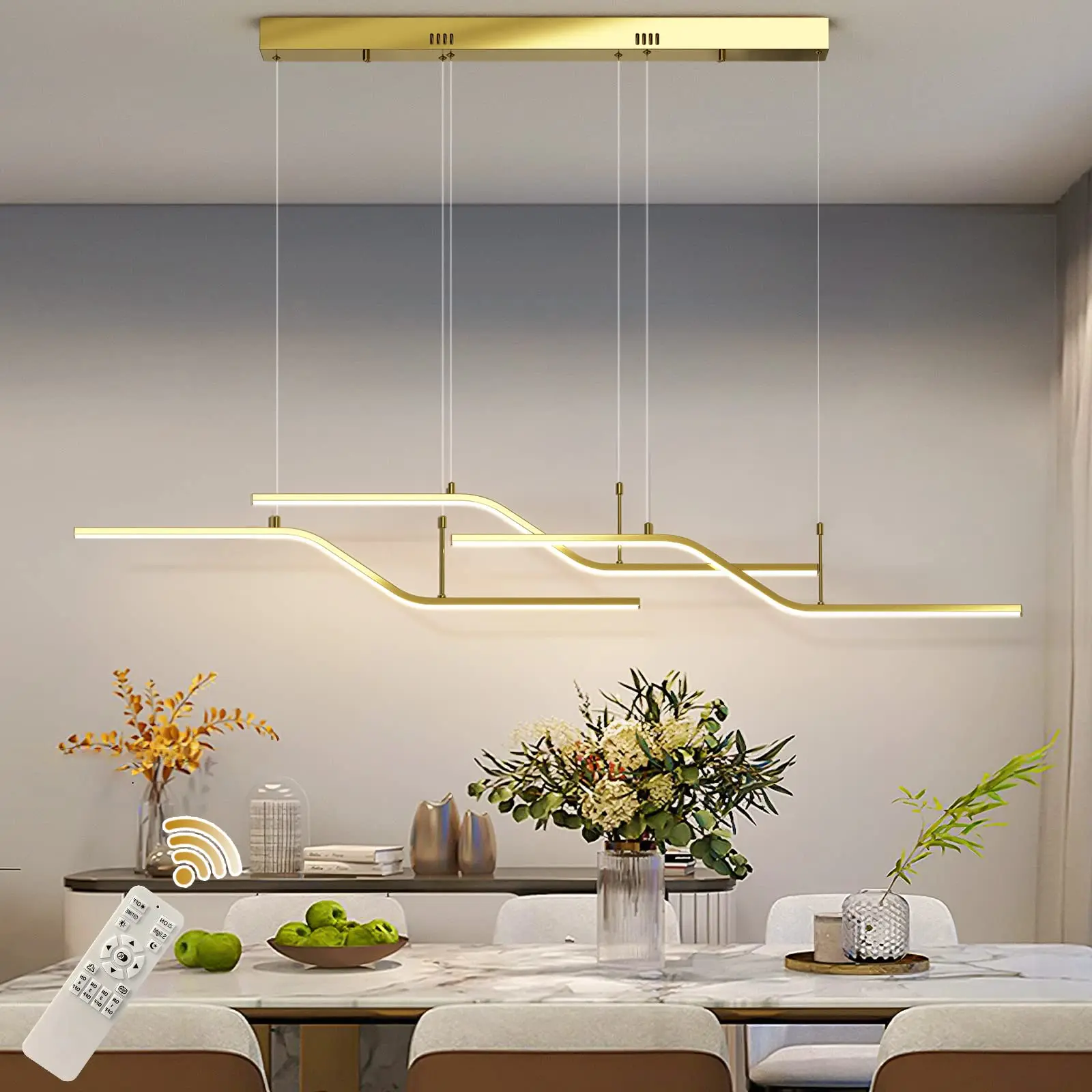
If you’re looking for a versatile and stylish option, consider the Modern 3-Light LED Pendant Light, 45W Dimmable Wave Linear Chandelier with Remote for Dining Room, Kitchen Island. This fixture combines sleek design with functionality, featuring a wave-like linear form that adds a touch of elegance to any space. Its dimmable capability and remote control make it easy to adjust lighting to your desired mood. Whether you’re illuminating a kitchen island or a dining area, this pendant light offers both style and practicality.
Modern 3-Light LED Pendant Light, 45W Dimmable Wave Linear Chandelier with Remote for Dining Room, Kitchen Island
For a modern and functional choice, consider the Modern 3-Light LED Pendant Light, 45W Dimmable Wave Linear Chandelier with Remote, which offers adjustable brightness and a sleek design.
Frequently asked questions
What is the ideal height to hang a pendant light over a kitchen island?
The bottom of the pendant should hang 28-34 inches above the island surface. This height provides ample task lighting without obstructing sightlines.
Can LED pendant lights be used with a dimmer switch?
Yes, but only if the fixture is specifically marked as dimmable. Additionally, you need a dimmer switch that is compatible with LED loads, as older dimmers may cause flickering or buzzing.
How many pendant lights do I need for a 6-foot island?
For a 6-foot island, two or three pendant lights are typically recommended. Space them evenly, about 24-30 inches apart, to create a balanced look.
What color temperature is best for a dining room pendant light?
A warm color temperature (2700K-3000K) is generally recommended for dining rooms as it creates a cozy, inviting atmosphere that enhances the dining experience.
