
Blog
The Ultimate Guide to Choosing a Live Edge Dining Table
Buying Guide
How to Choose Your Live Edge Dining Table
A live edge dining table brings the raw beauty of nature into your home. Whether you’re a design enthusiast or simply love organic forms, this guide will help you find the perfect piece.
Why Choose a Live Edge Dining Table?
A live edge dining table is more than just furniture; it’s a statement. The natural edge, often left intact, showcases the tree’s original contour, making every table unique. This style brings warmth and organic texture to any room, fitting seamlessly into modern, rustic, or eclectic interiors. Unlike mass-produced tables, each live edge piece tells a story through its grain, knots, and natural imperfections.
Beyond aesthetics, live edge tables are incredibly durable. Solid wood slabs, properly dried and finished, can last generations. They also serve as conversation starters, as guests are drawn to the natural details. If you value craftsmanship and individuality, a live edge dining table is a worthwhile investment.
Wood Species: Which One Is Right for You?
Choosing the right wood is crucial. Common options include walnut, oak, maple, and acacia. Walnut offers rich, dark tones and a smooth grain, ideal for formal settings. Oak is sturdy with prominent grain, perfect for a rustic look. Maple is light and subtle, great for small spaces. Acacia is highly durable and water-resistant, making it excellent for everyday use.
Consider the wood’s hardness, grain pattern, and color. For a dining table, hardness matters to resist scratches. Acacia, for instance, is harder than oak. Also think about how the wood will age—some woods darken over time, while others lighten. Visit a local lumberyard to see samples in person, or request swatches from online retailers.
Size and Shape: Finding the Perfect Fit
Measure your dining area carefully. Allow at least 36 inches of clearance around the table for chairs and movement. A round table, like the 47-inch diameter, works well in square rooms or for intimate gatherings. Rectangular tables suit longer spaces and can seat more people. Oval shapes combine the best of both, offering a softer look.
Think about how many people you typically host. A 47-inch round table comfortably seats 4-6. For larger groups, consider extending tables or longer rectangles. Remember that live edge slabs vary in width and length, so custom sizes are often available. Don’t forget to account for the base—a pedestal base allows more legroom, while four legs may limit seating.
Finishes and Maintenance: Protecting Your Investment
The finish affects both look and durability. Oil finishes, like tung or linseed, penetrate the wood, enhancing its natural beauty and allowing easy touch-ups. They require periodic reapplication. Polyurethane creates a hard, waterproof shell but can look plastic-like. A matte or satin polyurethane offers protection without high gloss. Wax finishes provide a soft sheen but need re-waxing.
For daily care, use coasters and trivets to prevent heat and moisture damage. Clean with a damp cloth and dry immediately. Avoid harsh chemicals. Every few months, apply a conditioning oil to maintain luster. If scratches appear, sand lightly and re-oil. With proper care, your live edge dining table will age gracefully.
Base Styles: From Industrial to Minimalist
The base of your table influences its overall look. Hairpin legs offer an industrial, mid-century vibe and work well with lighter slabs. Pedestal bases provide support without obstructing legs, ideal for round tables. A trestle base is sturdy and traditional. For a modern touch, consider a brass or steel base—the combination of warm wood and cool metal is striking.
When choosing a base, ensure it’s proportionate to the slab. A heavy slab needs a robust base to prevent tipping. Adjustable levelers are a plus on uneven floors. Some bases come with crossbars for added stability. If you’re handy, you can even purchase a slab and base separately to customize your table.
Where to Place Your Live Edge Dining Table
Consider the room’s lighting and layout. Natural light highlights the wood’s grain, so place the table near windows if possible. An area rug underneath defines the dining zone and adds warmth. Ensure the rug is large enough for chairs to slide out without catching.
For a cohesive look, match the table with complementary decor. Neutral walls let the wood stand out. Pair with upholstered chairs in earthy tones or leather for contrast. A live edge table also works as a desk or console table in a home office or entryway.
For more on the history of live edge furniture, see Wikipedia’s article on live edge.
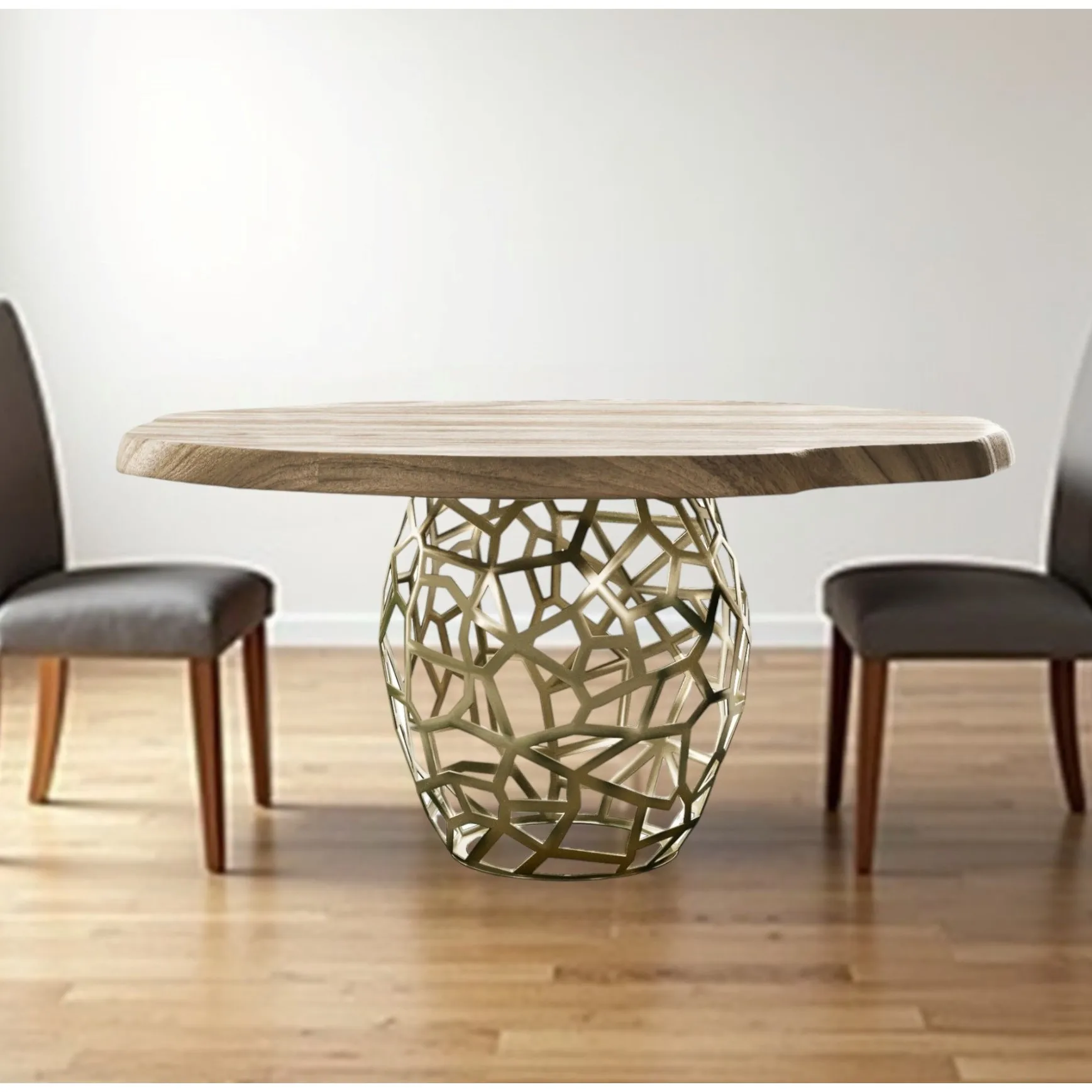
47″ Acacia Live Edge Round Dining Table with Brass Base
For a stunning blend of natural beauty and modern design, consider our 47″ Acacia Live Edge Round Dining Table with Brass Base.
Frequently asked questions
What is a live edge dining table?
A live edge dining table retains the natural edge of the wood slab, preserving the tree’s original contour. This creates a unique, organic look that highlights the wood’s grain and character.
How do I clean and maintain a live edge table?
Use a soft, damp cloth to wipe spills immediately. Avoid harsh chemicals. Apply a food-safe mineral oil or wood conditioner every few months to keep the wood hydrated and prevent cracking.
Can a live edge table be used outdoors?
Most live edge tables are designed for indoor use. Exposure to moisture and UV rays can damage the wood. If used outdoors, ensure it’s sealed with a weather-resistant finish and stored under cover.
How much does a live edge dining table cost?
Prices vary widely based on wood species, size, and craftsmanship. Expect to pay from $800 to $5,000 or more. Custom slabs and exotic woods cost more. Our 47″ Acacia Live Edge Round Dining Table offers excellent value.