
Blog
Metal and Wood Console Table: The Ultimate Buying Guide
Buying Guide
Your Guide to the Perfect Metal and Wood Console Table
A metal and wood console table can anchor your entryway or living room with warmth and structure. Here’s how to pick one that lasts and looks great.
Why Choose a Metal and Wood Console Table?
Combining the strength of metal with the natural beauty of wood, a metal and wood console table brings balance to any room. The contrast between sleek iron or steel and warm acacia or oak creates visual interest that suits both modern and rustic interiors. Plus, these tables are often sturdier than all-wood versions, handling daily use with grace.
Whether you need a slim console for a narrow hallway or a statement piece behind your sofa, the blend of materials ensures durability without sacrificing style. Learn more about console table history.
Key Styles of Metal and Wood Console Tables
From industrial to farmhouse, the style of your metal and wood console table sets the tone. Industrial designs feature dark metals and reclaimed wood, while mid-century options combine hairpin legs with walnut finishes. Scandinavian styles favor light woods and matte black frames. Consider your existing decor: a distressed metal base pairs well with vintage accessories, while clean lines suit contemporary spaces.
Industrial
Think chunky steel frames and rough-hewn wood. These tables often have a workshop feel, perfect for lofts or urban apartments.
Farmhouse
Painted metal legs and wide wooden tops with a weathered finish evoke cozy country charm. Often includes a lower shelf for baskets.
Mid-Century Modern
Slim metal legs, often angled, with tapered wood tops. Clean, simple, and timeless. Great for small spaces.
How to Choose the Right Size
Measure your space before shopping. A metal and wood console table should be about as long as the wall it sits against, but leave at least 6 inches on each side for breathing room. Height typically ranges from 30 to 36 inches – standard for entryway tables. Depth: 12 to 18 inches is common; too deep and it may crowd a hallway. For behind a sofa, match the sofa’s length or go slightly shorter.
- Length: 36–60 inches typical
- Height: 30–36 inches
- Depth: 12–18 inches
Wood and Metal Quality Considerations
Solid wood (like acacia, mango, or oak) ages better than veneers. Look for kiln-dried wood to prevent warping. Metal should be powder-coated or sealed to resist rust. Check joints: welded frames are stronger than bolted ones. For a metal and wood console table, the wood thickness matters – at least 1 inch for stability. Ask about the finish: a matte or satin sheen hides scratches better than high gloss.
Wood Types
- Acacia: Dense, water-resistant, rich grain
- Mango: Sustainable, medium hardness, warm tones
- Oak: Classic, very durable, prominent grain
Metal Types
- Iron: Heavy, sturdy, can rust if not coated
- Steel: Strong, lighter than iron, often powder-coated
- Aluminum: Lightweight, rust-resistant, less sturdy
Functionality: Storage and Display
Some metal and wood console tables offer drawers, shelves, or cabinets. A lower shelf is ideal for baskets, books, or shoes. Drawers hide clutter like keys and mail. Open shelving keeps things visible. Consider your daily needs: if you use the table for decor, a simple top is fine. For entryway organization, opt for storage options. Also think about cable management: some tables have built-in holes for cords.
Placing Your Console Table in Different Rooms
In the entryway, a metal and wood console table welcomes guests and holds a lamp or bowl for keys. In the living room, behind the sofa, it can display art and plants. In a home office, it serves as a writing desk or printer stand. In the dining room, use it as a buffet for serving dishes. Each placement has size considerations: entryways need slim depths, living rooms can handle wider tables.
Caring for Your Metal and Wood Console Table
Dust regularly with a soft cloth. For wood, use a mild cleaner and avoid excess water. For metal, wipe with a damp cloth and dry immediately to prevent rust. Avoid direct sunlight to prevent wood fading and metal heating. Use coasters and placemats. Every few months, apply a wood conditioner if the top is unfinished. Tighten screws as needed. With care, your table will last for years.
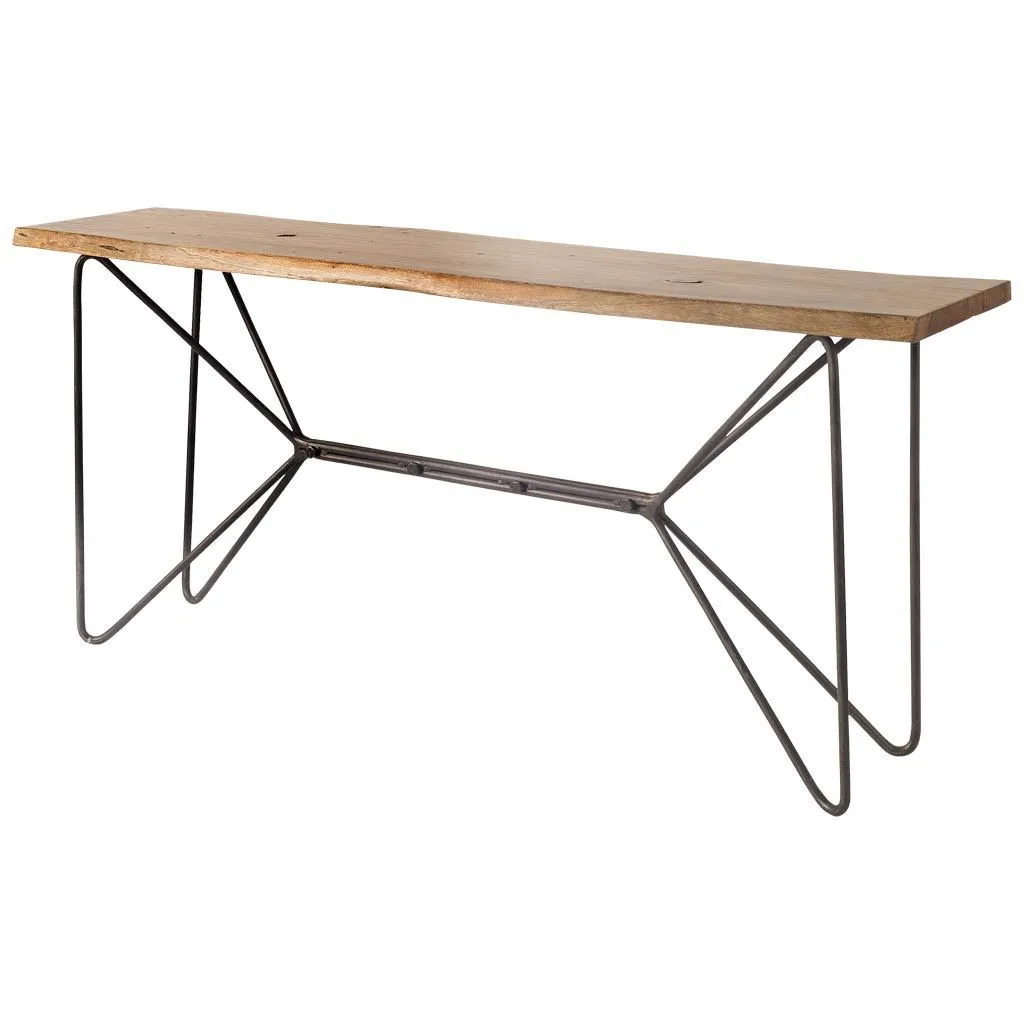
Goldoma 66″ Solid Acacia Wood and Iron Abstract Console Table
For a handcrafted option, the Goldoma 66″ Solid Acacia Wood and Iron Abstract Console Table combines durable acacia with a sleek iron base, offering both character and stability.
Frequently asked questions
What is the ideal height for a metal and wood console table?
Standard height is between 30 and 36 inches, which works well for entryways and behind sofas. Measure your wall space and consider the scale of nearby furniture.
Can I use a metal and wood console table outdoors?
Most are designed for indoor use. If you want outdoor use, look for weather-resistant finishes like powder-coated metal and sealed wood, but even then, avoid prolonged exposure to rain and sun.
How do I clean a metal and wood console table?
Dust regularly with a soft cloth. For wood, use a damp cloth with mild soap, then dry immediately. For metal, wipe with a damp cloth and dry to prevent rust. Avoid abrasive cleaners.
What styles of decor pair well with a metal and wood console table?
Industrial, farmhouse, mid-century modern, and Scandinavian styles all work beautifully. The key is to match the wood tone and metal finish with your existing furniture and accessories.