
Blog
How to Choose the Perfect Mid Century TV Stand
Style Guide
Find Your Ideal Mid Century TV Stand
A mid century TV stand can anchor your living room with timeless design. Whether you’re a fan of clean lines or warm wood tones, choosing the right one requires balancing aesthetics, function, and scale.
What Defines a Mid Century TV Stand?
True mid century design emerged in the 1940s–1960s, emphasizing simplicity, organic forms, and honest use of materials. A mid century TV stand typically features tapered legs, clean lines, and a mix of wood with metal or glass accents. Unlike bulky entertainment centers, it feels light and airy while providing just enough storage for your media essentials.
The key is to look for pieces that honor the original aesthetic—think walnut or oak veneers, brass or black metal hardware, and a low profile that doesn’t dominate the room. Avoid overly ornate or glossy finishes, which stray from the mid century ethos.
Size and Proportion: Matching Your TV and Room
Before shopping, measure your TV (diagonal screen size) and the space where the stand will go. A general rule: the stand should be wider than your TV for visual balance, but not so wide that it crowds the room. For a 55–59 inch TV, a stand around 60–70 inches wide works well.
Height matters too. The ideal viewing angle is at eye level when seated, so look for a mid century TV stand with a surface height of 24–30 inches. If your stand is too low, you might strain your neck; too high, and it feels like a sports bar. Don’t forget to account for the TV’s own stand or mount height.
Materials and Craftsmanship
Authentic mid century furniture often uses solid wood or high-quality veneers. Mid-century modern design favors materials like teak, walnut, and rosewood, but modern reproductions may use oak, mango wood, or engineered wood with a real wood veneer. Look for dovetail joints in drawers, smooth-sliding hardware, and a finish that feels natural, not plasticky.
Metal legs with a brushed brass or black powder coat are classic touches. Avoid flimsy materials like particleboard with paper veneer—they won’t hold up over time. A well-made stand will support your TV safely and last for years.
Storage Options: Drawers, Cabinets, and Open Shelving
Consider what you need to store. If you have a soundbar, game consoles, and cable boxes, a mid century TV stand with a combination of drawers and cabinets keeps clutter hidden while allowing easy access. Drawers are great for remotes and small accessories; cabinets can house larger devices with ventilation (look for cutouts or mesh backs).
Open shelving is ideal for displaying decor or media, but it can look messy if not organized. Some stands offer a mix: two cabinets flanking a center open shelf, or a row of drawers below. Think about your daily routine—do you need quick access to streaming devices, or is everything wireless? Choose storage that matches your lifestyle.
Color and Finish: Blending with Your Decor
Mid century stands come in warm wood tones (walnut, teak, oak) or painted options (black, white, retro pastels). Dark woods create a cozy, grounded look; lighter woods feel more Scandinavian and airy. Black stands with wood accents offer a modern contrast that works in many spaces.
Your room’s existing palette matters. If you have a neutral sofa and rug, a walnut stand adds warmth. For a monochrome or industrial room, a black and wood combination can tie everything together. Avoid matching wood tones exactly—variation adds depth—but do keep undertones compatible (warm vs. cool).
Placement and Room Layout
Position your mid century TV stand where it won’t compete with natural light (glare on the screen) and where seating can be arranged for comfortable viewing. Ideally, the stand should be the focal point of the wall, not squeezed between other large pieces.
Leave some breathing room: at least 6–12 inches of wall space on each side, and enough clearance for doors to open fully. If you’re using a soundbar, place it on the stand’s surface or on a shelf at ear level. Cable management is easier with a stand that has a back panel or removable cutouts.
Styling Your Mid Century TV Stand
Don’t let your TV stand look like an appliance. Style the surface with a few curated items: a small plant (snake plant or pothos), a ceramic vase, and a stack of books. Keep the arrangement asymmetrical for a relaxed mid century vibe. Avoid cluttering the stand with too many objects—less is more.
On open shelves, use baskets or boxes to hide smaller items. If you have a turntable or record player, it can sit on a lower shelf for easy access. The goal is to make the stand feel like part of the room’s decor, not just a piece of electronics furniture.
Balancing Budget and Quality
You don’t need to spend a fortune, but investing in a well-constructed mid century TV stand pays off in durability and style. Entry-level options may use MDF with a veneer, which can still look good if the finish is well done. Mid-range pieces often use solid wood for legs and frames, with veneered panels. High-end stands use all solid wood and premium hardware.
Check reviews for real-world feedback on assembly, stability, and how the finish holds up. A stand that’s easy to assemble and has a warranty is a good sign. Remember, this is a piece of furniture you’ll see every day—choose one that brings you joy and serves its purpose well.
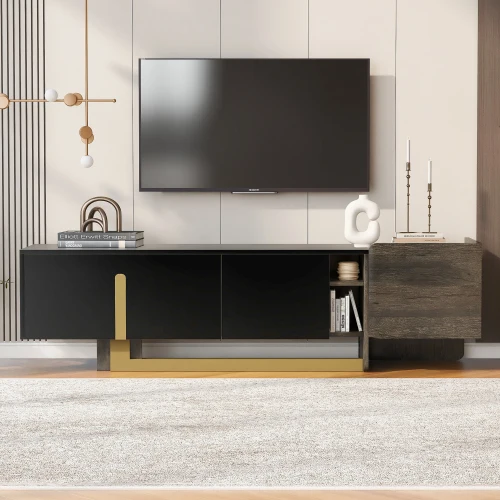
Goldoma Mid-Century TV Stand for TVs up to 59 Inches, 66.7″ Wide, with Drawer and Cabinets, Black
For a blend of authentic mid century lines and practical storage, the Goldoma Mid-Century TV Stand (66.7″ wide) offers a black finish with a drawer and cabinets to keep your media organized.
Frequently asked questions
What size mid century TV stand do I need for a 55-inch TV?
For a 55-inch TV, choose a stand at least 55 inches wide but ideally 60–65 inches for balance. Height should be 24–30 inches so the center of the screen is at eye level when seated.
Are mid century TV stands sturdy enough for large TVs?
Yes, when made from quality materials like solid wood or thick veneered MDF with a solid frame. Look for stands that specify a weight capacity matching your TV (typically 50–100 lbs).
How do I hide cables with a mid century TV stand?
Many stands have back cutouts or removable panels for cable routing. Use zip ties or cable sleeves to bundle cords behind the stand. Open shelving can also hide cords if you arrange devices neatly.
Can I use a mid century TV stand for other purposes?
Absolutely. Their versatile design works as a console table, buffet, or media storage in living rooms, bedrooms, or dining areas. Just ensure the height suits your use case.
