
Blog
The Ultimate Modular Sofa Buying Guide: Flexibility & Style
Buying Guide
Find Your Ideal Modular Sofa for Flexible Living
A modular sofa is the centerpiece of a flexible, modern living space. Whether you’re furnishing a cozy apartment or a sprawling family room, understanding the key factors—from configuration to fabric—will help you make a choice that serves your lifestyle for years to come.
Why Choose a Modular Sofa?
Modular sofas have revolutionized the way we think about seating. Unlike traditional fixed-section sofas, modular designs consist of individual pieces—seats, armrests, ottomans, and corner units—that can be rearranged to suit your space and needs. This flexibility makes them ideal for apartments, open-plan homes, or anyone who loves to reconfigure their living area.
Beyond adaptability, modular sofas offer practical benefits: they are easier to move through narrow doorways, simpler to clean (since sections can be separated), and more cost-effective to replace if one piece gets damaged. Plus, they grow with your life—add sections as your family or space expands.
Key Factors to Consider Before Buying
Configuration and Layout
Think about how you use your living room. Do you entertain often? A U-shaped or L-shaped configuration with a chaise might work best. Prefer lounging alone? A two-seater with an ottoman could be perfect. Measure your space carefully, including doorways and hallways, to ensure each module fits.
Fabric and Durability
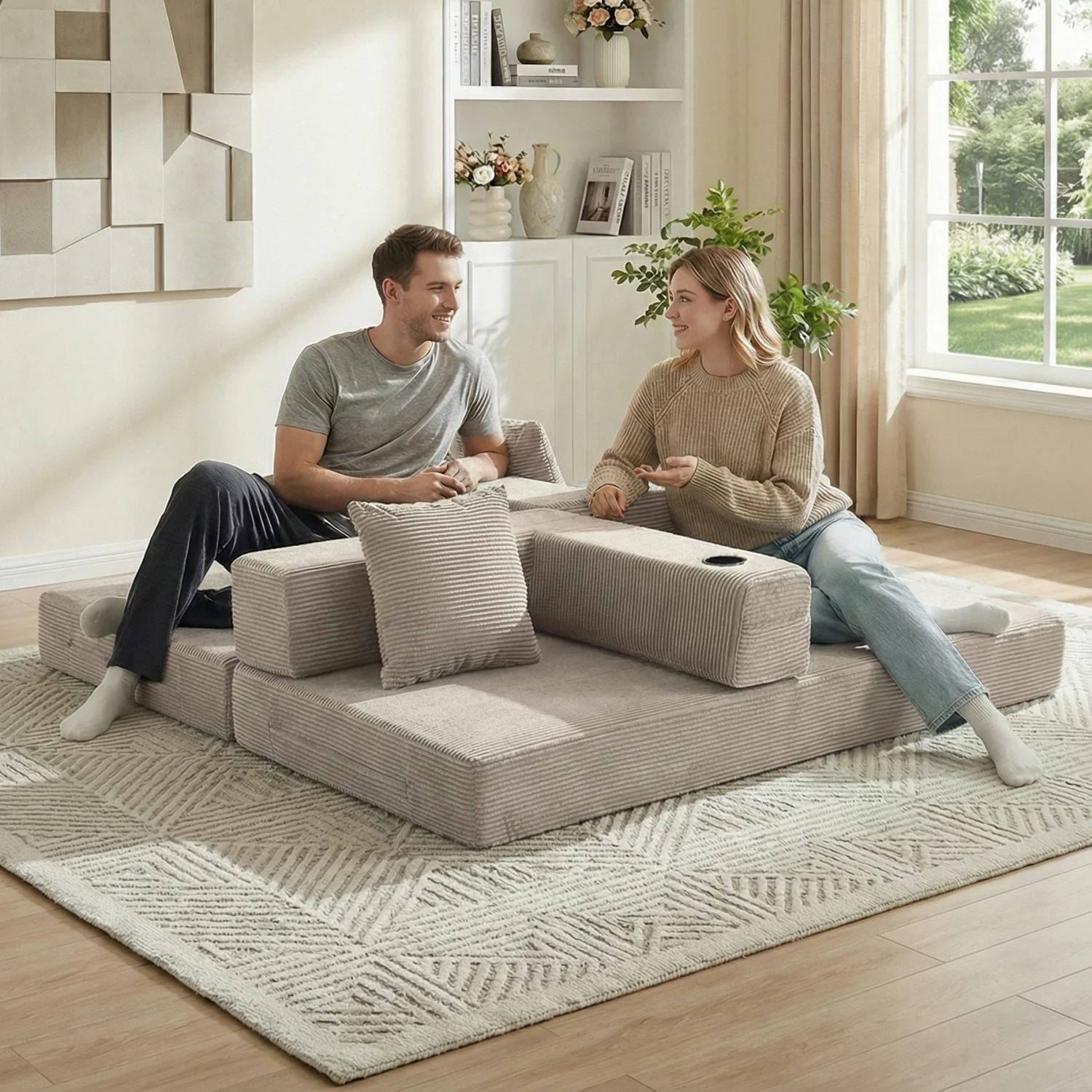
The fabric you choose affects both comfort and longevity. For high-traffic homes, look for performance fabrics like Crypton or solution-dyed acrylics that resist stains and fading. Corduroy, as seen in many modern designs, offers a tactile, warm feel and is surprisingly durable when tightly woven. For pet owners, avoid delicate weaves; opt for smooth, easy-to-clean materials.
Support and Cushioning
Not all cushions are created equal. High-resilience foam wrapped in down or fiber offers a balance of support and softness. Memory foam can feel too sinking, while firm foam may feel stiff. Test the seat depth—deeper seats are great for lounging, shallower for upright sitting.
Frame and Construction
A solid frame is the backbone of any quality sofa. Look for kiln-dried hardwood frames (like beech or birch) with corner-blocking and reinforced joints. Avoid particleboard or plywood, which can warp over time. Check the warranty: a good manufacturer will offer at least a 5-year frame warranty.
How to Arrange Your Modular Sofa
The beauty of a modular sofa is its ability to transform a room. Start by defining the focal point—often a coffee table or fireplace. From there, arrange modules to encourage conversation: two facing seats with a corner unit works well. For movie nights, create a deep lounging pit by pushing all sections together. Use ottomans as extra seating or a footrest.
Don’t forget about traffic flow. Leave at least 18 inches between the sofa and coffee table, and ensure pathways are clear. If you have a small space, consider a two-seater with a reversible chaise that can switch sides.
Caring for Your Modular Sofa
Regular maintenance extends the life of your sofa. Vacuum cushions weekly to remove dust and debris, and rotate them every few months to ensure even wear. For fabric sofas, spot-clean spills immediately with a mild detergent. Many modular sofas have removable covers—check the care label before washing. Avoid placing your sofa in direct sunlight to prevent fading.
For deeper cleaning, consider professional upholstery cleaning every 12–18 months. If a module gets damaged, you can often replace just that piece rather than the whole sofa, which is a major advantage of modular designs.
Modular Sofa vs. Sectional: What’s the Difference?
While both offer sectional seating, modular sofas are built from separate, interchangeable pieces, whereas traditional sectionals are typically fixed in shape. Modular sofas offer greater flexibility—you can add or remove sections, change the configuration, and even use pieces individually. Sectionals, on the other hand, often come as a single unit with a predetermined shape. For renters or those who move frequently, modular is the clear winner.
Eco-Friendly and Sustainable Options
If sustainability matters to you, look for modular sofas made from recycled materials, responsibly sourced wood, and low-VOC adhesives. Some brands offer modular designs that reduce waste by allowing you to buy only what you need. Additionally, the longevity of a well-made modular sofa means less furniture ends up in landfills. For more on sustainable furniture, check out Wikipedia’s article on sustainable furniture.
Final Tips for Your Purchase
Before clicking ‘buy,’ order fabric swatches to see how the material looks in your lighting. Read customer reviews for insight on comfort and durability. If possible, visit a showroom to test the cushions and configuration. And remember: a modular sofa is an investment in flexibility—choose one that can adapt as your life changes.
Goldoma Modern Modular Corduroy Sofa Bed – 2-Seater
For a versatile and cozy option, consider the Goldoma Modern Modular Corduroy Sofa Bed – 2-Seater, which combines a soft corduroy fabric with a space-saving sofa bed function.
Frequently asked questions
Can I add more sections to my modular sofa later?
Yes, that’s one of the main advantages. Most brands offer individual modules that can be purchased separately, allowing you to expand your sofa as needed. Just ensure the new modules match the original in style, fabric, and connection system.
How do I clean a modular sofa with removable covers?
Check the care label first—many covers are machine washable on a gentle cycle with cold water. Air dry or tumble dry on low. For non-removable covers, vacuum regularly and spot-clean with a mild upholstery cleaner.
Is a modular sofa good for small apartments?
Absolutely. Modular sofas can be configured to fit tight spaces, and you can choose a compact two-seater with a storage ottoman. They’re also easier to move into small elevators and through narrow doorways.
What is the typical weight capacity of a modular sofa seat?
It varies by brand, but most quality modular sofas support 250–350 lbs per seat. Always check the manufacturer’s specifications, especially if you plan to have multiple people on one seat.
