
Blog
Perforated Tart Ring Molds: The Baker’s Secret for Perfect Pastry
Baking Essentials
Master Even Baking with Perforated Tart Ring Molds
Perforated tart ring molds are a game-changer for home bakers, delivering perfectly crisp crusts and even baking every time. Whether you’re making delicate fruit tarts or savory quiches, these molds ensure professional results.
Why Perforated Tart Ring Molds Make a Difference
Traditional tart pans can trap steam, leading to soggy bottoms. Perforated tart ring molds solve this by allowing heat and air to circulate freely, creating an evenly baked, crispy crust. The holes also help excess moisture escape, so your pastry stays light and flaky. This design is especially useful for recipes that require a pre-baked shell, like lemon tarts or chocolate ganache tarts.
Choosing the Right Size and Material
Perforated tart ring molds come in various diameters, from mini 4-inch rings for individual desserts to 12-inch rings for large quiches. When selecting, consider your typical recipes. For most home bakers, a set of 4-inch and 8-inch rings covers a wide range. Material matters too: stainless steel offers durability and rust resistance, while aluminum heats up quickly. Some plastic versions are lightweight and non-stick, ideal for beginners. Look for rings with smooth edges to avoid cutting your fingers.
Stainless Steel vs. Aluminum vs. Plastic
- Stainless steel: Durable, dishwasher-safe, but can be pricier. Excellent heat distribution.
- Aluminum: Affordable, heats fast, but may warp over time. Often non-stick coated.
- Plastic: Lightweight, non-stick, great for cold desserts like mousse cakes. Not oven-safe above 400°F.
How to Use Perforated Tart Ring Molds for Perfect Results
Start by lightly greasing the ring, even if it’s non-stick, to ensure easy release. Place the ring on a parchment-lined baking sheet to catch any drips. For a classic tart, roll out your dough and press it into the ring, trimming the edges. Chill for 15 minutes to prevent shrinkage. Bake with pie weights or dried beans to keep the bottom flat. The perforations allow heat to reach the dough directly, so you’ll get a golden crust in less time. For savory dishes like quiche, you can skip the weights and pour the filling directly into the unbaked shell—the holes help the crust cook through.
Advanced Techniques: Mousse Cakes and Hamburgers
Beyond tarts, these molds are versatile. For no-bake mousse cakes, the perforated ring acts as a mold; once the mousse sets, you can push it out easily. For hamburger buns, use the ring to shape uniform patties or even bake fluffy buns inside the ring. The non-stick surface makes cleanup a breeze. If you’re making layered desserts, stack multiple rings to create tall, elegant creations. The possibilities are endless.
Caring for Your Perforated Tart Ring Molds
To maintain performance, hand wash with mild soap and dry immediately. Avoid abrasive scrubbers that can scratch non-stick coatings. For stainless steel, you can use a gentle metal polish to keep them shiny. Store rings flat or nested to save space. If you notice food stuck in the holes, soak in warm water for a few minutes, then use a soft brush. Proper care ensures your molds last for years.
Comparing Perforated vs. Solid Tart Pans
The key difference is airflow. Solid pans trap steam, which can make crusts soggy, especially for wet fillings like fruit tarts. Perforated pans promote evaporation, resulting in a crisper texture. However, solid pans are better for very liquid fillings that might leak through holes. For most baking, perforated wins. Some bakers keep both types on hand.
Where to Buy and What to Look For
When shopping, check for even perforation patterns—holes should be uniformly spaced. Ensure the ring is deep enough for your recipes (standard depth is 1-1.5 inches). For more on the science of heat transfer in baking, see Wikipedia’s baking article. A set with multiple sizes offers flexibility. If you’re new to these molds, start with a smaller set to test your favorite recipes.
Baking Tips for Beginners
Don’t overwork the dough—keep it cold. When rolling, aim for an even thickness. If the dough sticks, chill it again. For a gluten-free crust, add a binder like xanthan gum to prevent crumbling. Always preheat your oven fully before baking. Experiment with different fillings: classic French tarts, savory tarts with cheese and herbs, or sweet custard tarts. The perforated tart ring molds will help you achieve bakery-quality results at home.
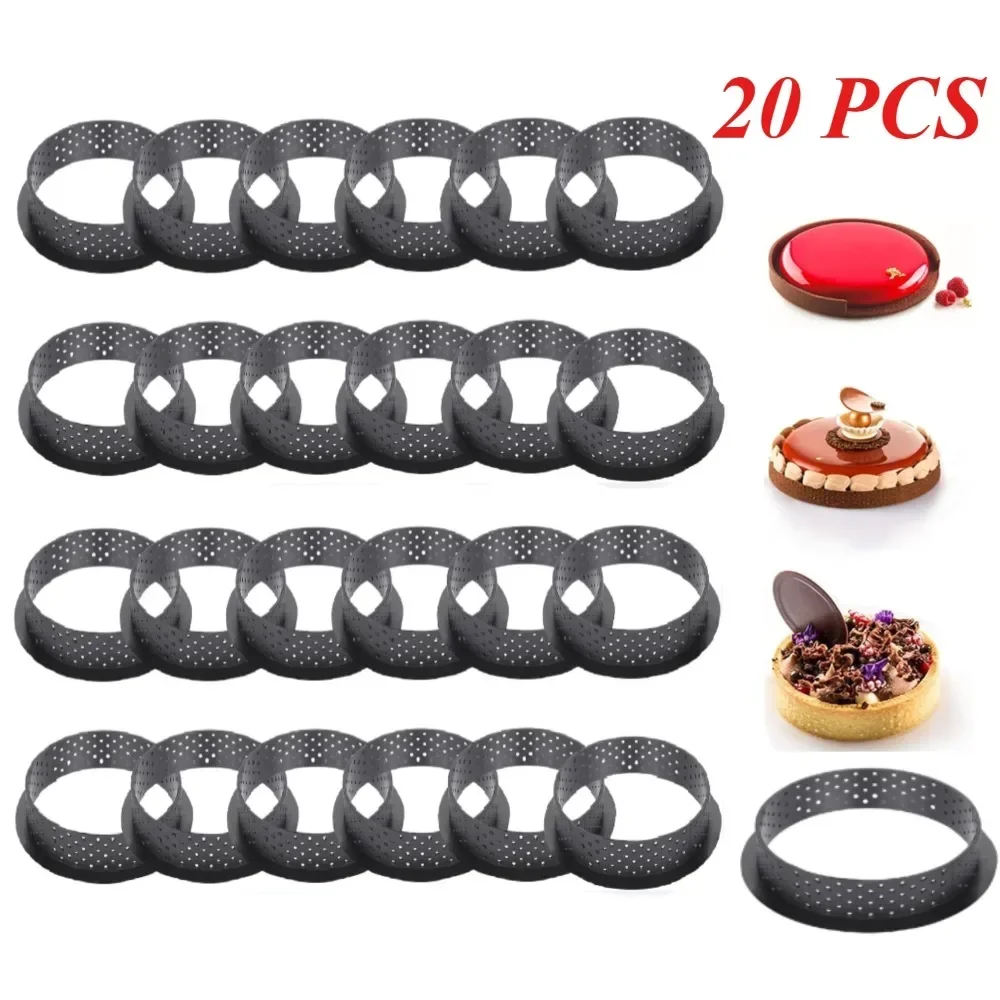
20PCS Tart Ring Perforated Cake Round Plastic Molds DIY Mousse Cake Hamburgers Non Stick Bakeware Mold for Home Baking Tools
For a reliable, budget-friendly option, the 20PCS Tart Ring Perforated Cake Round Plastic Molds set offers versatile sizes and non-stick convenience for home bakers.
Frequently asked questions
Can I use perforated tart ring molds for no-bake desserts?
Yes, they work well for no-bake mousse cakes and cheesecakes. The perforations help the dessert release cleanly, and the non-stick surface makes unmolding easy. Just ensure the mixture is firm enough to hold its shape before removing the ring.
How do I prevent dough from sticking to the perforated ring?
Lightly grease the ring with butter or non-stick spray, even if it’s labeled non-stick. For sticky dough, chill it for 15 minutes before pressing into the ring. Using parchment paper on the bottom also helps.
Are perforated tart ring molds oven-safe?
Most metal rings are oven-safe up to 450°F (232°C). Plastic rings are typically safe up to 400°F (204°C). Always check the manufacturer’s instructions. Avoid using plastic rings under the broiler.
What sizes are most useful for a home baker?
A set that includes 4-inch, 8-inch, and 10-inch rings covers most needs. Mini rings (2-3 inches) are great for appetizers or individual desserts. Consider your typical recipes when choosing.
