
Blog
The Complete Guide to Choosing a PVC Tablecloth
Buying Guide
Your Ultimate PVC Tablecloth Buying Guide
A PVC tablecloth is a practical and stylish addition to any dining space. Whether you’re protecting your table from spills or adding a decorative touch, this guide will help you make the right choice.
What Is a PVC Tablecloth?
A PVC tablecloth is made from polyvinyl chloride, a synthetic plastic polymer known for its durability and water resistance. Unlike fabric tablecloths, PVC is non-porous, making it ideal for everyday use, especially in households with children or frequent entertaining. It combines the look of traditional table linens with the practicality of a wipe-clean surface. You can find PVC tablecloths in various styles, from clear vinyl to printed designs, and even textured finishes that mimic linen or lace. The material is also lightweight and easy to fold for storage.
Benefits of Using a PVC Tablecloth
- Waterproof and Oil-proof: Spills bead up and can be wiped away without staining the table.
- Easy to Clean: A simple wipe with a damp cloth is usually enough; some are even machine washable.
- Durable: Resists tears, scratches, and everyday wear and tear.
- Affordable: Generally less expensive than fabric or high-end materials.
- Variety of Designs: Available in countless colors, patterns, and textures to match any decor.
How to Choose the Right Size and Shape
Measure your table’s length and width (or diameter for round tables). For a standard drop, add 6 to 12 inches on each side. For formal occasions, a longer drop of 15 to 20 inches is elegant. Rectangular and oval tables typically use rectangular tablecloths; round tables require round ones. Some PVC tablecloths are sold in rolls and can be cut to size, but pre-cut sizes are common. Always check the dimensions before purchasing to ensure a proper fit.
Styles and Designs: From Clear to Patterned
PVC tablecloths come in a wide range of styles. Clear vinyl is popular for protecting valuable tabletops while showcasing the wood grain or decorative plates. Printed patterns include floral, geometric, seasonal motifs, and more. Textured options like lace or woven patterns add depth. For a modern look, consider matte finishes or faux linen. The key is to choose a design that complements your dining room or kitchen aesthetic. Remember that darker colors hide stains better, while lighter colors brighten the space.
Caring for Your PVC Tablecloth
Most PVC tablecloths can be cleaned with mild soap and water. Avoid abrasive cleaners or scrubbing pads that might scratch the surface. For stubborn stains, use a mixture of baking soda and water. Some PVC tablecloths are machine washable on a gentle cycle, but always check the care label. To prevent creasing, store your tablecloth rolled rather than folded. If creases appear, lay it flat in a warm area or use a low-heat iron with a protective cloth. Avoid prolonged exposure to direct sunlight, as it can cause fading or yellowing over time.
Where to Use a PVC Tablecloth
PVC tablecloths are versatile. Use them indoors on dining tables, kitchen counters, or side tables. They are also great for outdoor dining on patios or picnics because they resist moisture and are easy to wipe clean. In craft rooms, they protect surfaces from paint and glue. For holiday gatherings, a festive PVC tablecloth can be quickly swapped out. They are also popular for rental events or temporary setups where easy cleanup is essential.
Environmental Considerations
While PVC is durable, it is a plastic and not biodegradable. However, its longevity means less frequent replacement compared to fabric tablecloths that may wear out or stain permanently. Some manufacturers now produce phthalate-free and BPA-free PVC options for safer use. If sustainability is a concern, look for recycled PVC or consider using a PVC tablecloth for years to extend its lifecycle. You can also repurpose old tablecloths as shelf liners or drop cloths. For more on PVC’s environmental impact, see this Wikipedia article.
Styling Tips for Your Dining Table
Layering a PVC tablecloth over a table pad or felt adds extra protection and prevents slipping. Use placemats and coasters to reduce direct contact with hot dishes. Choose a tablecloth with a subtle pattern to hide minor spills between cleanings. For a formal look, pair a clear PVC tablecloth with a decorative runner. In casual settings, a bright, playful pattern can become a conversation starter. Don’t be afraid to mix textures—a lace-edged PVC tablecloth can soften a modern dining set.
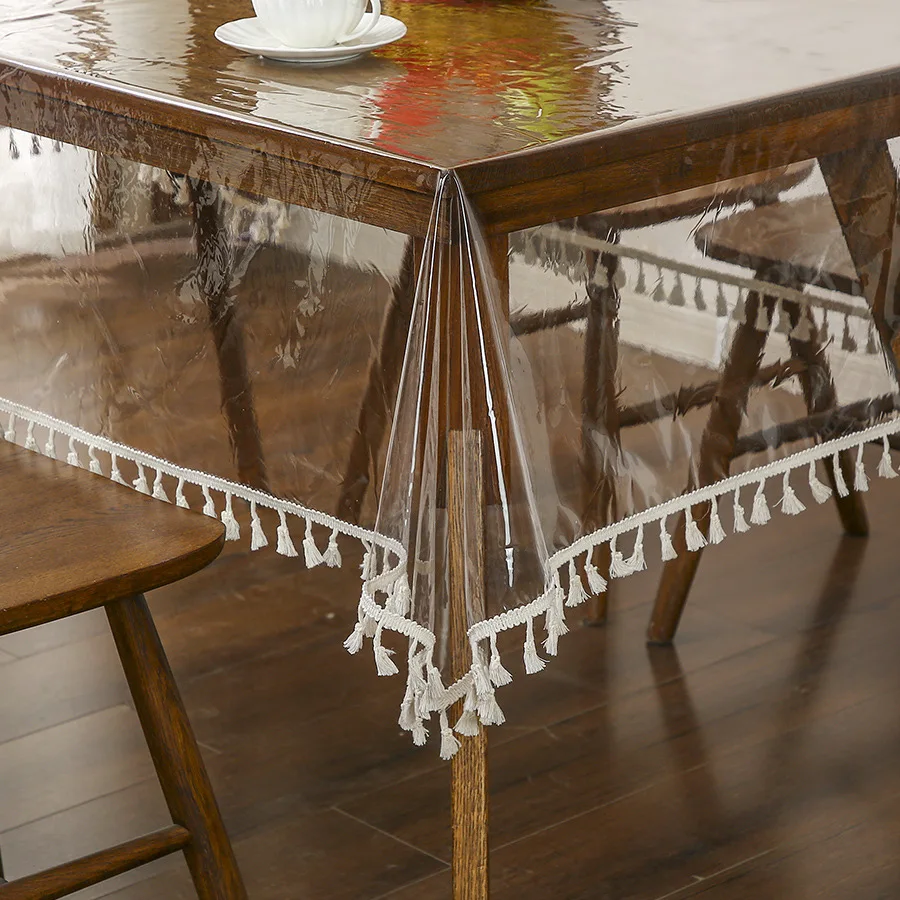
PVC Soft Glass Tablecloth,retro Fringed Lace Waterproof Oil-proof Household,light Luxury High-end Coffee and Eating Table Cover
For those seeking a blend of vintage charm and modern practicality, the PVC Soft Glass Tablecloth with retro fringed lace offers a waterproof, oil-proof solution that elevates any dining table.
Frequently asked questions
Can I use a PVC tablecloth on a glass table?
Yes, PVC tablecloths work well on glass tables. They provide a non-slip surface and protect the glass from scratches. However, ensure the tablecloth is clean to avoid any trapped debris that could scratch the glass.
How do I remove wrinkles from a PVC tablecloth?
To remove wrinkles, lay the tablecloth flat and place a heavy book on the crease for a few hours. Alternatively, use a hairdryer on a low setting to gently warm the area while smoothing it out. Avoid high heat as it can damage the PVC.
Is PVC tablecloth safe for food contact?
Most PVC tablecloths are safe for incidental food contact, but they are not intended for direct food preparation. Always wash the surface before placing food directly on it. Look for food-grade or phthalate-free options if you have concerns.
Can I cut a PVC tablecloth to fit my table?
Yes, you can cut PVC tablecloths with sharp scissors or a rotary cutter. To prevent fraying, seal the cut edges with a flame (carefully) or apply clear tape. Some manufacturers offer tablecloths in rolls for custom sizing.
