
Blog
Rattan Nightstand Buying Guide: Style & Storage
Buying Guide
Your Guide to the Perfect Rattan Nightstand
A rattan nightstand brings warmth and texture to any bedroom. Whether you’re drawn to boho, coastal, or modern minimalism, this natural material adds an organic touch that feels both timeless and fresh.
Why Choose a Rattan Nightstand?
Rattan is a natural, renewable material that has been used in furniture for centuries. Unlike synthetic alternatives, each piece has unique grain and color variations, giving your nightstand character. Rattan is also lightweight yet surprisingly durable, making it easy to move when rearranging your space. Plus, its open weave allows air circulation, which can help prevent moisture buildup—a bonus for bedside essentials like books and glasses.
Beyond practicality, a rattan nightstand adds visual warmth. The woven texture softens hard edges and pairs beautifully with other natural elements like linen, wood, and plants. If you’re aiming for a relaxed, inviting bedroom, rattan is an excellent choice.
Styles of Rattan Nightstands
Rattan nightstands come in several styles to suit different aesthetics:
- Traditional woven: Fully wrapped in rattan, often with curved legs and intricate patterns. Perfect for bohemian or tropical themes.
- Modern minimalist: Clean lines with rattan accents, such as drawer fronts or shelves. These blend well with contemporary decor.
- Mid-century inspired: Tapered legs and simple forms, often with rattan paneling on doors or drawers. A nod to retro design.
- Industrial hybrid: Combining metal frames with rattan elements, these offer an edgy contrast.
Consider your existing decor when choosing. A fully woven piece makes a statement, while an accent style integrates more subtly.
Materials: Rattan vs. Wicker vs. Bamboo
It’s easy to confuse rattan with similar materials, but they’re different. Rattan is a solid vine from tropical regions; it’s strong and flexible. Wicker refers to the weaving technique, not the material—wicker furniture can be made from rattan, bamboo, synthetic fibers, or even paper. Bamboo is a grass that’s hollow and less durable than rattan. For longevity, choose genuine rattan over synthetic wicker. Look for furniture labeled “solid rattan” or “handwoven rattan.” The natural variations in color and texture are signs of authenticity.
Size and Proportion: Finding the Right Fit
Measure your space before buying a rattan nightstand. Standard heights range from 22 to 30 inches, ideally matching your mattress height for easy reach. The width should leave room for a lamp and a few items without overcrowding. A depth of 14-18 inches works for most bedsides. If you have a small room, consider a narrow or open-shelf design to avoid visual bulk. For larger rooms, a two-drawer style offers more storage while maintaining an airy feel.
Storage Features: Drawers, Shelves, and Open Space
Think about what you’ll store. Drawers are great for hiding clutter like chargers, books, and personal items. Look for smooth-gliding hardware and dovetail joints for durability. Open shelves are perfect for displaying a plant or a stack of books, but they require tidiness. Some rattan nightstands combine both: a drawer for hidden storage and a lower shelf for decorative items. If you need extra organization, consider a model with a small drawer or a cabinet door.
Care and Maintenance for Rattan Nightstands
Rattan is low-maintenance but needs some care. Dust regularly with a soft brush or vacuum attachment to prevent buildup in the weave. Clean spills immediately with a damp cloth; avoid soaking the rattan. Keep it away from direct sunlight to prevent fading and from radiators to avoid drying and cracking. In dry climates, occasionally mist with water or use a humidifier. With proper care, a quality rattan nightstand can last for decades, developing a beautiful patina over time.
Where to Place Your Rattan Nightstand
While typically used as a bedside table, a rattan nightstand works in many rooms. In a living room, it can serve as an end table next to a sofa, holding drinks and remotes. In an entryway, it becomes a catchall for keys and mail. Its lightweight nature makes it easy to move around for extra seating or as a plant stand. The natural texture complements neutral palettes and adds warmth to monochromatic schemes.
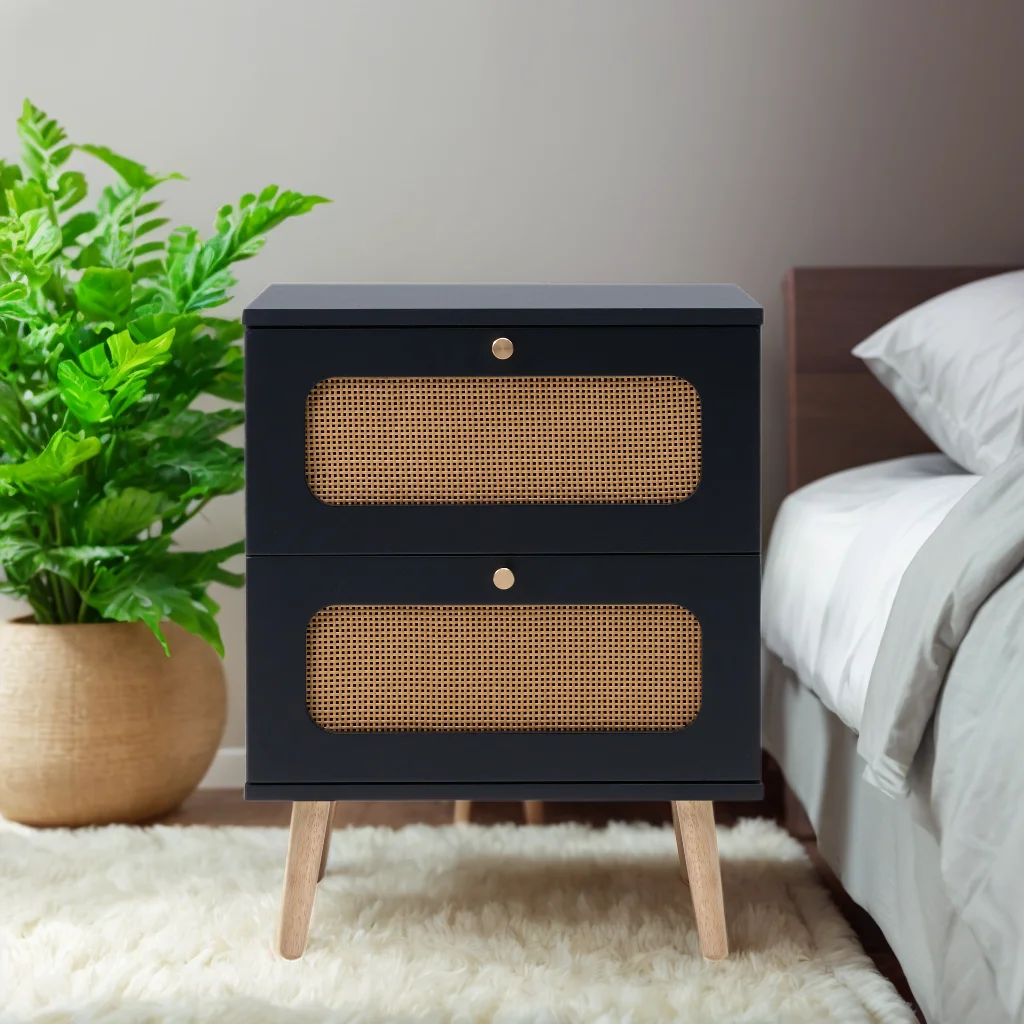
2-Drawer Rattan Nightstand with Handwoven Drawers – Minimalist End Table for Bedroom & Living Room
For a beautiful and functional option, consider the 2-Drawer Rattan Nightstand with Handwoven Drawers – Minimalist End Table for Bedroom & Living Room, which combines ample storage with artisanal charm.
Frequently asked questions
What is the difference between rattan and wicker?
Rattan is a natural vine material, while wicker is a weaving technique. Wicker furniture can be made from rattan, bamboo, or synthetic fibers. For durability, choose genuine rattan.
How do I clean a rattan nightstand?
Dust regularly with a soft brush or vacuum. Wipe spills with a damp cloth and dry immediately. Avoid harsh chemicals or soaking the rattan.
Can a rattan nightstand support a heavy lamp?
Yes, most rattan nightstands are sturdy enough for standard lamps. Check the weight capacity, but solid rattan frames can typically hold 20-30 pounds.
Is rattan eco-friendly?
Yes, rattan is a rapidly renewable resource that grows quickly without pesticides. It’s biodegradable and often harvested sustainably.
