Blog
The Complete Guide to Reactive Glaze Dinnerware
Buying Guide
Your Guide to Reactive Glaze Dinnerware
Reactive glaze dinnerware brings an earthy, one-of-a-kind beauty to your table—each piece tells its own story through unpredictable color and texture. This guide will walk you through everything you need to know before buying.
What Is Reactive Glaze Dinnerware?
Reactive glaze dinnerware is created through a chemical reaction during firing, where metallic oxides in the glaze interact with heat and oxygen. The result? Rich, variegated surfaces with speckles, crackles, or flowing color blends. No two pieces are identical, making each plate, bowl, or mug a small work of art. This technique has roots in ancient pottery but has seen a modern revival thanks to its organic, handcrafted appeal.
Why Choose Reactive Glaze for Everyday Use?
Beyond its visual appeal, reactive glaze dinnerware is surprisingly practical. The glaze forms a hard, non-porous surface that resists scratches and stains. Many sets are microwave and dishwasher safe, though handwashing is recommended to preserve the finish. The irregular edges and slight variations in thickness give each piece a comfortable, natural feel in the hand. For those who love hosting, these pieces create a warm, inviting tablescape that sparks conversation.
Key Features to Look For
When shopping for reactive glaze dinnerware, consider these factors:
- Material: Most are stoneware or porcelain. Stoneware is heavier and more chip-resistant, while porcelain offers a lighter, more refined feel.
- Glaze Safety: Ensure the glaze is lead-free and food-safe. Reputable brands use underglaze techniques that protect the reactive layer.
- Durability: Look for oven-to-table safe options if you plan to bake or reheat. Check for warranty information.
- Weight and Stackability: Heavier pieces feel substantial but may be harder to store. Test how they nest if space is tight.
Caring for Reactive Glaze Dinnerware
To keep your reactive glaze dinnerware looking its best, avoid abrasive scrubbers and harsh detergents. Hand wash with mild soap and a soft sponge. While many sets are dishwasher safe, the high heat and strong detergents can dull the reactive finish over time. Avoid sudden temperature changes—don’t put a hot dish into cold water. If you need to stack pieces, place a soft cloth or paper towel between them to prevent scratches.
How to Style Reactive Glaze on Your Table
The organic, imperfect beauty of reactive glaze dinnerware pairs beautifully with natural materials like linen napkins, wooden serving boards, and fresh greenery. Mix and match different reactive glaze colors—deep blues, greens, and earthy browns—for a collected, eclectic look. For a more minimalist aesthetic, stick to a single color family. The reactive finish also complements neutral tablecloths and simple flatware. Let the plates be the star.
Top Brands and What They Offer
While many brands produce reactive glaze dinnerware, quality varies. For a reliable, handcrafted feel, consider sets that emphasize artisan techniques. Some popular options include stoneware collections from established ceramic studios. Look for sets that offer a range of sizes—dinner plates, salad plates, bowls, and mugs—to cover all your needs. Reading customer reviews on durability and glaze consistency is essential before committing.
Is Reactive Glaze Dinnerware Safe for Kids?
Yes, many reactive glaze dinnerware sets are safe for children, provided they meet food safety standards. The non-porous glaze prevents bacteria buildup, and the sturdy stoneware construction can handle drops better than fine china. However, always check that the glaze is free of lead and cadmium. Some sets are specifically marketed as kid-friendly, with rounded edges and lightweight designs. For peace of mind, opt for brands that explicitly state their products are safe for all ages.
Final Tips for Choosing Your Set
Before you buy, think about your lifestyle. Do you entertain often? A 16-piece set with four place settings is a good starting point. Love mix-and-match? Buy open stock pieces from the same collection. Remember that reactive glaze dinnerware is inherently variable—embrace the uniqueness. If you prefer uniform dishes, this style may not be for you. But if you cherish handmade character, it’s a wonderful addition to your kitchen.
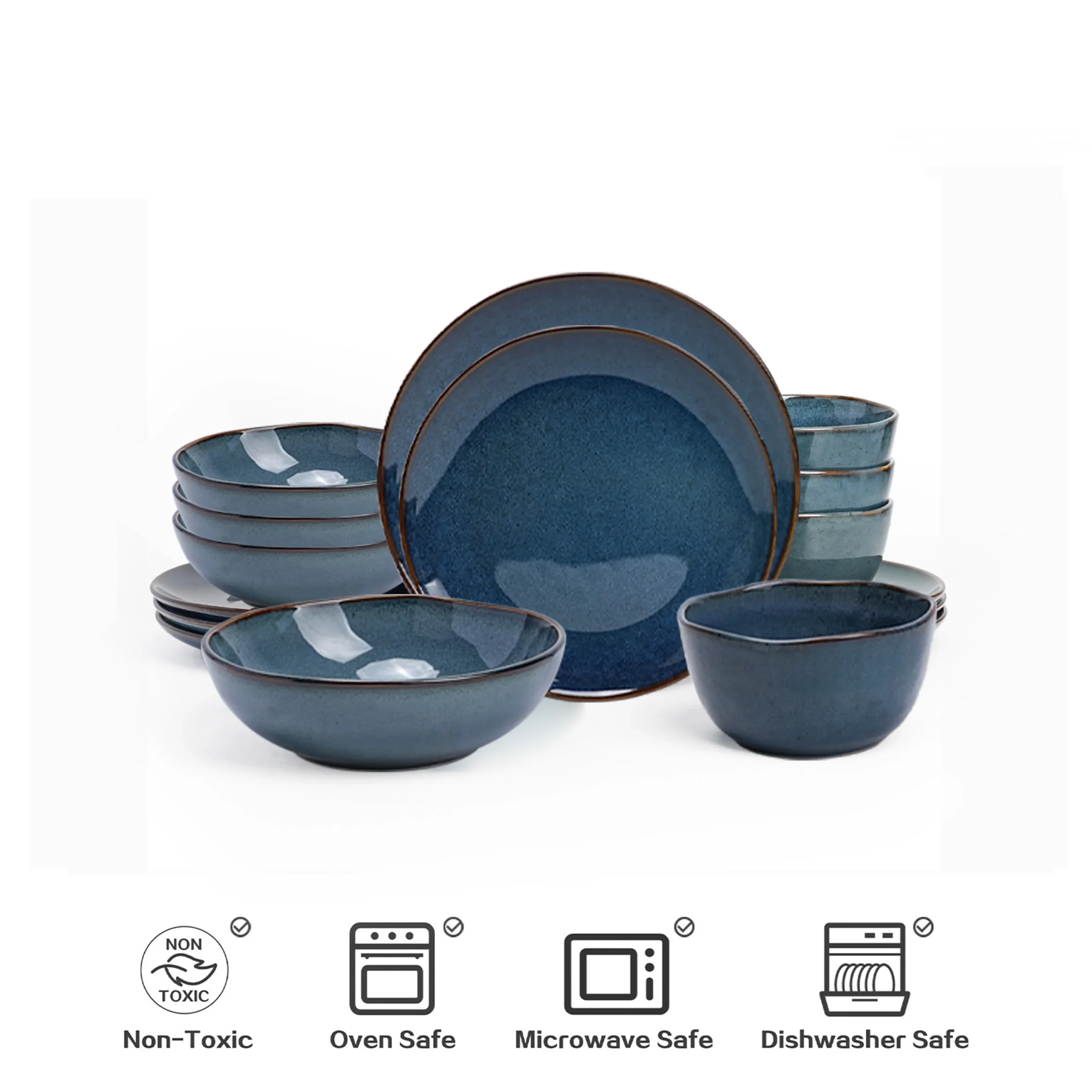
Organic Irregular 16pc Ceramic Stoneware Household Handland Reactive Glaze Health Kids Can Use Under the Glaze Dinnerware Sets
For a beautifully crafted option, consider the Organic Irregular 16pc Ceramic Stoneware Household Handland Reactive Glaze Health Kids Can Use Under the Glaze Dinnerware Sets, which combines safe underglaze techniques with an artisanal look.
Frequently asked questions
Is reactive glaze dinnerware microwave safe?
Most reactive glaze dinnerware is microwave safe, but always check the manufacturer’s guidelines. Some reactive glazes contain metallic elements that can spark in the microwave if not properly formulated. Look for sets that explicitly state microwave safety.
Can reactive glaze dinnerware go in the dishwasher?
Many reactive glaze sets are dishwasher safe, but hand washing is recommended to preserve the finish. Dishwasher detergents and high heat can gradually dull the reactive effect. If you must use a dishwasher, choose a gentle cycle and mild detergent.
Does reactive glaze contain lead?
Quality reactive glaze dinnerware is lead-free and food-safe. Reputable brands use underglaze techniques that seal the reactive layer. Always verify with the manufacturer and look for certifications like FDA or Proposition 65 compliance.
Why does my reactive glaze dinnerware have small cracks?
Small crackles or crazing in the glaze are often intentional and part of the reactive glaze aesthetic. However, if cracks are sharp or deep, they may indicate a defect. Check if the set is oven-to-table safe, as thermal shock can cause cracking.