
Blog
The Ultimate Guide to Choosing a Rotating Bookshelf
Buying Guide
Find Your Perfect Rotating Bookshelf Today
A rotating bookshelf can transform how you store and display your books, making every title accessible with a simple spin. Whether you’re tight on space or love a dynamic look, this guide will help you find the ideal one.
Why Choose a Rotating Bookshelf?
A rotating bookshelf is more than just a storage unit—it’s a space-saving marvel. Unlike traditional bookshelves that hug the wall, a rotating design allows you to access your collection from all sides, making it perfect for corners or as a room divider. It also adds a touch of elegance and functionality to any room.
Key Features to Look For
When shopping for a rotating bookshelf, consider these essential features:
- Material: Solid wood offers durability and a classic look, while engineered wood is lighter and more affordable.
- Adjustable Shelves: Customize the height to fit books of different sizes.
- Wheels: Caster wheels make it easy to move the shelf around, especially if you like to rearrange your space.
Space Considerations and Placement
Measure your room before purchasing. A rotating bookshelf works best in areas where you can spin it freely—at least 2 feet of clearance on all sides. Place it in a corner to maximize floor space, or use it as a focal point in a reading nook. Learn more about bookshelf history on Wikipedia.
Design Styles for Every Home
From minimalist modern to rustic farmhouse, rotating bookshelves come in various styles. Choose a finish that complements your existing decor—natural wood tones for warmth, or painted options for a pop of color. The rotating mechanism itself can be a design statement, with metal or wooden bases.
Capacity and Weight Limits
Check the weight capacity of the shelves, especially if you plan to store heavy hardcovers or decorative items. A solid wood rotating bookshelf typically supports more weight than a particleboard one. Also, ensure the base is sturdy enough to prevent tipping when fully loaded.
Assembly and Maintenance Tips
Most rotating bookshelves require some assembly. Look for models with clear instructions and minimal tools needed. For maintenance, dust the shelves regularly and lubricate the rotating mechanism annually to keep it spinning smoothly. Avoid overloading to prevent strain on the pivot.
Budget and Value
Prices vary widely based on material, size, and brand. A high-quality rotating bookshelf is an investment that lasts for years. Consider the long-term value—solid wood models often become heirloom pieces. Don’t sacrifice quality for a lower price, but also avoid overpaying for unnecessary features.
Making Your Decision
Take your time to compare options. Read reviews, check return policies, and visualize how the shelf will fit into your daily life. A well-chosen rotating bookshelf can be one of the most versatile pieces in your home.
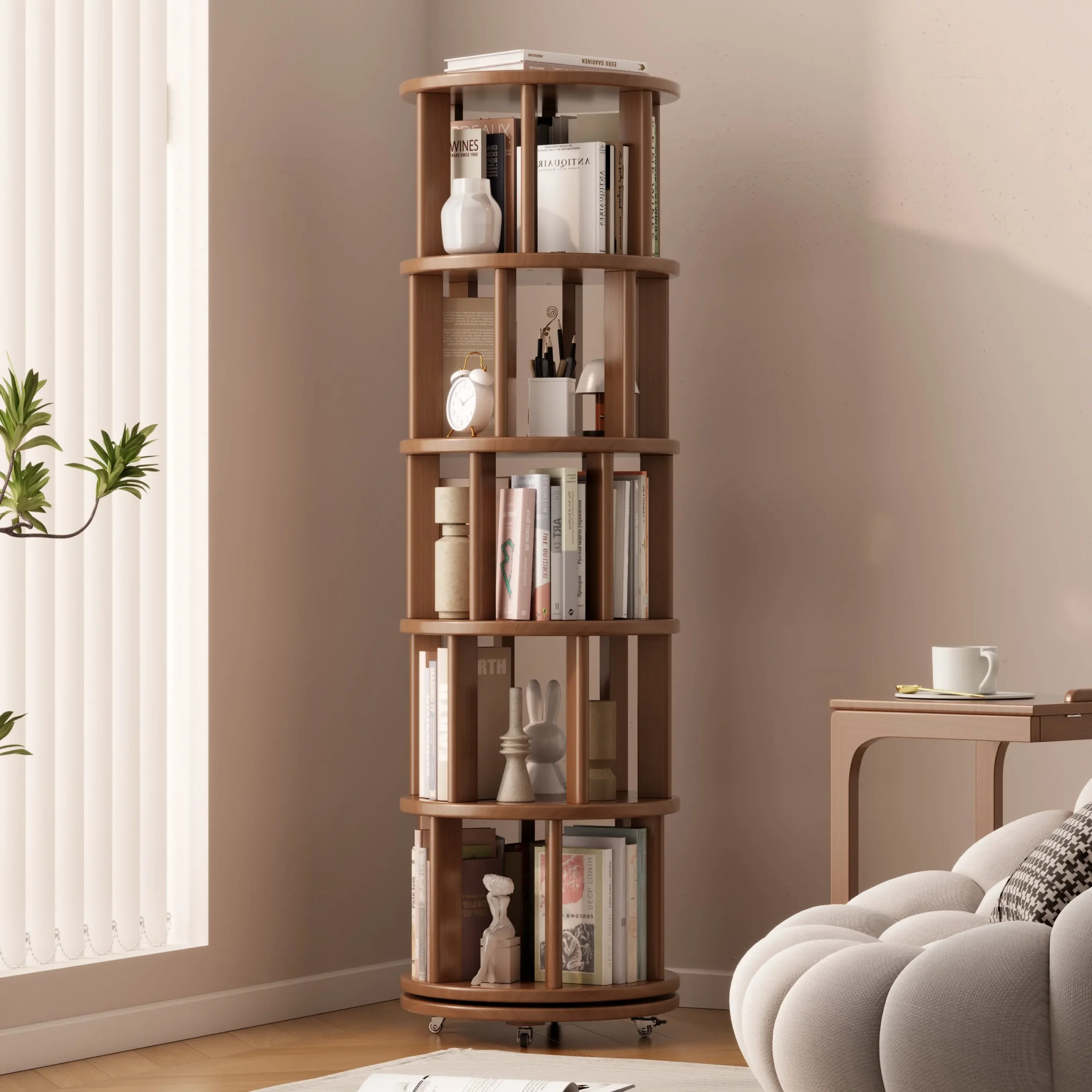
Goldoma 6-Tier Rotating Bookshelf – Solid Wood, Adjustable, with Wheels
For a reliable option, consider the Goldoma 6-Tier Rotating Bookshelf – Solid Wood, Adjustable, with Wheels, which combines durability with easy mobility.
Frequently asked questions
What is the ideal size for a rotating bookshelf?
The ideal size depends on your space and storage needs. Standard rotating bookshelves range from 4 to 6 feet in height and 24 to 36 inches in diameter. Measure your room and ensure there’s enough clearance for the shelf to rotate fully.
Can a rotating bookshelf hold heavy books?
Yes, but check the weight capacity per shelf. Solid wood rotating bookshelves typically support 20-30 pounds per shelf, while those made of engineered wood may have lower limits. Distribute weight evenly to maintain balance.
How do I maintain the rotating mechanism?
Periodically clean the base and apply a silicone-based lubricant to the bearing or pivot point. Avoid using oil-based lubricants as they can attract dust. If the shelf wobbles, check for loose screws or uneven flooring.
Are rotating bookshelves suitable for children’s rooms?
Yes, but choose a model with a sturdy base and safety features like anti-tip brackets. Ensure the shelves are not too high for kids to reach. A rotating bookshelf can make books more accessible and encourage reading.
