Blog
The Perfect Round End Table for Your Living Space
Buying Guide
Find Your Ideal Round End Table Today
A round end table is more than just a place to set your coffee; it’s a versatile piece that can soften a room’s angles and add flow. Whether you need a spot for a lamp or a stack of books, the right round end table makes all the difference.
Why Choose a Round End Table?
A round end table offers several advantages over its square or rectangular counterparts. Its curved shape eliminates sharp corners, making it safer in high-traffic areas and more forgiving in tight spaces. The continuous line also creates a softer visual, which can make a room feel more inviting. Additionally, round tables often allow for better traffic flow around them, as there are no protruding edges to navigate.
From a design perspective, round end tables can serve as a focal point or blend seamlessly into a corner. Their symmetry lends itself well to both modern and traditional decor, and they pair beautifully with sofas, armchairs, or as standalone accent pieces.
Key Factors to Consider When Buying a Round End Table
Before making a purchase, think about the following aspects to ensure your round end table meets your needs.
Size and Proportion
Measure the space where you plan to place the table. A round end table should be roughly the same height as the arm of your sofa or chair (typically 20-24 inches) for easy access. The diameter should allow for comfortable reach without overwhelming the seating area. A good rule of thumb: leave at least 18 inches between the table and surrounding furniture.
Material and Finish
Common materials include solid wood, metal, glass, and engineered wood. Each has its own look and maintenance requirements. Solid wood offers durability and warmth, while metal can bring an industrial edge. Glass tops create an airy feel but require frequent cleaning. Consider the existing furniture in your room to ensure consistency in style and color.
Functionality
Do you need storage? Some round end tables come with shelves or drawers for stashing remotes, magazines, or coasters. If you often eat or work at the table, a larger surface might be beneficial. For small spaces, consider a nesting set or a table with a lower shelf.
Popular Styles of Round End Tables
Round end tables come in a variety of styles to suit different aesthetics.
- Traditional: Often feature turned legs, carved details, and rich wood finishes like cherry or mahogany. These tables add a classic, timeless feel.
- Modern: Clean lines, minimal ornamentation, and materials like chrome, glass, or lacquered wood. They emphasize function and simplicity.
- Rustic/Farmhouse: Distressed wood, natural edges, and chunky legs. These tables bring a cozy, lived-in charm.
- Industrial: Combine metal and wood, often with exposed hardware and a utilitarian look. Perfect for lofts or contemporary spaces.
- Mid-Century Modern: Tapered legs, organic shapes, and warm teak or walnut tones. A popular retro-inspired choice.
When selecting a style, consider the overall theme of your room. A round end table can either complement or contrast with your existing decor, so choose wisely.
Round End Table Materials: Pros and Cons
Understanding material properties helps you make an informed decision.
Solid Wood
Pros: Durable, repairable, ages beautifully, unique grain patterns. Cons: Can be heavy, susceptible to moisture, higher cost.
Metal
Pros: Sturdy, lightweight options available, modern aesthetic, often affordable. Cons: Can dent or scratch, may feel cold, prone to rust if not coated.
Glass
Pros: Visually lightens a room, easy to clean, works in small spaces. Cons: Shows fingerprints and smudges, can break, not ideal for families with young children.
Engineered Wood (MDF, Particleboard)
Pros: Budget-friendly, smooth surface for painting, consistent appearance. Cons: Less durable, can warp if exposed to moisture, difficult to repair.
For more on wood types, check out this overview of wood materials.
How to Style a Round End Table in Your Home
A well-styled round end table can enhance your living space. Here are some ideas:
- Keep it simple: A lamp, a small plant, and a coaster set create a balanced vignette.
- Add layers: Use a stack of books as a base for a decorative object, then add a tray for functional items.
- Incorporate texture: A ceramic vase, a woven basket, or a metal sculpture adds visual interest.
- Consider symmetry: Place matching tables on either side of a sofa for a formal look.
- Mix heights: Combine a tall lamp with a low bowl or candle holder for dynamic composition.
Remember that the table itself is part of the decor. Choose a finish that complements your color palette and let it shine.
Round End Table Placement Tips
Where you put your round end table matters. Common placements include:
- Next to a sofa or armchair: The classic spot for holding drinks, remotes, or a reading lamp.
- In a corner: A round table fits neatly into a corner, especially with a table lamp to brighten the area.
- Between two chairs: Creates a cohesive seating group, perfect for conversation.
- As a bedside table: In smaller bedrooms, a round end table can serve as a nightstand without taking up too much visual space.
- Entryway: Place it in a hallway for keys, mail, or a decorative bowl.
Ensure there is enough clearance around the table for easy movement. In tight spaces, a round table is often more accommodating than a square one.
Caring for Your Round End Table
Proper maintenance extends the life of your table. For wood tables, dust regularly with a soft cloth and use coasters for drinks. Avoid placing hot items directly on the surface. For metal tables, wipe with a damp cloth and dry immediately to prevent rust. Glass tables benefit from a glass cleaner and microfiber cloth. Always follow the manufacturer’s care instructions.
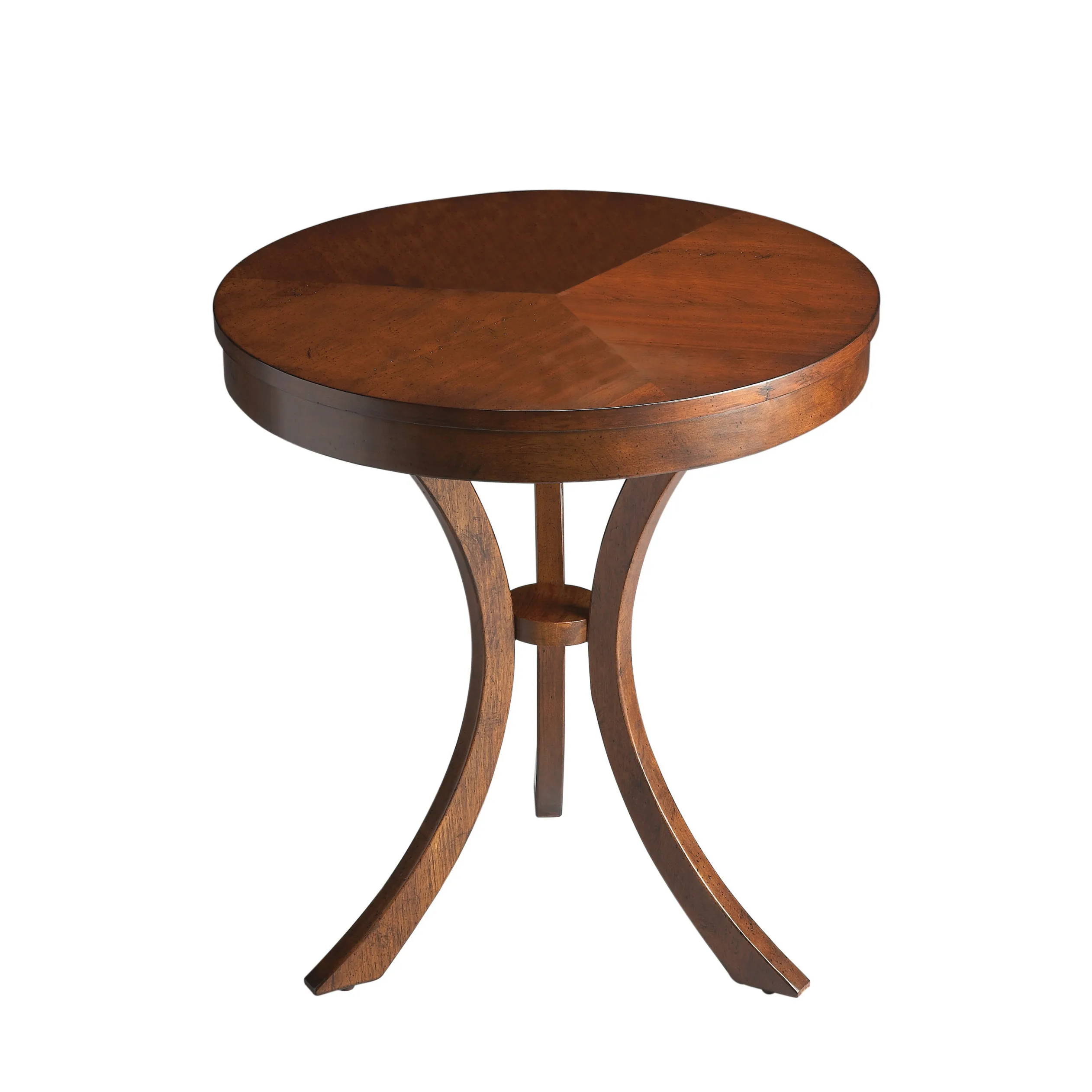
Goldoma 26″ Medium Brown Round End Table with Distressed Finish
For a beautifully crafted option, consider the Goldoma 26″ Medium Brown Round End Table with Distressed Finish, which brings warmth and character to any room.
Frequently asked questions
What is the standard height for a round end table?
The standard height for a round end table is typically between 20 and 24 inches, which aligns with the arm height of most sofas and chairs for comfortable use.
Can a round end table be used as a nightstand?
Yes, a round end table can work as a nightstand, especially in smaller bedrooms. Its curved shape softens the room and it can hold a lamp, alarm clock, and a few essentials.
How do I choose the right size round end table for my space?
Measure the area and consider the surrounding furniture. The table should be about the same height as the sofa arm, and the diameter should allow for at least 18 inches of clearance around it.
What materials are best for a round end table in a high-traffic area?
Solid wood or metal are durable choices for high-traffic areas. They withstand daily use better than glass or engineered wood, and can be easier to repair if damaged.