Blog
The Perfect Round End Table for Your Space
Buying Guide
How to Choose a Round End Table
A round end table can anchor a seating area or serve as a handy surface beside a sofa. Whether you need extra storage or a spot for your coffee, this guide helps you find the right one.
Why Choose a Round End Table?
A round end table offers several advantages over square or rectangular designs. Its lack of sharp corners makes it safer in high-traffic areas, especially if you have children or pets. The circular shape also promotes better flow in a room, allowing people to move around it easily. Plus, it can soften the lines of angular furniture, creating a more inviting atmosphere.
Key Factors to Consider
Size and Height
Before buying a round end table, measure the space where it will go. The table should be roughly the same height as the arm of your sofa or chair (usually 20–24 inches). For depth, allow at least 18 inches between the table and other furniture for comfortable movement.
Material and Durability
Common materials include wood, metal, glass, and manufactured wood. Solid wood offers longevity and warmth, while metal adds an industrial touch. Glass can make a small room feel larger but requires more upkeep. Manufactured wood is budget-friendly and available in many finishes.
Style and Finish
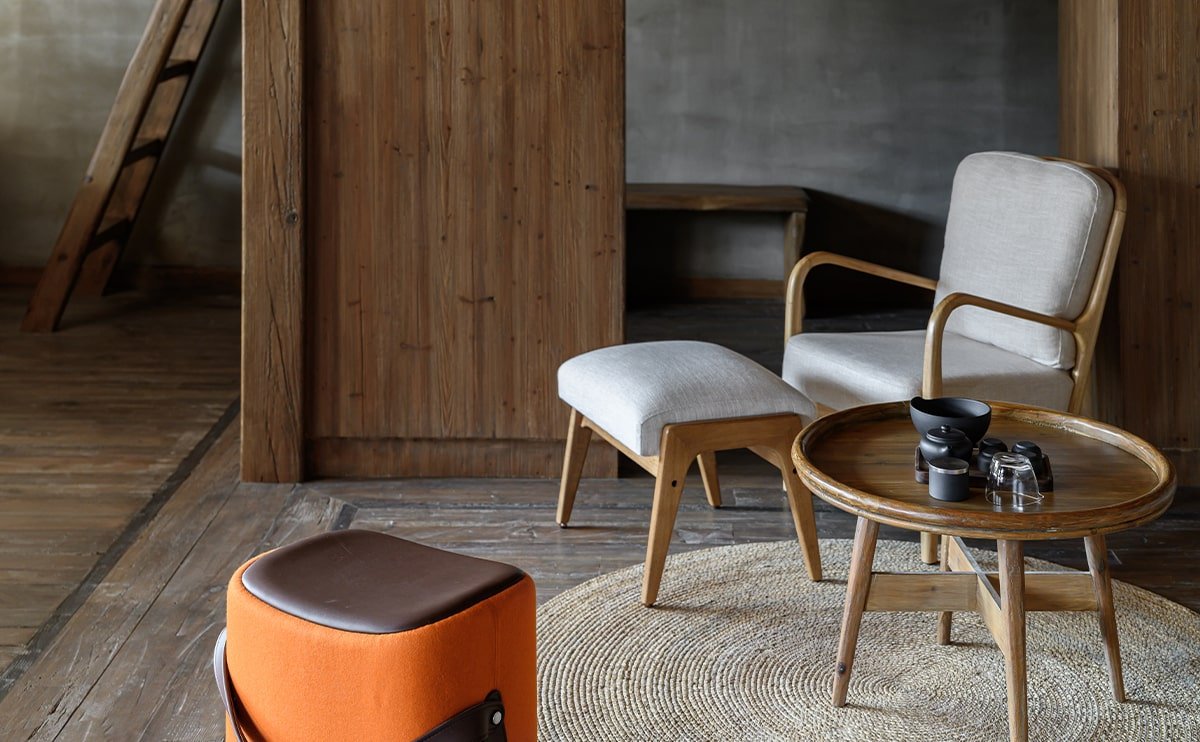
Your round end table should complement your existing decor. For a rustic look, consider distressed wood or dark chestnut finishes. Modern spaces pair well with sleek metal or high-gloss surfaces. Neutral colors like white, black, or natural wood are versatile choices.
Types of Round End Tables
- Standard side table: A simple tabletop with legs, ideal for holding a lamp and a book.
- Storage table: Features shelves or drawers to keep remotes and magazines organized.
- Nesting tables: A set of two or three tables that can be used together or separately.
- Pedestal table: Has a central support, offering more legroom.
Matching Your Round End Table with Decor
Consider the room’s color palette and furniture style. A dark wood table can anchor a light-colored room, while a painted table adds a pop of color. For a cohesive look, match the table’s finish to other wood tones in the space. If you prefer an eclectic style, mix metals and woods for visual interest.
Space-Saving Benefits
In small living rooms or apartments, a round end table can be a smart choice. Its shape allows it to fit into tight corners or next to a sofa without protruding awkwardly. Many designs are lightweight, making them easy to move as needed.
Caring for Your Round End Table
To keep your table looking its best, dust regularly with a soft cloth. For wood tables, use a wood cleaner or polish occasionally. Avoid placing hot items directly on the surface—use coasters or trivets. For glass tops, a glass cleaner will keep them streak-free.
For more on furniture materials, see this Wikipedia article on wood.
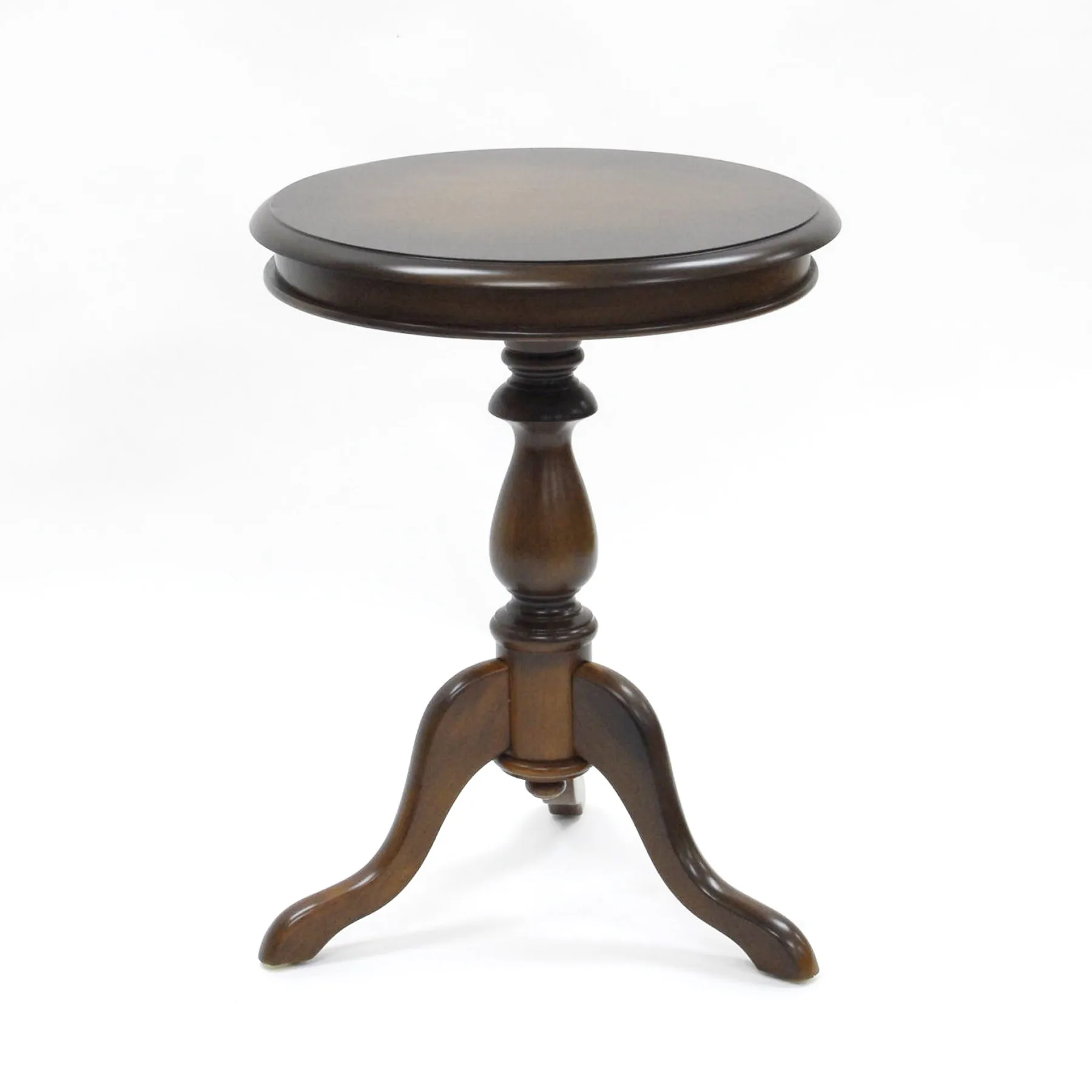
Goldoma 25-Inch Dark Chestnut Round End Table – Rustic Manufactured Wood Side Table
For a reliable and stylish option, consider the Goldoma 25-Inch Dark Chestnut Round End Table, which combines rustic charm with sturdy manufactured wood.
Frequently asked questions
What is the standard height for a round end table?
Typically, a round end table is 20 to 24 inches tall, matching the arm height of most sofas and chairs.
Can a round end table be used as a nightstand?
Yes, a round end table can serve as a nightstand if it’s the right height for your bed and has enough surface area for essentials.
How do I clean a round end table with a glass top?
Use a glass cleaner and a lint-free cloth to avoid streaks. For stubborn spots, a mixture of vinegar and water works well.
What is the best material for a round end table in a high-traffic area?
Manufactured wood or metal are durable and easy to clean, making them good choices for busy spaces.