Blog
How to Choose the Perfect Round End Table for Your Space
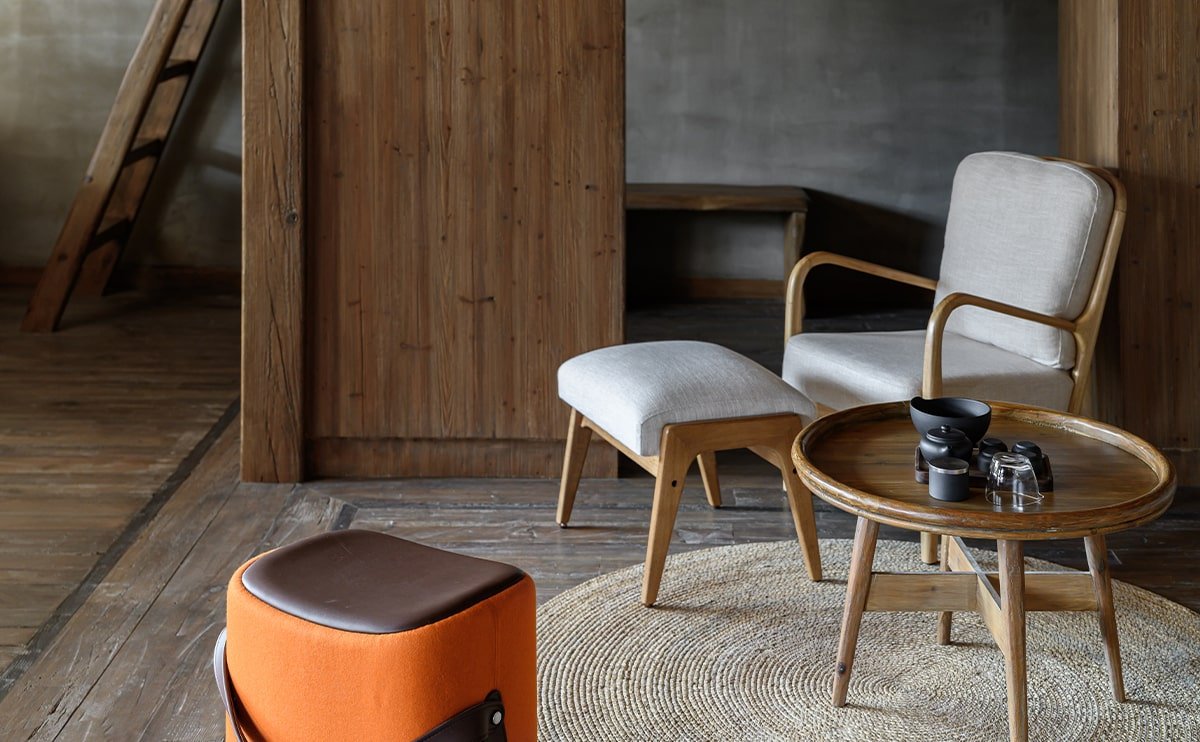
Buying Guide
Find Your Ideal Round End Table Today
Choosing the right round end table can transform a room, offering both style and function. This guide will help you make an informed decision.
Why a Round End Table Works in Any Room
A round end table is a versatile piece that fits seamlessly into living rooms, bedrooms, or even home offices. Its circular shape softens the sharp lines of rectangular furniture and encourages easy flow around it. Unlike square tables, round end tables are inherently safer in high-traffic areas because there are no sharp corners. They also make small spaces feel larger by eliminating visual clutter. Whether you need a spot for a lamp, a cup of tea, or decorative objects, a round end table delivers both form and function. For more on furniture shapes and spatial dynamics, see this Wikipedia article on furniture design.
Size Matters: Finding the Right Dimensions for Your Round End Table
Before buying a round end table, measure your space carefully. The table should be within arm’s reach of your seating—typically 16 to 20 inches from the seat height. The diameter should be proportional to the furniture around it: 20 to 24 inches works well next to a standard sofa. Height is crucial too: aim for a tabletop that is at the same height or slightly lower than the seat cushion. A round end table that is too tall or too short can disrupt the visual balance. Also consider the table’s footprint: leave at least 18 inches of clearance on all sides for easy movement.
Table Height Guidelines
- Standard sofa seat height: 18-20 inches
- Ideal table height: 20-22 inches
- For chairs: table height should match armrest height
Material Choices for Your Round End Table
The material of your round end table affects its durability, look, and maintenance. Solid wood is a classic choice, offering warmth and longevity. It can be stained or painted to match your decor. Engineered wood with veneer is more affordable but may not last as long. Metal tables bring an industrial vibe and are often lightweight. Glass tops feel airy but require frequent cleaning. Consider your lifestyle: if you have kids or pets, a sturdy wood or metal table might be best. A round end table with a lower shelf can hide clutter or store books. For a natural, timeless appeal, solid wood is hard to beat.
Style and Design: Matching Your Round End Table to Your Decor
A round end table should complement your existing furniture. For a modern look, choose clean lines and minimalist designs. Rustic interiors pair well with distressed wood or turned legs. Mid-century modern tables often feature tapered legs and organic shapes. Don’t forget the base: pedestal bases offer stability and easy legroom, while four-leg designs are classic. The finish should harmonize with other wood tones in the room. A round end table can also serve as a statement piece if it contrasts with the surrounding palette. Remember, the goal is cohesion, not matchy-matchy.
Functionality: Storage and Features in a Round End Table
Think about what you’ll place on your round end table. Do you need a drawer for remotes and coasters? A lower shelf for magazines or baskets? Some tables come with USB ports or charging stations. If you entertain often, a table with a removable tray top can double as a serving surface. For small spaces, nesting tables offer flexibility. A round end table with a lift-top can transform into a laptop desk. Prioritize features that align with your daily habits. A simple table without storage might be perfect if you prefer a minimalist look.
Popular Features
- Drawer for hidden storage
- Lower shelf for display or extra storage
- Swivel top for easy access
- Built-in charging ports
Budget and Value: Investing in a Quality Round End Table
Prices for round end tables vary widely. Entry-level tables under $100 are often made of particleboard or thin metal. Mid-range tables ($100-$300) typically use solid wood or quality veneers. High-end tables can cost over $500 with premium materials and craftsmanship. When budgeting, consider the table’s expected lifespan. A well-made round end table can last decades. Look for solid joinery (dovetail drawers, mortise and tenon), stable legs, and a smooth finish. It’s better to invest in one quality piece than to replace a cheap table every few years. Check reviews for real-world durability.
Caring for Your Round End Table
To keep your round end table looking its best, dust regularly with a soft cloth. Use coasters for drinks and placemats for hot items. Clean spills immediately to prevent stains. For wood tables, apply furniture polish every few months. Avoid direct sunlight to prevent fading. If the table has metal parts, wipe them dry to avoid rust. With proper care, a round end table remains a beautiful and functional part of your home for years.
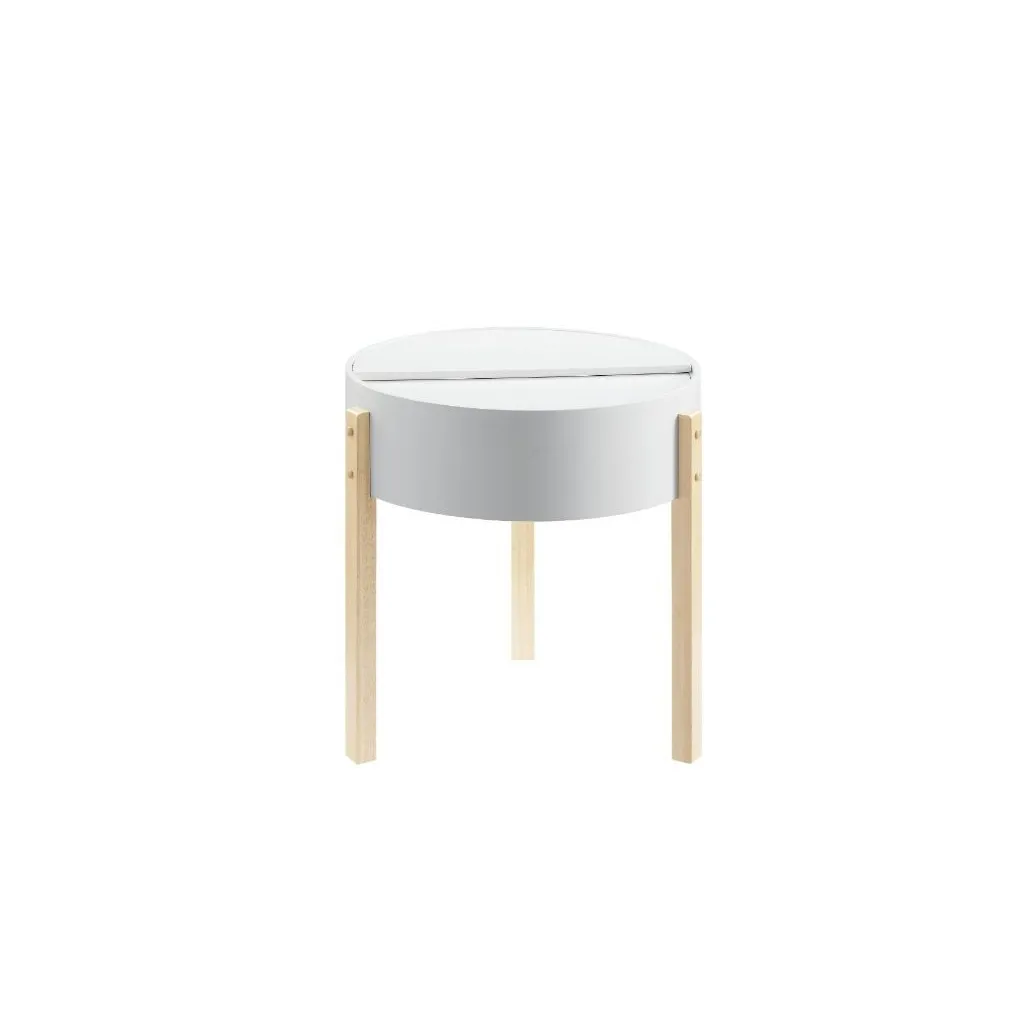
Goldoma 21″ Round End Table – Brown & White Solid Wood
For a beautiful and durable option, consider the Goldoma 21″ Round End Table – Brown & White Solid Wood, which combines classic design with sturdy craftsmanship.
Frequently asked questions
What is the standard height for a round end table?
The standard height for a round end table is typically between 20 and 22 inches, matching or slightly lower than the seat height of your sofa or chair.
Can a round end table work in a small room?
Yes, a round end table is ideal for small rooms because its shape eliminates sharp corners and creates a sense of openness, making the space feel larger.
What materials are best for a round end table?
Solid wood is a top choice for durability and timeless appeal. Other options include metal for industrial style, glass for an airy look, or engineered wood for budget-friendly choices.
How do I choose the right size round end table?
Measure the height of your seating and ensure the table is within 16-20 inches horizontally. The diameter should be proportional—20-24 inches is common for sofas. Leave 18 inches of clearance around the table.