Follow us on Instagram @goldomallc
Free shipping on orders over $53 USD
Handcrafted with love
New home décor collection available now
Use code GOLDOMA15 for 15 % off
Follow us on Instagram @goldomallc
Free shipping on orders over $53 USD
Handcrafted with love
New home décor collection available now
Use code GOLDOMA15 for 15 % off


How to Choose the Perfect Rustic End Table for Your Home
Buying Guide
Find Your Perfect Rustic End Table Today
A rustic end table can anchor a room with warmth and character. Whether you’re drawn to reclaimed wood or distressed finishes, choosing the right piece transforms your space.
Reclaimed Wood Distressed Finish Space-Saving
What Defines a Rustic End Table?
A rustic end table is more than just a surface for your lamp or coffee mug. It embodies a design philosophy that celebrates natural materials, imperfections, and a connection to the outdoors. Typically crafted from solid wood—often reclaimed or salvaged—these tables feature visible grain, knots, and sometimes even nail holes that tell a story. The finish is usually matte or distressed, avoiding high gloss to maintain an earthy feel. Unlike sleek modern tables, rustic pieces invite a sense of history and comfort, making them ideal for living rooms, cabins, or any space where you want to create a cozy, grounded atmosphere.
Key Materials: Wood Types and Their Characteristics
Reclaimed Wood: Sourced from old barns, factories, or wine barrels, reclaimed wood is prized for its unique patina and environmental benefits. Each plank carries marks of its previous life, such as weathered textures or square nail holes. Pros: Durable, eco-friendly, one-of-a-kind look. Cons: Can be more expensive and may require occasional maintenance to prevent drying.
Pine: A softwood that’s lightweight and affordable, pine takes stains well and develops a warm glow over time. It’s prone to dents and scratches, but that often adds to the rustic appeal. Best for: Budget-friendly rustic decor.
Oak: Hard and sturdy, oak offers prominent grain patterns and excellent longevity. It’s heavier and more expensive than pine but resists wear. Best for: High-traffic areas.
Acacia: Known for its rich color variations and natural water resistance, acacia is a dense hardwood that’s both durable and visually striking. Best for: Humid climates or dining areas.
Styles of Rustic End Tables: From Farmhouse to Lodge
Rustic design spans several substyles. Understanding these can help you select a table that harmonizes with your existing decor:
- Farmhouse Rustic: Clean lines with slightly distressed finishes, often painted white or gray with visible wood underneath. Features include turned legs and simple hardware.
- Lodge or Cabin: Heavier, chunkier construction with dark stains and log details. These tables often have live edges (the natural edge of the wood) and thick tops.
- Industrial Rustic: Combines wood with metal elements like hairpin legs or steel frames. The wood is often rough-sawn and paired with dark iron accents for a modern twist.
- Primitive Rustic: Simpler, more utilitarian designs with minimal finishing. Wood may be left raw or lightly oiled, emphasizing natural imperfections.
Size and Proportion: Finding the Right Fit
An end table should be proportionate to your seating and the room. As a rule of thumb, the tabletop height should be within 2 inches of your sofa or chair arm height—typically 20–24 inches tall. Width should be around 20–30 inches, depending on available space.
For small rooms, consider a narrow table (18–20 inches wide) or a round shape to ease traffic flow. In larger spaces, a square or rectangular table with a lower shelf offers extra storage for books or baskets. Always measure your seating height and the area beside it before shopping.
Functionality: Storage, Surfaces, and Features
Beyond a flat surface, many rustic end tables offer practical features:
- Drawers: Ideal for hiding remotes, coasters, or reading glasses. Look for smooth-gliding hardware.
- Lower Shelves: Perfect for displaying decorative items or storing magazines. Open shelves keep items accessible but visible.
- Cabinets: Enclosed storage that hides clutter. Great for living rooms that double as play areas.
- USB Ports or Outlets: Some modern rustic tables integrate charging stations—a convenient blend of old-world charm and modern tech.
Consider what you’ll store. If you prefer a clean look, opt for a table with a drawer or cabinet. If you like to rotate decor, a shelf may be more flexible.
How to Match Your Rustic End Table with Existing Decor
Your rustic end table should complement, not clash with, your room. Here are tips for different decor styles:
- Modern Farmhouse: Pair a whitewashed or gray distressed table with neutral sofas and black metal accents. Avoid overly dark wood.
- Traditional Rustic: Choose a warm brown or honey-toned wood. Leather sofas and wool throws enhance the cozy feel.
- Eclectic: Mix a rustic table with mid-century modern chairs or boho textiles. The contrast can be striking.
- Scandinavian: Opt for light wood with minimal distressing. Keep the table streamlined to maintain an airy look.
Also consider the table’s finish: matte or satin sheens work best with rustic decor. Avoid high-gloss, which feels out of place.
Caring for Your Rustic End Table
To keep your rustic end table looking its best:
- Dust regularly with a soft, dry cloth. Avoid harsh chemicals that can strip the finish.
- Clean spills immediately with a damp cloth and dry thoroughly. Reclaimed wood can stain easily.
- Apply wax or oil every 6–12 months to nourish the wood and maintain its luster. Use products designed for unfinished or distressed wood.
- Protect from direct sunlight and extreme humidity. Wood expands and contracts with temperature changes.
- Use coasters and placemats to prevent rings and heat marks. Even rustic pieces benefit from care.
For more on wood care, visit Wikipedia’s guide to wood finishing.
Worth a look
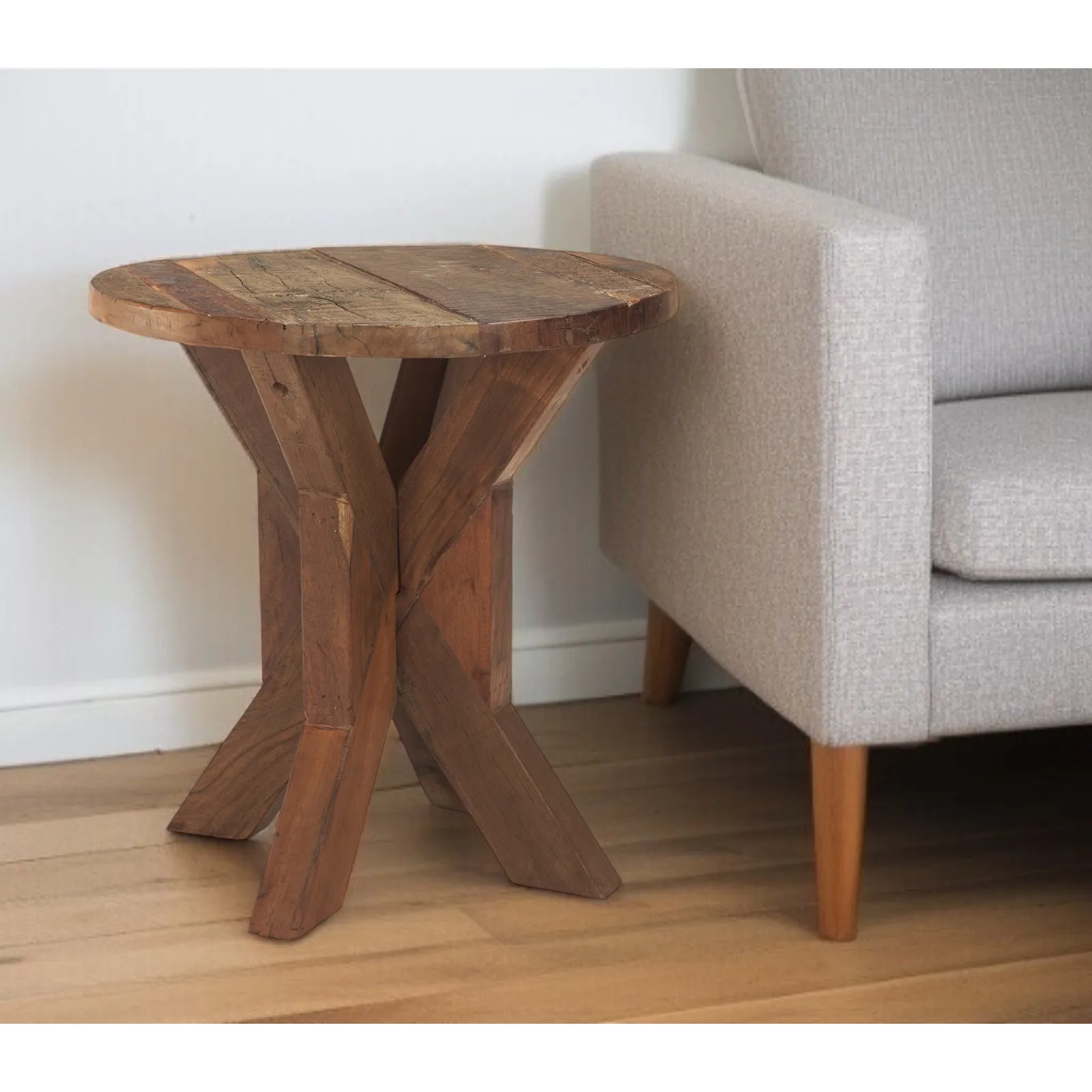
Goldoma 26″ Rustic Reclaimed Wood End Table, Brown Distressed Finish
For a reliable choice, consider the Goldoma 26″ Rustic Reclaimed Wood End Table, Brown Distressed Finish, which combines authentic character with solid construction.
Frequently asked questions
What is the best wood for a rustic end table?
Reclaimed wood offers unique character and durability. Pine is budget-friendly, while oak and acacia are harder and more resistant to wear. Choose based on your style and traffic level.
How tall should a rustic end table be?
Typically 20–24 inches tall, matching the arm height of your sofa or chair. Measure your seating to ensure a comfortable reach.
Can a rustic end table work in a modern room?
Yes, especially if you choose a streamlined design with clean lines. Pairing rustic wood with metal or glass accents creates a balanced, eclectic look.
How do I clean a distressed wood end table?
Dust with a soft cloth and clean spills promptly with a damp cloth. Avoid abrasive cleaners. Apply wood oil or wax periodically to maintain the finish.