
Blog
The Ultimate Guide to Choosing a Rustic Entryway Table
Buying Guide
How to Pick the Perfect Rustic Entryway Table
A rustic entryway table sets the tone for your home, blending charm with function. Whether you need a drop zone for keys or a display spot for decor, the right table makes all the difference.
Why a Rustic Entryway Table Works in Any Home
Rustic furniture brings warmth and character, often made from natural materials like reclaimed wood or distressed finishes. A rustic entryway table isn’t just a piece of furniture—it’s a statement that welcomes guests with a sense of history and craftsmanship. Unlike modern minimalism, rustic styles embrace imperfections, making each table unique. They pair well with farmhouse, cottage, or even industrial decor, bridging the gap between cozy and practical.
Materials That Define Rustic Style
The soul of a rustic table lies in its materials. Solid wood, especially oak, pine, or reclaimed barn wood, is a top choice. These woods often feature knots, grain variations, and weathered textures that add authenticity. Metal accents, such as iron legs or handles, complement the wood without overpowering it. Avoid laminates or particleboard if you want true longevity; natural materials age beautifully and can be refinished if needed. For a more eco-friendly option, seek out FSC-certified or salvaged wood. Learn more about rustic furniture on Wikipedia.
Size and Proportion: Finding the Right Fit
Before buying, measure your entryway. A typical console table is 30-36 inches high, but length varies. For narrow hallways, a table 12-18 inches deep works well. In wider spaces, you can go up to 24 inches deep. The length should leave room for traffic flow—at least 3 feet of clearance on each side. A 60-inch table, like many rustic entryway table options, suits larger foyers or open-concept layouts. Remember, the table shouldn’t block doors or pathways. Sketch your space or use painter’s tape to visualize the footprint.
Storage Needs: Drawers, Shelves, and More
Think about what you’ll store. Keys, mail, and sunglasses need a small drawer or tray. Shoes, bags, or pet supplies benefit from a lower shelf or cabinet. Some rustic entryway tables combine both: a drawer for clutter and an open shelf for baskets or books. If you have limited floor space, look for tables with built-in hooks or a slim profile. Avoid overstuffing—rustic style thrives on a curated look, not chaos. A table with two drawers and a shelf offers versatile storage without feeling bulky.
Drawer Considerations
Drawers should glide smoothly; soft-close mechanisms are a plus. Check interior depth—shallow drawers (2-3 inches) are fine for mail, while deeper ones (4-6 inches) hold small electronics or gloves. Dovetail joints signal quality construction.
Style Variations Within Rustic
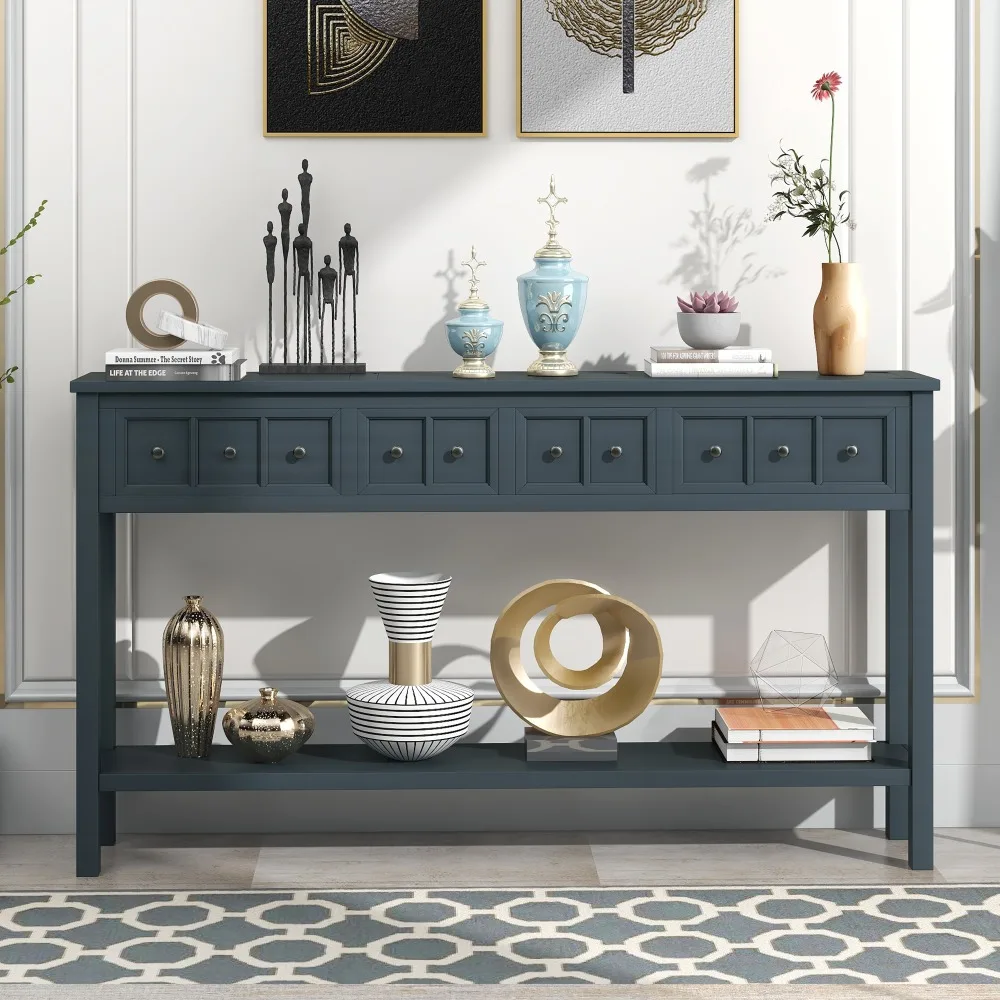
Rustic isn’t one-size-fits-all. Farmhouse rustic uses chunky wood, often painted or whitewashed, with turned legs. Industrial rustic blends metal and wood, with darker finishes and exposed hardware. Cabin rustic leans into raw wood and handcrafted details. When choosing a rustic entryway table, consider your existing decor. A distressed navy finish, for example, adds a pop of color while keeping the rustic vibe. Neutral tones like brown, gray, or black are versatile; painted options can anchor a room.
Placement and Styling Tips
Center the table against a wall, or float it in a wider hallway. Use it as a landing spot for a lamp, a bowl for keys, and a small plant or stack of books. A mirror above the table makes the space feel larger and reflects light. Keep the surface balanced—group items in odd numbers for visual appeal. Don’t overcrowd; the table itself is a feature. For seasonal decor, swap out accents like pumpkins in fall or a vase of flowers in spring. A rustic entryway table can also double as a desk in a pinch if you add a stool.
Durability and Maintenance
Rustic tables are built to last, but they need care. Dust regularly with a soft cloth; avoid harsh chemicals that strip finish. For wood, use a gentle cleaner or a mix of vinegar and water. Reapply wax or oil every year to maintain luster. If the table gets scratched, embrace it—rustic style celebrates wear. But for deeper gouges, lightly sand and refinish the area. Metal parts may need occasional tightening. A well-made table can be a family heirloom, especially if it’s solid wood rather than veneer.
Goldoma 60-Inch Rustic Entryway Console Table with Storage Drawers and Shelf, Navy
For a durable and stylish option, the Goldoma 60-Inch Rustic Entryway Console Table with Storage Drawers and Shelf in Navy offers ample storage and a timeless look.
Frequently asked questions
What is the ideal height for a rustic entryway table?
Most entryway tables are 30 to 36 inches tall, which works well for standing and placing items. Measure your wall space and consider the height of nearby furniture for a cohesive look.
Can a rustic entryway table work in a small hallway?
Yes, choose a slim model (12-18 inches deep) and avoid bulky designs. Look for tables with a narrow profile and open shelving to keep the space airy.
How do I clean and maintain a rustic wood table?
Dust regularly with a soft cloth. For spills, wipe immediately. Use a wood-safe cleaner and reapply oil or wax annually to protect the finish and enhance the grain.
What accessories pair well with a rustic entryway table?
Natural elements like woven baskets, ceramic vases, and wooden trays complement rustic style. A table lamp, mirror, and a small plant add warmth without clutter.