
Blog
The Ultimate Sideboard with Storage Buying Guide
Furniture Guide
How to Choose a Sideboard with Storage
A sideboard with storage is one of the most versatile pieces you can add to your home. Whether you need extra space for dinnerware, a place to stow away board games, or a stylish surface for decor, this guide will help you find the perfect fit.
Why a Sideboard with Storage Is a Smart Investment
A sideboard with storage offers more than just a place to set down a serving platter. It provides concealed space for items you want to keep handy but out of sight, from extra linens to remote controls. In smaller homes, a well-chosen sideboard can replace a bulky cabinet or dresser, making your space feel larger and more organized. Plus, its flat top is ideal for displaying art, lamps, or a catch-all tray.
Key Features to Look For in a Sideboard with Storage
When shopping for a sideboard with storage, consider these elements:
- Door vs. drawer configuration: Do you prefer easy access with drawers, or do you want to hide larger items behind doors? Many sideboards offer a mix of both.
- Shelving adjustability: Adjustable shelves allow you to accommodate tall bottles, stacks of plates, or bulky electronics.
- Material quality: Solid wood offers durability and a classic look, while engineered wood can be more affordable and lightweight. Rattan or faux rattan adds texture and a warm, natural feel.
- Size and proportions: Measure your space carefully, including doorways and hallways for delivery. A sideboard that is too large can overwhelm a room, while one that is too small may not provide enough storage.
Choosing the Right Size for Your Space
Before you buy a sideboard with storage, measure the area where you plan to place it. Leave at least 36 inches of clearance in front for comfortable walking and opening doors. The height should be similar to your dining table or sofa arm for a cohesive look. A standard sideboard is about 30-36 inches tall, but you can find shorter or taller options to suit your needs.
Materials and Styles: From Modern to Traditional
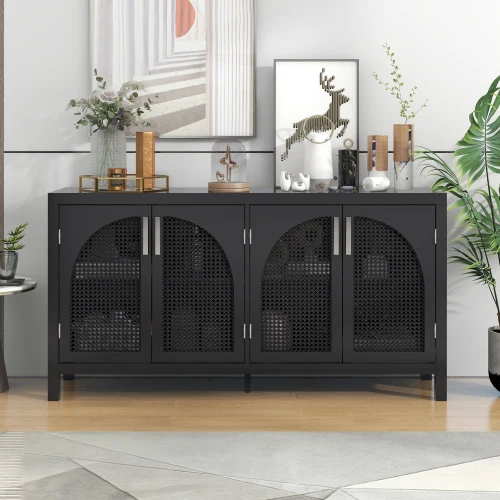
The material of your sideboard with storage sets the tone for the room. For a modern look, consider sleek metal or high-gloss lacquer. For a cozy, organic feel, opt for wood with visible grain or rattan accents. Faux rattan, like that used in the Modern FCJ Home Furniture Sideboard with Large Storage Faux Rattan Doors Metal Handles for Living Rooms and Entryways, offers the texture of natural rattan without the maintenance. This sideboard also features metal handles that add an industrial touch, blending well with contemporary decor.
Popular Styles
- Mid-century modern: Tapered legs, warm wood tones, and simple hardware.
- Scandinavian: Light woods, clean lines, and minimal ornamentation.
- Industrial: Dark metals, reclaimed wood, and exposed hardware.
- Farmhouse: Distressed finishes, barn door slides, and chunky hardware.
Where to Use a Sideboard with Storage Throughout Your Home
A sideboard with storage isn’t limited to the dining room. In the entryway, it can hold keys, mail, and bags while providing a surface for a lamp or decorative bowl. In the living room, it can store media equipment, books, and blankets. Even in a home office, a sideboard can serve as a credenza for files and supplies. The key is to match the style and size to the room’s function.
Tips for Styling Your Sideboard with Storage
Once you’ve chosen your sideboard with storage, styling it can elevate the whole room. Start with a focal point, like a large mirror or piece of art above it. Layer in items of varying heights: a tall vase, a stack of books, and a small plant. Keep the surface balanced but not too cluttered. Use trays or baskets on the top to corral small items. Inside the storage, use organizers to maximize space.
Understanding Sideboard with Storage vs. Buffet vs. Credenza
These terms are often used interchangeably, but there are subtle differences. A sideboard with storage typically has legs and is designed for dining rooms. A buffet is similar but may be larger and used for serving. A credenza is usually lower and longer, often used in living rooms or offices. For most homes, a sideboard with storage offers the best combination of style and function. For more details, you can read about the history of sideboards on Wikipedia.
Modern FCJ Home Furniture Sideboard with Large Storage Faux Rattan Doors Metal Handles for Living Rooms and Entryways
For a blend of modern style and practical storage, consider the Modern FCJ Home Furniture Sideboard with Large Storage Faux Rattan Doors Metal Handles, designed to complement living rooms and entryways.
Frequently asked questions
What is the standard height for a sideboard with storage?
Most sideboards are between 30 and 36 inches tall, which aligns well with dining tables and sofa arms. However, you can find shorter or taller options to fit your specific space.
Can I use a sideboard with storage in a small room?
Yes, a sideboard with storage can be a great space-saving solution. Look for a narrow or compact design with vertical storage options, and place it against a wall to maximize floor space.
How do I clean and maintain a faux rattan sideboard?
Faux rattan is easy to care for—simply dust regularly with a soft cloth or use a vacuum with a brush attachment. For spills, wipe with a damp cloth and mild soap, then dry immediately.
What is the difference between a sideboard and a credenza?
While often used interchangeably, a sideboard typically has legs and is taller, while a credenza is lower and longer with a more cabinet-like appearance. Both offer storage, but sideboards are more common in dining rooms.