Follow us on Instagram @goldomallc
Free shipping on orders over $53 USD
Handcrafted with love
New home décor collection available now
Use code GOLDOMA15 for 15 % off
Follow us on Instagram @goldomallc
Free shipping on orders over $53 USD
Handcrafted with love
New home décor collection available now
Use code GOLDOMA15 for 15 % off


The Ultimate Guide to Choosing a Solid Wood Console Table
Buying Guide
How to Choose Your Solid Wood Console Table
A solid wood console table is more than just furniture—it’s an investment in your home’s warmth and character. Whether you need a narrow entryway table or a statement piece for your living room, this guide will help you make the right choice.
Wood Types Style Tips Size Guide
Why a Solid Wood Console Table Is a Timeless Choice
When you choose a solid wood console table, you’re selecting a piece that will age gracefully and add enduring beauty to your space. Unlike veneers or particleboard, solid wood can be refinished, repaired, and passed down through generations. Each table tells a story through its grain, knots, and natural variations—making it truly one-of-a-kind. Plus, solid wood is sturdy and can handle daily use, from holding keys and mail to displaying cherished decor.
For those who value sustainability, solid wood is a renewable resource when harvested responsibly. Look for certifications like FSC (Forest Stewardship Council) to ensure your table comes from well-managed forests. By investing in a solid wood console table, you’re also reducing waste compared to buying disposable furniture.
Popular Wood Types for Console Tables
The type of wood greatly influences the look, durability, and price of your console table. Here are some common choices:
- Oak: Known for its strength and prominent grain, oak is a classic choice that suits traditional and rustic interiors. It takes stains well and is highly durable.
- Walnut: With rich, dark tones and a straight grain, walnut exudes elegance. It’s slightly softer than oak but still very sturdy, perfect for modern or mid-century designs.
- Cherry: Cherry wood ages beautifully, deepening to a warm reddish-brown over time. Its fine, straight grain makes it ideal for formal or traditional settings.
- Mahogany: A luxurious hardwood with a reddish-brown hue and interlocked grain. Mahogany is durable and resistant to rot, often used in antique-style furniture.
- Maple: Light-colored and subtle grain, maple is very hard and resistant to scratches. It’s great for contemporary or Scandinavian looks.
- Pine: A budget-friendly softwood with a knotty character. Pine is lightweight and easy to distress, perfect for farmhouse or cottage styles.
When selecting a solid wood console table, consider the existing wood tones in your room. You can also mix woods for an eclectic look, but try to keep undertones (warm vs. cool) consistent.
Choosing the Right Style for Your Home
Your solid wood console table should complement your decor while reflecting your personality. Here are popular styles to consider:
- Traditional: Features ornate details, turned legs, and rich finishes. Perfect for formal living rooms or classic entryways.
- Mid-Century Modern: Clean lines, tapered legs, and minimal ornamentation. Often in walnut or teak, this style adds a retro yet timeless vibe.
- Rustic/Farmhouse: Emphasizes natural textures, distressed finishes, and sturdy construction. Reclaimed wood is a popular choice for eco-conscious buyers.
- Industrial: Combines solid wood with metal accents, like hairpin legs or steel frames. Great for lofts or contemporary spaces.
- Scandinavian: Light woods, slim profiles, and functional design. Creates an airy, uncluttered look.
Don’t be afraid to mix styles—a mid-century console table can look stunning in a traditional room as a focal point. The key is to balance proportions and maintain visual harmony.
Size and Placement Tips for Your Console Table
Before buying, measure your space carefully. A solid wood console table that’s too large will overwhelm a small entryway, while one too small may look lost against a big wall. Here’s a quick guide:
- Height: Standard console table height is 30-32 inches, matching most sofa arms and entryway counters. For behind a sofa, ensure it’s lower than the sofa back.
- Width: Ideally, leave at least 6-12 inches of wall space on each side for a balanced look. For narrow hallways, keep width under 48 inches.
- Depth: In entryways, 12-18 inches deep is comfortable. Behind a sofa, 14-20 inches works well for lamps and decor.
- Clearance: Allow at least 36 inches of walking space around the table in high-traffic areas.
If you’re placing the table in a hallway, consider a narrow design (12-14 inches deep) to avoid blocking the path. In a living room, you can go deeper for more display space.
Solid Wood Construction: What to Look For
Not all solid wood furniture is created equal. When shopping for a solid wood console table, inspect these details:
- Joinery: Dovetail, mortise-and-tenon, or dowel joints indicate quality. Avoid tables assembled with staples or glue alone.
- Wood Thickness: Thicker tabletops (1 inch or more) are more durable and less prone to warping.
- Finish: Look for a smooth, even finish that protects the wood. Lacquer, polyurethane, or oil finishes are common. Avoid tables with a tacky or overly shiny surface.
- Back and Bottom: Quality tables have finished backs and bottoms—this prevents moisture absorption and ensures longevity.
- Hardware: If the table has drawers, check that the slides are smooth and the handles are securely attached.
Remember, solid wood can expand and contract with humidity changes. Good construction accounts for this with techniques like breadboard ends or floating panels.
How to Care for Your Solid Wood Console Table
With proper care, your solid wood console table will last for decades. Follow these simple tips:
- Dust regularly with a soft, dry cloth. Avoid feather dusters that can scratch the finish.
- Clean spills immediately with a slightly damp cloth, then dry thoroughly. Never let water sit on the wood.
- Use coasters and placemats to protect the surface from heat, moisture, and scratches.
- Avoid direct sunlight which can fade and dry out the wood. Use curtains or UV-protective film on windows.
- Apply furniture polish or wax every 6-12 months to nourish the wood and maintain its luster. Test on an inconspicuous area first.
- Maintain humidity between 40-60%. In dry climates, use a humidifier; in damp areas, a dehumidifier can prevent warping.
For deeper scratches or dents, you can often sand and refinish the table. Consult a professional for valuable pieces.
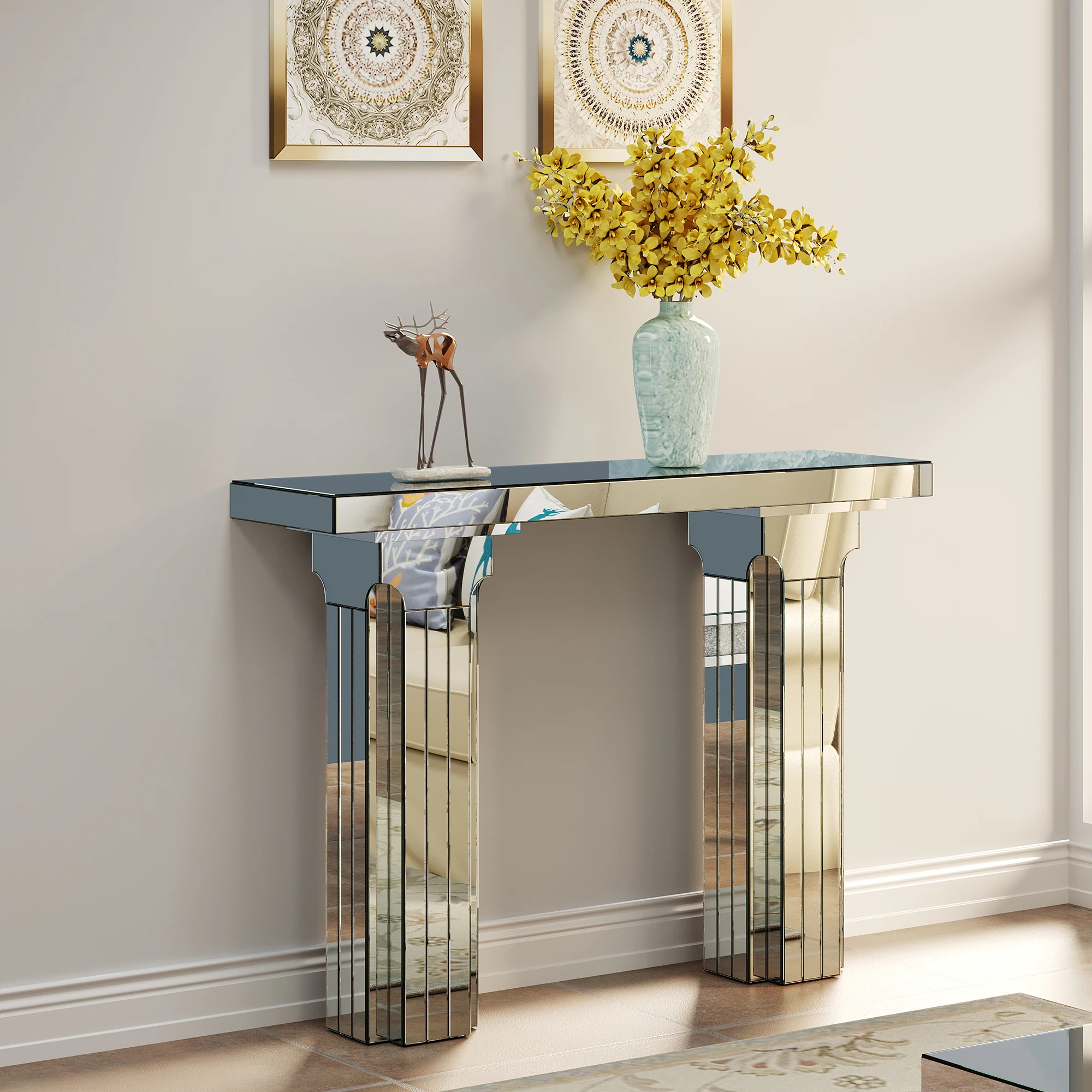
If you’re looking for a stunning option that combines solid wood with modern elegance, consider the Goldoma Mirrored Solid Wood Console Table. Its mirrored accents add a touch of glamour while the solid wood base ensures durability.
Budget and Value Considerations
Solid wood console tables range from a few hundred to several thousand dollars. Price depends on wood type, craftsmanship, brand, and design complexity. Here’s what to expect:
- Entry-level ($200-$600): Usually made of pine or rubberwood, with simpler designs. Still solid wood, but may have less refined joinery.
- Mid-range ($600-$1,500): Oak, maple, or cherry, with better construction and finishes. More design options.
- High-end ($1,500+): Premium hardwoods like walnut, mahogany, or teak, with expert craftsmanship and unique details.
When comparing value, consider the cost per year of use. A well-made solid wood console table can last 50+ years, making it a wise investment. Also, check return policies and warranties—some brands offer limited lifetime warranties on structural integrity.
Ultimately, the best solid wood console table for you is one that fits your space, style, and budget while bringing you joy every day. Take your time, do your research, and choose a piece that feels like home.
Worth a look
Goldoma Mirrored Solid Wood Console Table
For a unique blend of solid wood craftsmanship and modern elegance, the Goldoma Mirrored Solid Wood Console Table offers a stunning focal point.
Frequently asked questions
What is the standard height for a solid wood console table?
Most solid wood console tables are 30-32 inches tall, which works well behind sofas, in entryways, or against walls. However, you can find taller or shorter options for specific needs.
Can I use a solid wood console table in a damp area like a bathroom?
It’s not recommended, as humidity can cause solid wood to warp, crack, or develop mold. If you must, choose a sealed, moisture-resistant finish and ensure good ventilation.
How do I know if a console table is truly solid wood?
Check the product description for ‘solid wood’ and avoid terms like ‘wood veneer’ or ‘engineered wood’. Inspect the edges and underside for a consistent wood grain pattern; veneer often has repeating grain. Also, solid wood feels heavier and warmer to the touch.
What is the difference between solid wood and engineered wood?
Solid wood is cut from a single piece of timber, giving it strength and the ability to be refinished. Engineered wood (like plywood or MDF) is made from wood fibers and adhesives, which is cheaper but less durable and cannot be sanded or refinished.