Follow us on Instagram @goldomallc
Free shipping on orders over $53 USD
Handcrafted with love
New home décor collection available now
Use code GOLDOMA15 for 15 % off
Follow us on Instagram @goldomallc
Free shipping on orders over $53 USD
Handcrafted with love
New home décor collection available now
Use code GOLDOMA15 for 15 % off


How to Choose a Solid Wood Dining Table
Buying Guide
Your Guide to the Perfect Solid Wood Dining Table
A solid wood dining table is more than just furniture—it’s the heart of your home where meals and memories are shared. We’ll help you choose one that lasts a lifetime.
Wood Types Size & Shape Style & Finish
Why Choose a Solid Wood Dining Table?
Solid wood dining tables are prized for their durability, timeless beauty, and ability to age gracefully. Unlike veneers or particleboard, solid wood can be refinished and repaired, making it a sustainable choice that can last for generations. The natural grain patterns and warm tones add character to any dining space.
Common Wood Species for Dining Tables
Different woods offer distinct looks and performance. Oak is hard and heavy with prominent grain, ideal for busy families. Walnut is darker, rich, and slightly softer, while maple is light and uniform. Teak is naturally water-resistant. For more on wood properties, see hardwood characteristics on Wikipedia.
- Oak: Durable, prominent grain, affordable.
- Walnut: Rich dark brown, elegant, moderately hard.
- Maple: Light color, subtle grain, very hard.
- Teak: Weather-resistant, golden brown, oily.
Table Size and Seating Capacity
Measure your dining area, allowing at least 36 inches of clearance on each side. A standard rectangular table for four is around 48-60 inches long, while a square table fits four comfortably. Round tables encourage conversation but may not fit in narrow rooms. Always consider how many people you typically host.
Shape and Style Considerations
Rectangular tables are classic and space-efficient, square tables create intimacy, and round tables soften a room’s geometry. Extendable tables offer flexibility. Your choice should complement your decor—rustic farmhouse, mid-century modern, or industrial. A solid wood dining table with a metal base can bridge traditional and contemporary styles.
Solid Wood vs. Engineered Wood
Solid wood is cut from a single piece of timber, ensuring longevity and the ability to be sanded and refinished. Engineered wood (plywood, MDF) is more stable but cannot be repaired as easily. For a long-term investment, prioritize solid wood. Check that table legs and aprons are solid wood, not just the top.
Finish and Maintenance
Most solid wood tables come with a clear lacquer, oil, or wax finish. Lacquer is durable and resistant to spills; oil enhances the natural look but requires reapplication. Use coasters, avoid direct sunlight, and clean with a damp cloth. A well-maintained solid wood dining table can become a family heirloom.
Worth a look
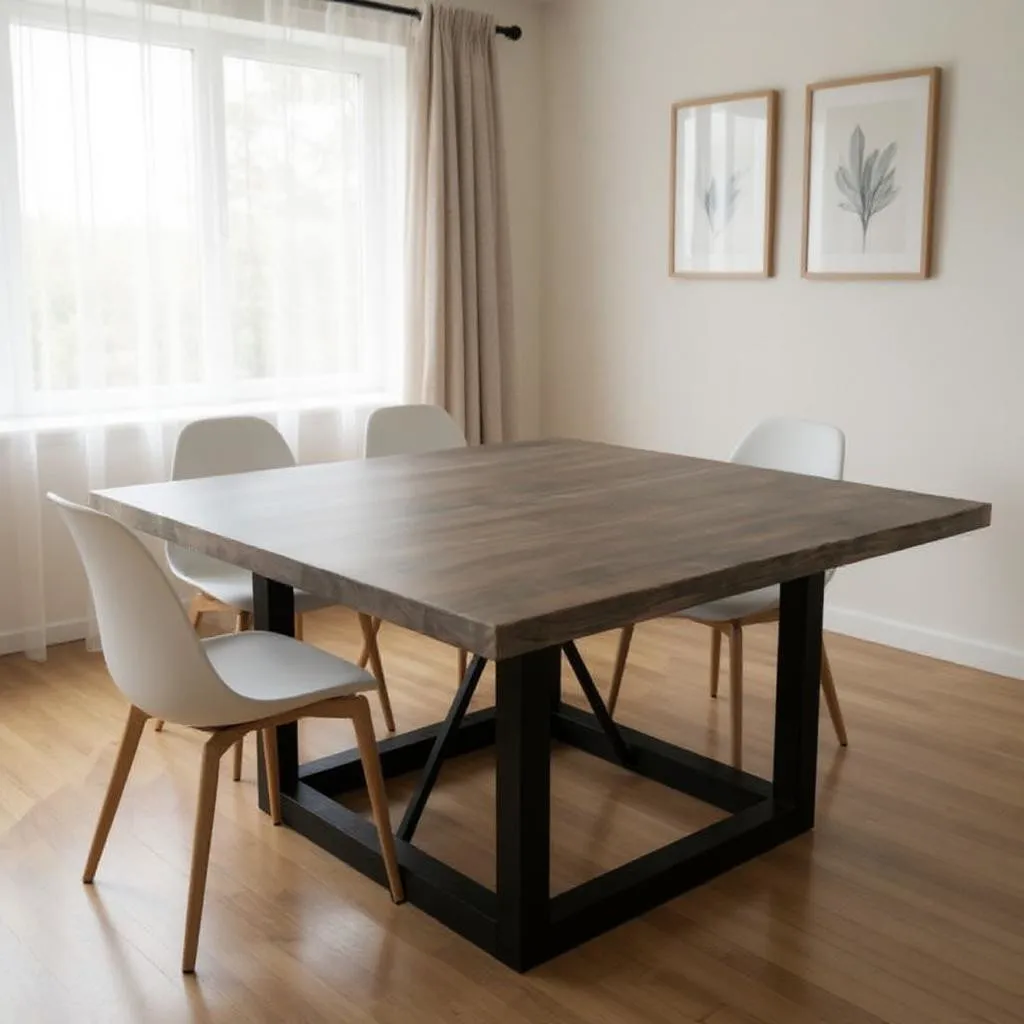
Goldoma 60″ Solid Wood and Iron Square Dining Table | Dark Brown & Black
If you’re looking for a compact and stylish option, consider the Goldoma 60″ Solid Wood and Iron Square Dining Table in Dark Brown & Black, which combines sturdy solid wood with an industrial iron frame.
Frequently asked questions
What is the best wood for a dining table?
The best wood depends on your lifestyle. Oak is durable and affordable, walnut offers a rich look, and maple is hard with a subtle grain. Consider hardness, grain, and color to match your decor and usage.
How do I choose the right size dining table?
Measure your room and allow at least 36 inches of clearance for chairs. For four people, a 48-60 inch rectangular table works; a 48-inch square table seats four comfortably. Always account for extra guests.
How do I care for a solid wood dining table?
Use coasters and placemats, clean spills immediately, and dust regularly. Avoid heat and direct sunlight. Periodically apply furniture polish or oil to maintain the finish.
Can solid wood tables be refinished?
Yes, solid wood tables can be sanded and refinished multiple times, making them a sustainable choice. This is a major advantage over veneered or engineered wood.