Follow us on Instagram @goldomallc
Free shipping on orders over $53 USD
Handcrafted with love
New home décor collection available now
Use code GOLDOMA15 for 15 % off
Follow us on Instagram @goldomallc
Free shipping on orders over $53 USD
Handcrafted with love
New home décor collection available now
Use code GOLDOMA15 for 15 % off


The Complete Guide to Choosing a Solid Wood Sideboard
Buying Guide
How to Choose the Perfect Solid Wood Sideboard
A solid wood sideboard is more than just storage—it’s a statement piece that anchors your dining room or living area. This guide will help you navigate the key considerations so you can find one that fits your space and style.
Style & Function Wood Types Size & Placement
Why Choose a Solid Wood Sideboard?
Unlike veneers or particleboard, a solid wood sideboard offers durability, natural beauty, and the ability to be refinished over time. Each piece has unique grain patterns that add warmth to any room. Solid wood also ages gracefully, developing a rich patina that enhances its character.
Understanding Different Wood Species
The type of wood significantly affects the look and longevity of your sideboard. Here are common options:
- Oak: Known for its prominent grain and strength. It takes stains well and works in traditional or modern settings.
- Walnut: Rich, dark tones with a straight grain. Ideal for a sophisticated, mid-century modern aesthetic.
- Mahogany: Deep reddish-brown, fine grain. A classic choice for formal dining rooms.
- Cherry: Light reddish hue that darkens with age. Offers a smooth, elegant appearance.
- Pine: Softwood with visible knots. More affordable and suits rustic or farmhouse styles.
For a deeper dive into wood characteristics, check out this overview on Wikipedia.
Choosing the Right Size and Configuration
Before purchasing a solid wood sideboard, measure your available wall space. Standard depths range from 15 to 20 inches, and heights from 30 to 36 inches. Consider the number of doors and drawers you need—some sideboards offer open shelving for display, while others prioritize concealed storage. Think about what you’ll store: dinnerware, linens, or media equipment.
Style Considerations for Your Space
A sideboard should complement your existing decor. For a minimalist look, choose clean lines and minimal hardware. For a rustic vibe, look for distressed finishes and chunky hardware. Mid-century designs often feature tapered legs and geometric pulls. Remember that a solid wood sideboard can serve as a focal point, so pick a style that harmonizes with your room’s overall theme.
Construction Quality Indicators
Not all solid wood furniture is built equally. Examine dovetail joints in drawers, which indicate quality craftsmanship. Look for full-extension drawer slides and soft-close hinges. The back panel should be solid wood or plywood, not hardboard. Check that the finish is even and smooth. A well-constructed solid wood sideboard can last for generations.
Care and Maintenance Tips
To keep your sideboard looking its best, dust regularly with a soft cloth. Use coasters for drinks and placemats for hot dishes. Avoid direct sunlight to prevent fading or uneven aging. Apply furniture polish or wax occasionally to nourish the wood. With proper care, your solid wood sideboard will remain beautiful for years.
Where to Place Your Sideboard
Common placements include the dining room (for serving and storing dishes), living room (as a media console or display piece), or entryway (for keys and mail). Ensure there’s enough clearance for doors and drawers to open fully. In a dining room, position it against a wall that’s easily accessible during meals. In a living room, consider sightlines from seating areas.
Worth a look
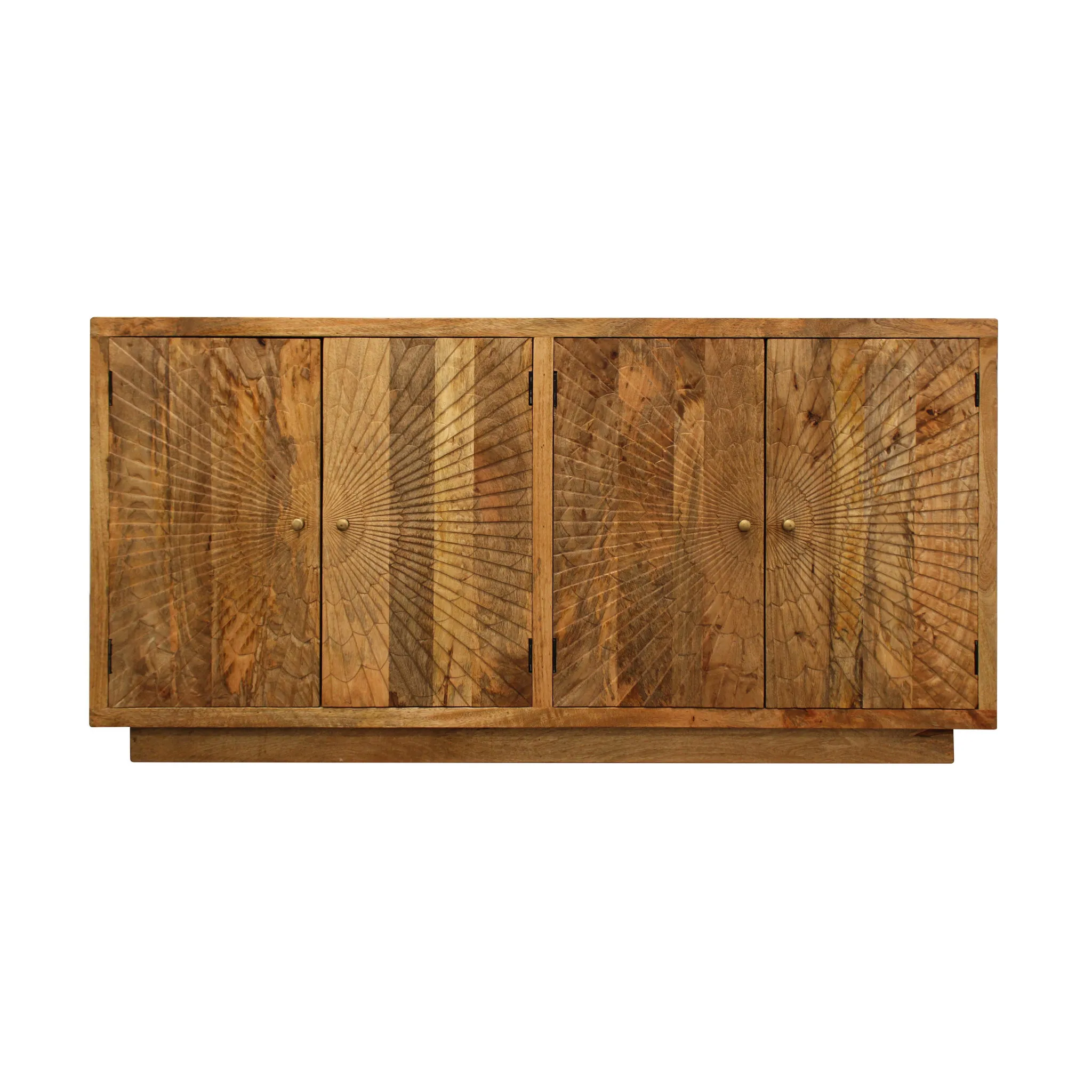
Goldoma 72″ Solid Wood Sideboard with Four Doors and Shelves – Brown
For a beautifully crafted option, consider the Goldoma 72″ Solid Wood Sideboard with Four Doors and Shelves – Brown, which combines ample storage with timeless design.
Frequently asked questions
What is the difference between solid wood and veneer sideboards?
Solid wood sideboards are made entirely from natural wood, offering durability and the ability to be refinished. Veneer sideboards have a thin layer of real wood over a cheaper core, which can be less durable and cannot be sanded or refinished as deeply.
How do I choose the right wood species for my sideboard?
Consider the existing wood tones in your room and the look you want. Oak is sturdy and versatile, walnut offers rich dark tones, and cherry ages beautifully. Pine is budget-friendly but softer. Match the wood’s hardness to the intended use.
What size sideboard should I buy?
Measure your wall space and allow for clearance. A typical sideboard is 48-72 inches wide, 15-20 inches deep, and 30-36 inches tall. For dining rooms, choose a length that leaves room for chairs and traffic flow.
How do I care for a solid wood sideboard?
Dust regularly with a soft cloth, avoid direct sunlight, and use coasters. Apply furniture polish or wax every few months. Clean spills immediately with a damp cloth and dry thoroughly.