Follow us on Instagram @goldomallc
Free shipping on orders over $53 USD
Handcrafted with love
New home décor collection available now
Use code GOLDOMA15 for 15 % off
Follow us on Instagram @goldomallc
Free shipping on orders over $53 USD
Handcrafted with love
New home décor collection available now
Use code GOLDOMA15 for 15 % off


The Ultimate Guide to Choosing a Stainless Steel Soup Pot
Kitchen Essentials
Find Your Perfect Stainless Steel Soup Pot
A stainless steel soup pot is one of the most versatile tools in any kitchen. Whether you’re simmering a hearty stew or boiling pasta, the right pot makes all the difference.
Durable Versatile Easy Clean
Why a Stainless Steel Soup Pot?
A stainless steel soup pot is a kitchen workhorse. Unlike nonstick or aluminum, stainless steel doesn’t react with acidic ingredients like tomatoes or vinegar, ensuring your soup tastes pure. It heats evenly and resists rust, dents, and scratches. For everyday cooking, it’s a reliable choice that lasts for years.
Key Features to Look For
Material Matters
Not all stainless steel is created equal. Look for pots made from 18/10 stainless steel, which contains 18% chromium and 10% nickel for superior corrosion resistance and shine. Some pots have an aluminum or copper core sandwiched between layers for better heat distribution. A thick bottom prevents hot spots that can burn your soup.
Construction Quality
Check the thickness of the pot. A heavier gauge (lower number, e.g., 1.0mm) means more durability and even heating. Riveted handles are more secure than welded ones. A tight-fitting lid traps steam and flavor.
Size and Capacity Guide
For most households, a 6-8 quart stainless steel soup pot is ideal for batch cooking. If you often cook for a crowd or make stock, consider a 12-quart pot. For small batches or sauces, a 4-quart pot works well. Think about your stove size and storage space too.
Compatibility with Cooktops
Stainless steel soup pots work on all cooktops, including induction, gas, and electric. For induction, the pot must be magnetic—test with a magnet. A flat bottom ensures stability on electric coils. Some pots are specifically designed for multiple heat sources, like those labeled “electromagnetic furnace gas special.”
Care and Maintenance Tips
To keep your pot looking new, hand wash with warm soapy water and a soft sponge. Avoid abrasive cleaners that can scratch the surface. For stubborn stains, use a stainless steel cleaner or a paste of baking soda and water. Dry immediately to prevent water spots. While many pots are dishwasher safe, hand washing prolongs the finish.
Comparing Stainless Steel to Other Materials
Stainless steel offers a balance of performance and durability. Enameled cast iron retains heat well but is heavy and can chip. Nonstick pots are easy to clean but scratch easily and have a limited lifespan. Aluminum is lightweight but can react with acidic foods. For most cooks, a good stainless steel soup pot is the best all-around choice.
Budget and Value Considerations
You don’t need to spend a fortune. Mid-range pots offer excellent quality. Look for features like a thick base, tight lid, and comfortable handles. A well-made pot can last decades, making it a smart investment. For more background on stainless steel in cookware, see Wikipedia’s article on stainless steel.
Worth a look
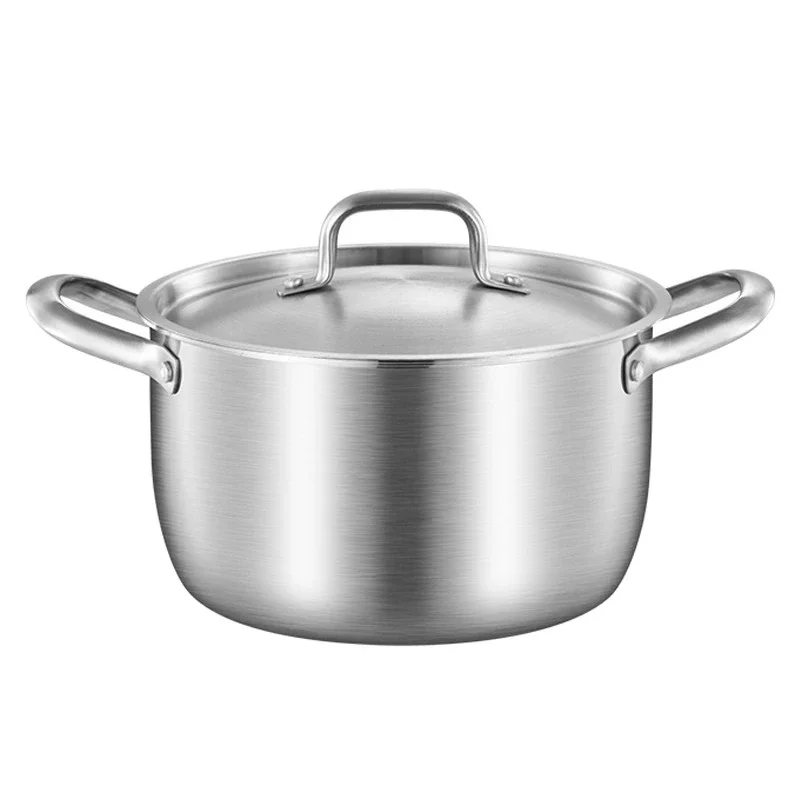
stainless steel soup pot Extra thick food grade soup pot Thickened double ear pot Electromagnetic furnace gas special pots
For a reliable option, consider our stainless steel soup pot Extra thick food grade soup pot Thickened double ear pot Electromagnetic furnace gas special pots, built for even heating and long-lasting performance.
Frequently asked questions
Is a stainless steel soup pot safe for acidic foods?
Yes, stainless steel is non-reactive, so it won’t leach metallic flavors into acidic soups or tomato-based dishes.
Can I use a stainless steel soup pot on an induction cooktop?
Only if the pot is magnetic. Check the product description or test with a magnet. Many stainless steel pots have a magnetic base for induction compatibility.
How do I remove burnt food from a stainless steel pot?
Fill the pot with water and a splash of vinegar, bring to a boil, then scrape with a wooden spoon. For stubborn residue, use a stainless steel cleaner or baking soda paste.
What size soup pot should I buy for a family of four?
An 8-quart pot is usually sufficient for soups, stews, and pasta. It offers room for leftovers without being too large to handle.