
Blog
The Essential Stainless Steel Tray Set Buying Guide
Buying Guide
How to Choose the Perfect Stainless Steel Tray Set
A stainless steel tray set is one of those kitchen essentials that quietly elevates your daily routine. Whether you’re prepping ingredients, serving dinner, or organizing your pantry, the right set makes all the difference.
Why Invest in a Stainless Steel Tray Set?
Stainless steel trays are incredibly durable, resistant to rust and stains, and can handle both hot and cold items. Unlike plastic or glass, they won’t warp, crack, or shatter, making them a safe long-term investment. A good stainless steel tray set will serve you for years, whether you use it for baking, serving, or organizing.
Key Factors to Consider When Choosing a Tray Set
Before buying, think about what you’ll use the trays for. Are you a home cook who needs a roasting pan? A caterer looking for sleek serving platters? Or perhaps you want stackable trays for pantry storage. Here are the main factors:
- Size and Shape: Rectangular trays are great for oven use and serving large dishes. Square plates work well for individual portions. Round trays are ideal for appetizers or desserts.
- Edge Design: Rolled edges add strength and prevent warping. Flat edges are easier to stack.
- Finish: Mirror polish looks elegant but shows fingerprints. Brushed or matte finishes hide smudges better.
- Weight: Heavier gauge steel (18/10 or thicker) resists dents and conducts heat evenly. Lighter trays are fine for serving but may warp under high heat.
- Set Composition: Some sets include multiple sizes, while others focus on one type. Think about which sizes you’ll actually use.
What Gauge and Grade of Stainless Steel Matter?
Stainless steel is graded by its composition. The most common for trays are 18/8 (18% chromium, 8% nickel) and 18/10, which offer excellent corrosion resistance. Gauge refers to thickness: lower gauge numbers mean thicker metal. For everyday use, 20-22 gauge is a good balance of durability and weight. Thicker trays (18 gauge) are better for heavy-duty commercial use. Check product specs to ensure you’re getting quality steel that won’t rust or leach into food.
Versatility: From Oven to Table to Pantry
A versatile stainless steel tray set can transition seamlessly from cooking to serving. Look for trays that are oven-safe (check maximum temperature), easy to grip with hot pads, and have a non-porous surface that won’t absorb odors. Many trays double as baking sheets, roasting pans, or serving platters. For commercial kitchens, stackable trays save space. For home use, consider sets with different sizes to handle everything from cookies to a full roast.
Using Trays for Organization
Beyond cooking, stainless steel trays are fantastic for organizing drawers, shelves, and cabinets. Use small ones for utensils, medium ones for spices, and large ones for pots and pans. Their sleek look instantly tidies up any space.
How to Care for Your Stainless Steel Trays
To keep your trays looking new, follow these simple care tips:
- Wash by hand or in the dishwasher (if the manufacturer says it’s safe). Dry immediately to prevent water spots.
- Avoid abrasive cleaners or steel wool that can scratch the surface. Use a soft sponge and mild detergent.
- For stubborn stains or discoloration, use a paste of baking soda and water, or a specialized stainless steel cleaner.
- Never leave acidic foods (like tomato sauce) in contact for long periods; rinse promptly.
- Store trays flat or stacked with a soft cloth between them to prevent scratches.
With proper care, a quality stainless steel tray set can last a lifetime. For more on stainless steel properties, check out this Wikipedia article.
Common Mistakes to Avoid When Buying a Tray Set
Many shoppers focus only on price or looks. Avoid these pitfalls:
- Ignoring the gauge: Thin trays warp easily in the oven. Always check the thickness.
- Overlooking the rim: Sharp edges can cut your hands. Look for smoothly rolled or finished edges.
- Buying too many pieces: A set with 10 pieces might seem like a deal, but if you only use three, it’s wasted space. Opt for a smaller, curated set.
- Not checking oven compatibility: Some trays have plastic handles or coatings that can’t handle high heat.
By keeping these in mind, you’ll find a set that truly meets your needs.
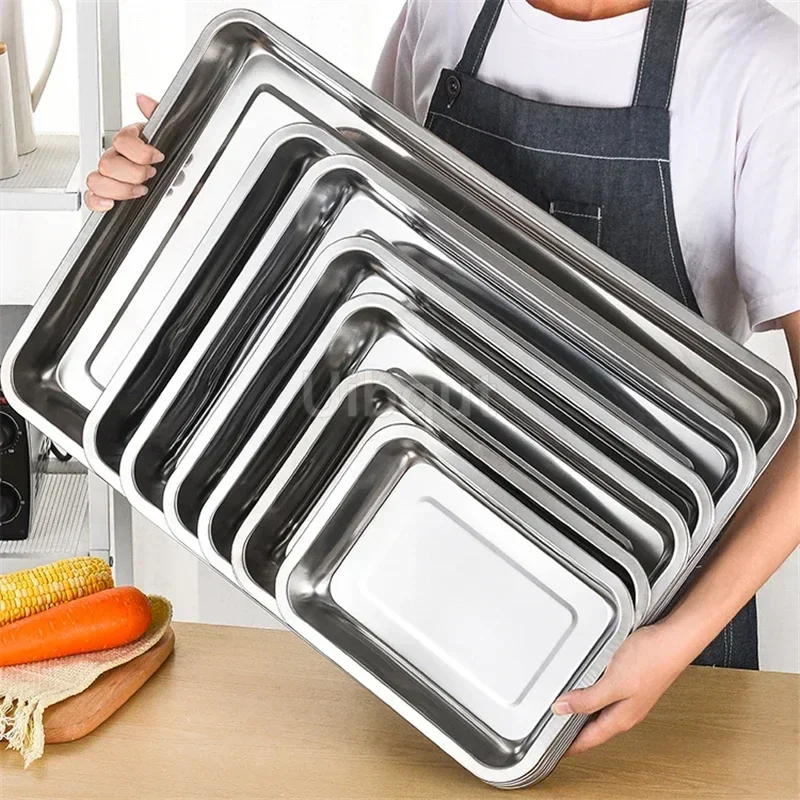
Rectangular commercial and household square plate Steamed fish dish Serving plate Barbecue plate plates set Stainless steel tray
For a practical and durable option, consider the Rectangular commercial and household square plate Steamed fish dish Serving plate Barbecue plate plates set Stainless steel tray — it’s a versatile choice that covers multiple kitchen needs.
Frequently asked questions
Can stainless steel tray sets go in the oven?
Most stainless steel trays are oven-safe, but always check the manufacturer’s specifications. Look for trays labeled as oven-safe and note the maximum temperature (usually around 500°F). Avoid trays with non-stick coatings or plastic handles.
How do I remove rainbow discoloration from stainless steel trays?
Rainbow discoloration is caused by heat exposure and is harmless. To remove it, wipe the tray with a cloth dampened with white vinegar or a specialized stainless steel cleaner. For stubborn marks, use a paste of baking soda and water.
Are stainless steel trays dishwasher safe?
Many stainless steel trays are dishwasher safe, but hand washing is recommended to maintain the finish. If using a dishwasher, dry immediately after the cycle to prevent water spots. Check the product care instructions for guidance.
What’s the difference between 18/8 and 18/10 stainless steel?
Both are high-quality grades. 18/8 contains 18% chromium and 8% nickel, while 18/10 has 18% chromium and 10% nickel. The extra nickel in 18/10 provides slightly better corrosion resistance and a brighter finish, but both are excellent for kitchen use.
