
Blog
The Complete Guide to Choosing the Perfect Sushi Plate
Buying Guide
Find Your Ideal Sushi Plate Today
A sushi plate is more than just a serving dish—it sets the stage for your culinary presentation. Whether you’re a home chef or a sushi enthusiast, choosing the right plate can elevate your meal.
Why the Right Sushi Plate Matters
A well-chosen sushi plate enhances both the visual appeal and the dining experience. The plate’s color, shape, and material can complement the vibrant colors of sushi, making each piece look more appetizing. Moreover, the right plate can help maintain the temperature and freshness of the sushi. When selecting a sushi plate, consider how it fits with your overall table setting and personal style.
Materials: Ceramic vs. Porcelain vs. Wood
The material of your sushi plate affects durability, weight, and aesthetics. Ceramic plates are a popular choice because they retain heat well and come in many glazes. Porcelain is similar but more delicate and often thinner. Wood plates, like those made from bamboo or cedar, add a rustic feel but require more care to avoid stains and cracks. For everyday use, ceramic offers a good balance of beauty and practicality. For more information on ceramic tableware, check out this Wikipedia article on ceramics.
Shape and Size: Finding the Perfect Fit
Sushi plates come in various shapes—round, square, rectangular, and even boat-shaped. A rectangular platter is ideal for serving multiple rolls, while a small round plate works well for individual servings. Consider the size of your sushi pieces and how you plan to present them. A larger plate allows for artistic arrangement, while a smaller one keeps portions controlled. For a traditional touch, opt for a rectangular shape that mimics the classic wooden geta.
Color and Glaze: Enhancing Presentation
The color of your sushi plate can dramatically affect the presentation. Darker plates, like black or deep blue, make the bright colors of sushi pop. Lighter plates, such as white or cream, offer a clean, minimalist look. Glazed finishes are easier to clean and resist stains, while matte finishes provide a more natural texture. Consider the overall theme of your dinnerware when choosing a color.
Caring for Your Sushi Plate
To keep your sushi plate looking its best, hand washing is recommended for most ceramic and porcelain plates. Avoid abrasive sponges that can scratch the glaze. For wooden plates, oil them occasionally to prevent drying. Always dry plates thoroughly to avoid water spots. With proper care, a quality sushi plate can last for years.
Styles and Trends in Sushi Plates
Modern sushi plates often feature minimalist designs with clean lines. Traditional Japanese styles include hand-painted motifs like cherry blossoms or waves. Some plates have compartments for soy sauce or ginger. Look for versatile designs that can transition from casual dinners to formal occasions. A simple, elegant plate is always in style.
Pairing Sushi Plates with Other Tableware
Your sushi plate should coordinate with your chopsticks, soy sauce dishes, and serving bowls. A cohesive table setting enhances the dining experience. If you have a collection, consider mixing and matching for a unique look. For a harmonious set, choose plates from the same collection or with complementary colors.
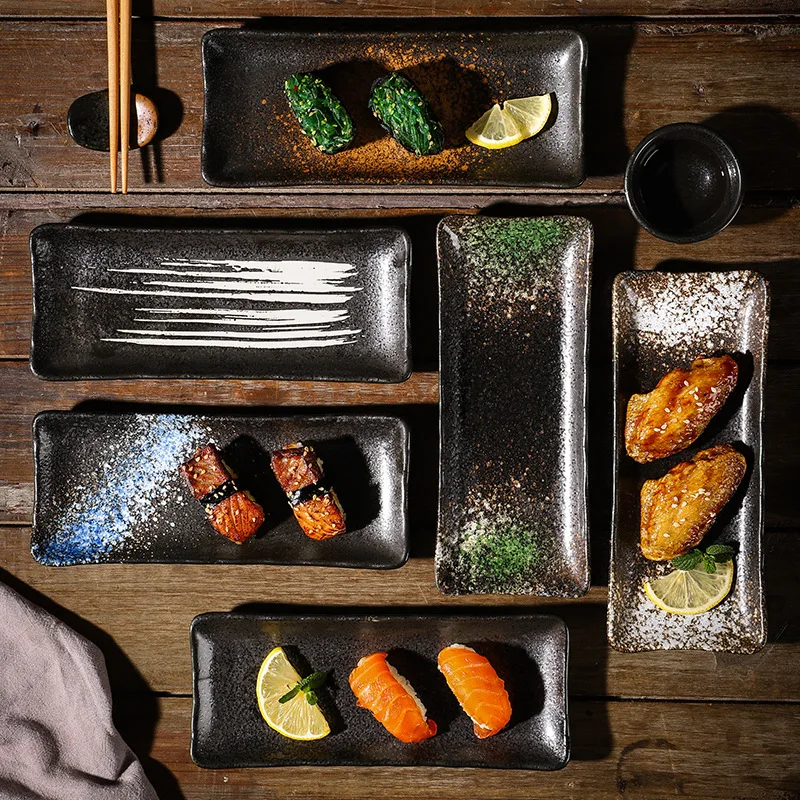
Japanese Cuisine Strip Sushi Plate, Restaurant Ceramic, Long Platter Dessert Plate, Household Tableware
For a durable and elegant option, consider the Japanese Cuisine Strip Sushi Plate from Goldoma—a long ceramic platter that works beautifully for sushi, desserts, or appetizers.
Frequently asked questions
What is the best material for a sushi plate?
Ceramic is the most popular material for sushi plates due to its durability, heat retention, and variety of finishes. Porcelain offers a more delicate option, while wood provides a rustic feel. Choose based on your aesthetic and maintenance preferences.
How do I choose the right size sushi plate?
Consider the number of sushi pieces you typically serve. For individual servings, a 6-8 inch plate works well. For sharing, opt for a larger rectangular platter around 12 inches long. Ensure the plate fits comfortably on your table.
Can sushi plates be used for other foods?
Absolutely. Sushi plates are versatile and can be used for appetizers, desserts, or small snacks. Their elegant design makes them suitable for a variety of dishes beyond sushi.
How should I clean and maintain my sushi plate?
Hand wash ceramic and porcelain plates with mild soap and a soft sponge. Avoid harsh chemicals. For wooden plates, wipe clean and occasionally treat with food-safe mineral oil. Always dry thoroughly to prevent damage.
