
Blog
The Ultimate Guide to Choosing a Sushi Serving Tray
Buying Guide
How to Pick the Best Sushi Serving Tray
A sushi serving tray is more than just a plate—it’s the stage for your culinary creation. Choosing the right one can elevate your dining experience and impress your guests.
Why the Right Sushi Serving Tray Matters
When you serve sushi, the tray is the first thing your guests see. A well-chosen sushi serving tray not only holds the food but also sets the tone for the meal. It should complement the colors and textures of the sushi, making each piece look its best. The right tray can turn a simple dinner into a special occasion, and it’s worth taking the time to find one that fits your style and needs.
Materials: Wood, Stone, or Ceramic?
The material of your sushi serving tray affects both appearance and functionality. Wooden trays, like those made from bamboo or cedar, are traditional and lightweight. They add warmth and are gentle on knives, but require careful cleaning to avoid stains and warping. Stone trays, such as slate or marble, offer a sleek, modern look and excellent heat retention—ideal for chilled sushi. Ceramic trays come in countless glazes and shapes, providing versatility. Each material has its pros and cons: wood is classic, stone is dramatic, and ceramic is colorful.
Wood Trays: Timeless and Natural
Wood is a classic choice for a sushi serving tray. It’s lightweight, durable, and brings a natural aesthetic to the table. However, wood can absorb odors and stains, so it’s best to hand wash and dry immediately. Look for sealed or lacquered wood for easier maintenance.
Stone Trays: Elegant and Cool
Stone trays, especially slate, are popular for presenting sashimi and nigiri. They keep sushi cool and provide a striking contrast. Stone is heavy and can chip if dropped, but with proper care, it lasts for years. Some stone trays are also suitable for dry ice presentations, adding a theatrical touch.
Ceramic Trays: Versatile and Artistic
Ceramic trays offer endless design options, from minimalist white to intricate patterns. They are non-porous when glazed, making them easy to clean. Ceramic can be heavy and breakable, but it’s a favorite for its beauty and durability.
Size and Shape: Finding the Perfect Fit
The size of your sushi serving tray should match the number of guests and the type of sushi. A small tray works for individual portions, while a large tray is ideal for family-style serving. Rectangular trays are classic and stack well, while round or oval trays create a softer look. Consider the depth: shallow trays are best for nigiri and sashimi, while deeper trays can hold rolls without spilling. Think about your table space and how the tray will fit with other dishes.
Style and Design: Match Your Decor
Your sushi serving tray should reflect your personal style and complement your tableware. Minimalist designs in black or white are versatile, while natural wood or stone adds organic texture. For a modern look, consider trays with clean lines and matte finishes. Traditional Japanese trays often feature lacquerware or bamboo. Don’t be afraid to mix materials—a stone tray on a wooden board can create an interesting contrast.
Care and Maintenance: Keep Your Tray Looking New
Proper care extends the life of your sushi serving tray. Wood trays should be hand washed with mild soap and dried immediately; never soak them. Stone trays can be wiped clean with a damp cloth; avoid acidic cleaners that may etch the surface. Ceramic trays are usually dishwasher safe, but check the manufacturer’s instructions. Store trays in a dry place to prevent damage. For more on caring for natural materials, see this guide on tableware care.
Special Features: Dry Ice and Presentation
Some sushi serving trays are designed for dramatic presentations using dry ice. These trays often have a recessed area or a separate compartment to hold dry ice safely. The fog effect adds a wow factor, especially for special occasions. If you’re interested in this style, look for trays made from heat-resistant materials like stone or thick ceramic. Always handle dry ice with care and follow safety guidelines.
Making Your Choice: What to Look For
When shopping for a sushi serving tray, consider how often you’ll use it and what kind of sushi you serve most. For everyday use, a durable ceramic or wood tray might be best. For entertaining, a stone tray with dry ice capability can impress guests. Check the weight—lighter trays are easier to carry, while heavier trays feel more substantial. Also, think about storage: do you have space for a large tray, or do you need something that nests with other dishes?
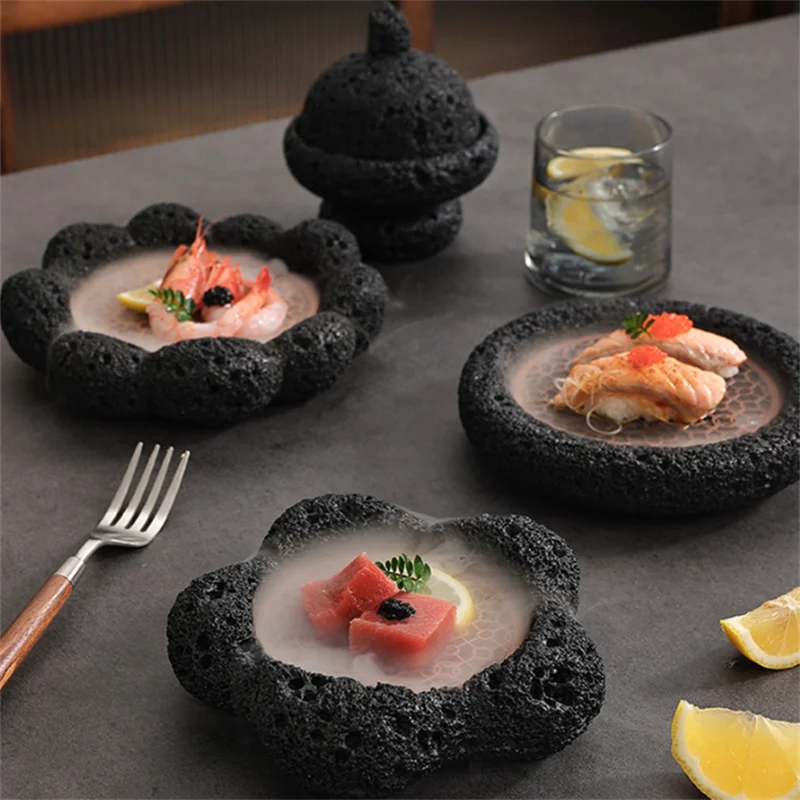
Black Cement Tableware Dinner Plate stone Sashimi sushi Disc Dry Ice Tray Plate Dessert Plates Dim Sum Dish Steak Plates Bowl
For a versatile option that combines stone and ceramic benefits, consider the Black Cement Tableware Dinner Plate, which works beautifully as a sushi serving tray and handles dry ice presentations with ease.
Frequently asked questions
What is the best material for a sushi serving tray?
The best material depends on your needs. Wood is traditional and lightweight, stone offers a cool surface and dramatic look, and ceramic provides versatility in design. Consider heat retention, durability, and ease of cleaning.
Can I use a sushi serving tray for other foods?
Absolutely. A sushi serving tray can double as a serving platter for appetizers, desserts, or even small dishes like dim sum. Its design often complements various cuisines.
How do I clean a wooden sushi serving tray?
Hand wash with mild soap and warm water, then dry immediately. Avoid soaking or putting it in the dishwasher. Periodically treat with food-safe mineral oil to maintain the wood.
Is a stone sushi serving tray safe for dry ice?
Yes, stone trays like slate or marble are heat-resistant and safe for dry ice. However, ensure the tray has a recessed area or separate compartment for dry ice to avoid direct contact with food.
