
Blog
Why Every Bathroom Needs a Teak Bath Mat
Buying Guide
The Ultimate Teak Bath Mat Buying Guide
A teak bath mat is more than just a bathroom accessory—it’s an investment in comfort and style. This guide will help you find the perfect one for your home.
What Makes a Teak Bath Mat Special?
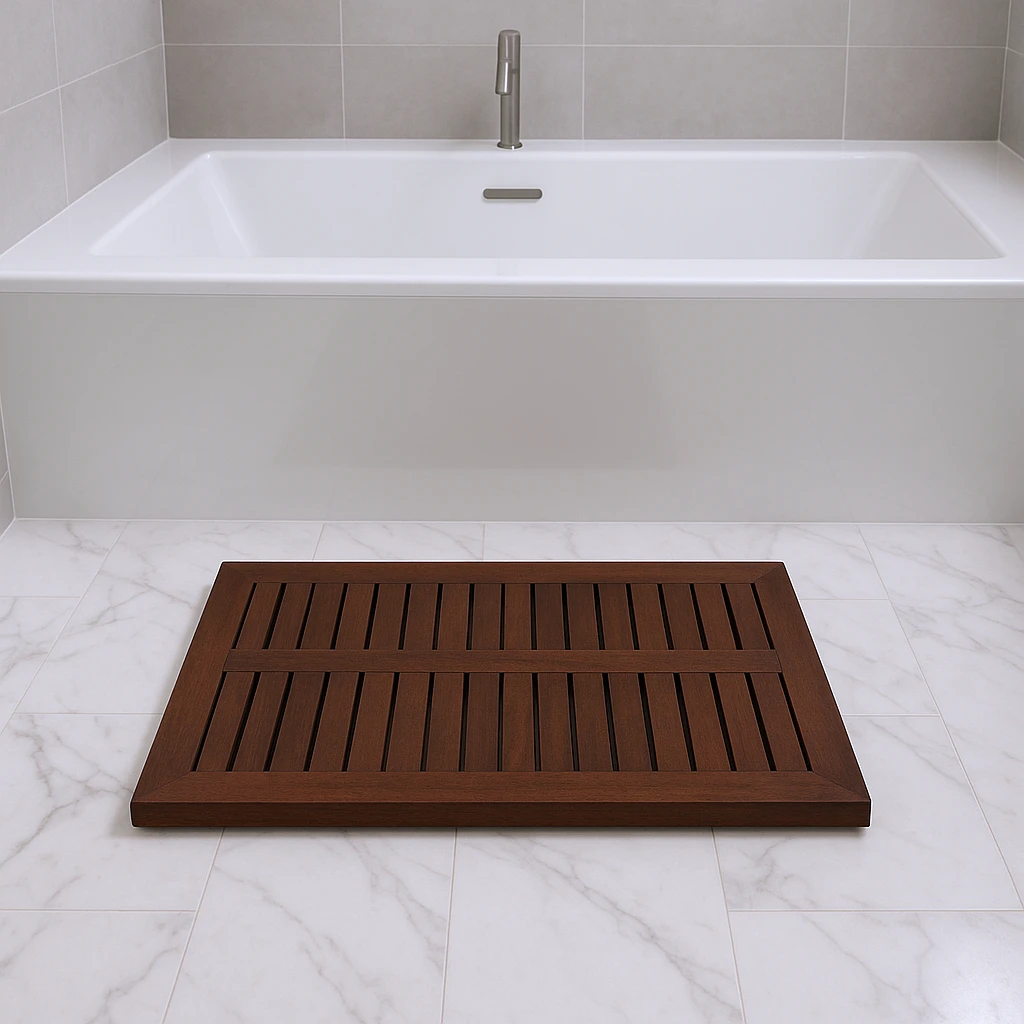
Teak wood is naturally rich in oils, making it highly resistant to water, rot, and mildew. This makes a teak bath mat an excellent choice for humid bathroom environments. Unlike fabric mats that can harbor bacteria and require frequent washing, a teak bath mat stays fresh with minimal upkeep. The slatted design allows water to drain through, keeping the surface dry and reducing slip hazards. Plus, teak’s warm golden-brown hue adds a spa-like touch to any bathroom decor.
Key Features to Look For in a Teak Bath Mat
When shopping for a teak bath mat, consider these factors:
- Wood quality: Look for solid teak (not veneer or composite) for durability. Premium teak from sustainably managed forests is best.
- Slat spacing: Optimal spacing (about 1/8 inch) allows water to drain while preventing small items from falling through.
- Finish: Some mats come pre-oiled with teak oil or sealant for extra protection. Unfinished mats will patina to a silvery gray over time.
- Non-slip backing: Check for rubber or silicone strips underneath to keep the mat securely in place on tile or stone floors.
- Size: Measure your shower or bath area. Common sizes are 16×24 inches for smaller spaces and 20×36 inches for larger areas.
How to Care for Your Teak Bath Mat
Proper care extends the life of your teak bath mat. Rinse it with fresh water after each use to remove soap residue and mineral deposits. Let it dry upright or hung over a shower rod—never leave it flat on a wet surface. Once a month, give it a deeper clean by scrubbing with a mixture of mild soap and water, then rinsing thoroughly. To maintain the wood’s original color, apply teak oil every few months. If you prefer the natural silver patina, simply skip the oiling. Avoid using harsh chemicals, bleach, or abrasive scrubbers that can damage the wood fibers.
Teak Bath Mat vs. Other Materials: Pros and Cons
Compared to cotton or microfiber mats, a teak bath mat dries faster and resists mold and mildew. It also stays cleaner longer because dirt and hair don’t get trapped in fibers. However, teak mats are heavier and more expensive upfront. Bamboo mats are a cheaper alternative but less durable—bamboo is not as water-resistant as teak and may crack over time. Stone or tile mats offer a different aesthetic but can feel cold and hard underfoot. For a balance of comfort, longevity, and natural beauty, teak is the superior choice.
Environmental and Health Benefits of Teak
Teak is a renewable resource when harvested from certified sustainable plantations. Unlike synthetic mats that shed microplastics into waterways, a teak bath mat is biodegradable and non-toxic. Teak’s natural oils also have antimicrobial properties, reducing the growth of bacteria and fungi. This makes it a healthier option for your bathroom, especially for those with allergies or respiratory sensitivities. By choosing a teak mat, you’re investing in a product that is better for both your home and the planet.
How to Choose the Right Teak Bath Mat for Your Bathroom
Start by assessing your bathroom’s layout and style. For a minimalist look, go with a simple slatted design in a natural finish. If your bathroom has a rustic or coastal theme, a darker stain or wider slats might complement it better. Consider the mat’s height—lower profiles are easier to step onto from a shower, while taller ones provide a more substantial feel. Also, think about maintenance: if you’re not keen on oiling, choose a mat that is pre-sealed or one that you’re happy to let gray naturally. Finally, read reviews to gauge real-world durability and customer satisfaction.
For more on the properties of teak wood, visit Wikipedia’s teak page.
Common Mistakes to Avoid When Buying a Teak Bath Mat
Don’t confuse teak with other woods like eucalyptus or acacia—they are less water-resistant. Avoid mats with a glossy polyurethane finish, which can peel over time. Also, steer clear of mats made from multiple small pieces glued together; they may fall apart in humid conditions. Finally, don’t skip the non-slip backing: a mat that slides around is a safety hazard. A well-made teak bath mat should feel solid, heavy, and smooth to the touch.
23″ Dark Brown Teak Slat Bath Mat
For a reliable option, consider our 23″ Dark Brown Teak Slat Bath Mat, crafted from solid teak with a rich finish and non-slip backing.
Frequently asked questions
How often should I oil my teak bath mat?
It depends on your preference. To maintain the original golden color, apply teak oil every 2-3 months. If you like the natural silver patina, you don’t need to oil it at all.
Can I leave my teak bath mat in the shower?
Yes, most teak mats are designed for continuous use in wet areas. Just ensure it has proper drainage and airflow to dry between uses.
Will a teak bath mat stain my floor?
High-quality teak mats with sealed or oiled surfaces are unlikely to stain. However, unfinished teak may release tannins that can discolor light-colored grout or stone over time.
Is teak bath mat slippery when wet?
Teak itself is not slippery, but the surface can become slick if soap scum builds up. Regular cleaning and the slatted design help maintain traction. Many mats also include non-slip backing.