
Blog
The Ultimate Teak Garden Bench Buying Guide
Buying Guide
The Complete Teak Garden Bench Buying Guide
A teak garden bench is more than just a place to sit—it’s an invitation to slow down and enjoy your outdoor space. In this guide, we’ll walk you through everything you need to know to find the perfect one for your garden.
Why Choose a Teak Garden Bench?
Teak has been the gold standard for outdoor furniture for centuries, and for good reason. Its natural oils make it resistant to rot, insects, and weather damage, which means a teak garden bench can last for decades with minimal care. Unlike many other woods, teak doesn’t warp or crack easily, even in extreme climates. This makes it a smart investment for anyone who wants a beautiful, long-lasting piece for their patio, garden, or park.
But not all teak is created equal. The quality can vary significantly depending on where and how it’s harvested. In this guide, we’ll help you understand what to look for so you can make an informed choice.
Understanding Teak Grades and Quality
When shopping for a teak garden bench, you’ll often hear terms like ‘Grade A’, ‘Grade B’, or ‘plantation teak.’ These refer to the quality of the wood, which directly impacts durability and appearance.
- Grade A teak: This is the highest quality, taken from the heartwood of mature teak trees. It has a uniform golden-brown color and high oil content, making it the most resistant to weather and insects.
- Grade B teak: Slightly lower quality, often with more color variation and fewer natural oils. It’s still durable but may require more maintenance.
- Grade C teak: Mostly sapwood, which is less resistant and more prone to decay. Often used in cheaper furniture but not recommended for long-term outdoor use.
For a bench that will truly stand the test of time, look for one made from Grade A teak. You can also check if the wood is certified by the Forest Stewardship Council, which ensures sustainable sourcing.
Key Features to Look For
Beyond the wood itself, there are several design and construction elements that set a great teak garden bench apart from a mediocre one.
Construction Quality
Inspect how the bench is put together. Mortise-and-tenon joints are a sign of superior craftsmanship, as they are stronger and more durable than simple screws or nails. Also, check if the bench has stainless steel or brass hardware, which won’t rust and will keep the bench sturdy for years.
Ergonomics and Comfort
A bench might look beautiful, but if it’s not comfortable, you won’t use it. Look for a slightly curved seat and backrest that support the natural shape of your body. The seat height should be around 18 inches from the ground, and there should be enough space for two or three people, depending on your needs.
Style and Design
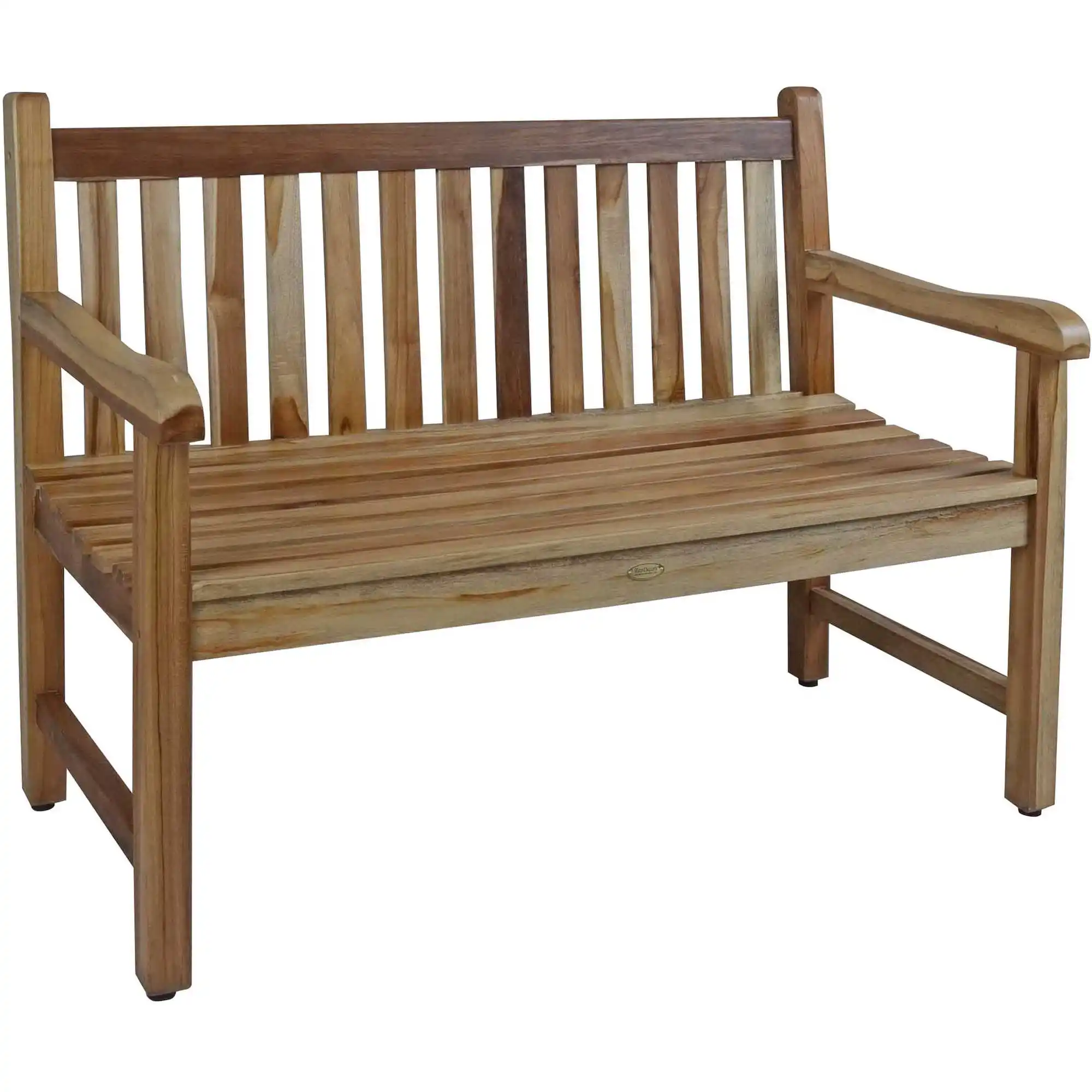
Teak garden benches come in a variety of styles, from classic slatted designs to modern minimalist ones. Consider the overall look of your garden or patio. Do you prefer a traditional feel, or something more contemporary? The design should complement your outdoor space, not clash with it.
Maintenance and Care Tips
One of the biggest advantages of teak is that it requires very little upkeep. However, a few simple practices can keep your bench looking its best for even longer.
- Keep it clean: Wash the bench with mild soap and water a couple of times a year to remove dirt and mildew. Avoid using pressure washers, as they can damage the wood.
- Let it age gracefully: If you leave your teak bench untreated, it will naturally weather to a beautiful silver-gray patina. Many people love this look because it blends well with outdoor surroundings.
- Oil if you prefer: If you want to maintain the rich golden-brown color, apply a teak sealer or oil once or twice a year. Just be aware that this requires regular upkeep.
- Cover when not in use: While teak is weather-resistant, covering your bench during harsh winters or heavy storms can prolong its life even further.
Placement: Getting the Most from Your Bench
Where you place your teak garden bench can make a big difference in how much you enjoy it. Here are some ideas:
- Under a tree: A bench under a shady tree creates a natural retreat on hot summer days.
- Facing a focal point: Position your bench to face a beautiful view, a flower bed, or a water feature. This invites you to sit and appreciate your garden.
- On a patio: Place it on your patio or deck for easy access and a comfortable spot to relax with a morning coffee.
- In a quiet corner: A secluded corner with a bench can become a peaceful hideaway for reading or meditating.
Remember to consider the path of the sun and prevailing winds so you can choose the most comfortable spot.
Budget and Value
Teak garden benches are an investment. Prices can range from a few hundred to over a thousand dollars, depending on size, quality, and brand. While it might be tempting to go for a cheaper option, remember that a well-made teak bench can last for 30 years or more, making it a better value in the long run than a cheaper bench that will need replacing in a few years.
When comparing prices, consider the wood grade, construction quality, and warranty. Some manufacturers offer warranties that cover structural defects, which gives you extra peace of mind.
Environmental and Ethical Considerations
With growing concerns about deforestation, it’s important to choose teak that is sourced responsibly. Look for benches made from plantation-grown teak or those certified by organizations like the Forest Stewardship Council (FSC). This ensures that the wood was harvested in a way that supports forest conservation and the wellbeing of local communities.
By choosing a sustainable teak garden bench, you can enjoy your outdoor space with a clear conscience, knowing that you’re not contributing to environmental harm.
26″ Modern Design Natural Teak Solid Wood Garden Bench Outdoor Patio or Park Bench with Metal Exterior Furniture
If you’re looking for a modern take on the classic teak garden bench, the 26″ Modern Design Natural Teak Solid Wood Garden Bench with metal exterior offers a sleek silhouette that pairs beautifully with any contemporary outdoor setting.
Frequently asked questions
How long does a teak garden bench last?
With proper care, a high-quality teak garden bench can last 30 years or more. Teak’s natural oils make it highly resistant to rot, insects, and weather damage.
Should I oil my teak garden bench?
It’s a matter of preference. If you want to maintain the golden-brown color, apply teak oil or sealer once or twice a year. If you prefer the natural silver-gray patina, you can leave it untreated, and it will weather on its own.
Can I leave my teak bench outside in winter?
Yes, teak is durable enough to withstand winter weather. However, covering it with a protective cover or storing it indoors can help extend its lifespan, especially in harsh climates.
What is the best grade of teak for outdoor furniture?
Grade A teak is the best choice for outdoor furniture because it comes from the heartwood of mature trees, has high oil content, and offers superior durability and resistance to weather and insects.
