
Blog
The Best Chef Knife: A Complete Buying Guide
KNIFE GUIDE
How to Choose the Best Chef Knife
The best chef knife is more than a tool—it’s an extension of your hand. Whether you’re mincing garlic or slicing butternut squash, the right blade makes all the difference.
Understanding Chef Knife Anatomy
A chef knife typically has an 8-inch blade, though 6- and 10-inch versions exist. Key parts include the blade, bolster, handle, and tang. The tang—the metal extension inside the handle—affects balance and durability. Full tang knives (metal running the entire handle length) offer better stability.
Blade Material: Stainless vs. Carbon Steel
Blade steel determines sharpness, ease of sharpening, and rust resistance. Stainless steel is low-maintenance and rust-resistant, while carbon steel takes a sharper edge but requires immediate drying. High carbon stainless steel combines the best of both—easy to sharpen and resistant to stains. For a reliable everyday knife, this is a smart choice.
Stainless Steel
- Rust-resistant
- Easy care
- May not hold edge as long
Carbon Steel
- Super sharp
- Requires drying
- Develops a patina
High Carbon Stainless
- Sharp yet durable
- Minimal maintenance
- Long-lasting edge
Handle Comfort and Grip
Your knife handle should feel natural in your hand. Wood handles offer warmth and a secure grip, especially when contoured. They absorb shock better than plastic or metal. Look for a handle that fits your hand size and doesn’t cause fatigue during long prep sessions. A well-shaped wooden handle can make hours of chopping feel effortless.
Weight and Balance
A chef knife should feel balanced—not blade-heavy or handle-heavy. Heavier knives (8–12 oz) power through dense vegetables, while lighter knives (6–8 oz) allow quick, precise cuts. Test the balance by holding the knife at the bolster; it should feel neutral. Many home cooks prefer a moderate weight that reduces wrist strain.
Edge Retention and Sharpening
A knife that stays sharp longer saves you time. High carbon stainless steel holds an edge well. Regular honing with a steel rod realigns the edge between sharpenings. For sharpening, use a whetstone or a quality pull-through sharpener. Avoid electric sharpeners that can remove too much metal. A sharp knife is safer than a dull one.
Care and Maintenance
Hand wash your chef knife with mild soap and dry immediately. Never put it in the dishwasher—high heat and detergents damage the blade and handle. Store in a knife block, magnetic strip, or blade guard to protect the edge. Oil wooden handles occasionally to prevent drying and cracking.
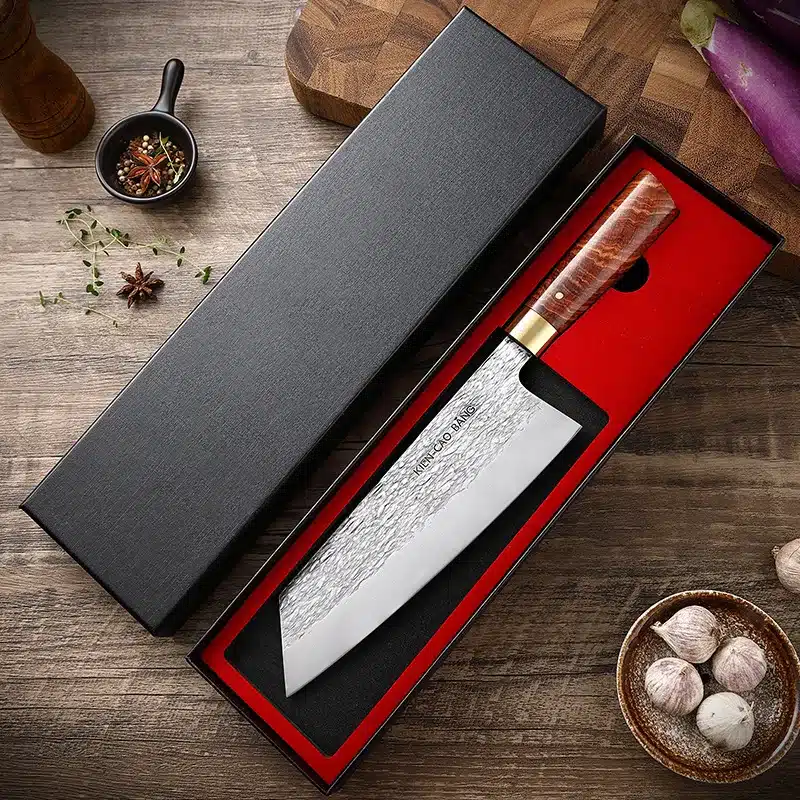
Hand Forged High Carbon Stainless Steel Chef Knife with Wood Handle Sharp Meat Cutting Tool
For a reliable balance of sharpness and ease, consider the Hand Forged High Carbon Stainless Steel Chef Knife with Wood Handle—it’s built to last and feels great in hand.
Frequently asked questions
What length chef knife is best for home cooks?
An 8-inch chef knife is the most versatile for home cooks. It handles everything from chopping vegetables to slicing meat, and fits most hand sizes comfortably.
How often should I sharpen my chef knife?
Hone your knife with a steel rod every few uses. Sharpen with a whetstone every 3-6 months, depending on usage. Signs it needs sharpening: it struggles to cut a tomato skin.
Is a heavy chef knife better?
Not necessarily. Heavier knives provide momentum for tough cuts but can fatigue the wrist. Lighter knives offer control. Choose based on your comfort and cooking style.
Can I use a chef knife for everything?
A chef knife is a generalist—great for chopping, slicing, and mincing. For delicate tasks like paring or boning, specialized knives work better. But for most kitchen prep, a chef knife is sufficient.
