
Blog
The Best Kitchen Cleaver for Home Cooks
Knife Guide
Finding the Best Kitchen Cleaver for You
If you’ve been looking for the best kitchen cleaver, you know the options can be overwhelming. Whether you’re breaking down whole chickens or smashing garlic, the right cleaver makes all the difference.
Why a Good Cleaver Matters
A kitchen cleaver is more than just a heavy blade for chopping bones. A well-made cleaver can slice vegetables, mince herbs, and even scoop ingredients off the cutting board. The best kitchen cleaver combines durability with precision, allowing you to tackle everything from butternut squash to delicate fish. It’s a workhorse that earns its place in your knife block.
Blade Materials: Carbon vs. Stainless
The blade steel determines how sharp the cleaver stays and how easy it is to maintain.
- Carbon steel: Takes a razor edge and is easy to sharpen, but can rust if not dried promptly. Many professional chefs prefer it for its performance.
- Stainless steel: More resistant to corrosion and requires less maintenance. Look for high-carbon stainless (like German or Japanese steel) for a good balance of edge retention and stain resistance.
For most home cooks, a stainless steel cleaver with a high hardness rating (around 58-60 HRC) offers the best blend of sharpness and ease of care.
Weight and Balance
A cleaver’s weight affects how it feels in hand. Lighter cleavers (around 6-8 ounces) are nimble for slicing and dicing, while heavier ones (10-14 ounces) have more momentum for chopping through bones. The best kitchen cleaver should feel balanced, with the weight distributed evenly between blade and handle. Test the grip by holding the knife at the bolster; it should not tip forward or backward.
Handle Design and Comfort
Since you’ll be using the cleaver for repetitive tasks, the handle must be comfortable. Look for:
- Wooden handles: Warm and absorb shock well, but need occasional oiling.
- Composite or synthetic handles: Durable, waterproof, and often ergonomically shaped.
- Full tang: The blade extends through the handle for better balance and durability.
Choose a handle that fits your hand size and grip style (pinch or hammer). A contoured shape can reduce fatigue during long prep sessions.
Edge Profile and Versatility
Most cleavers have a flat edge with a slight curve at the tip, allowing for rocking cuts. Some have a more pronounced belly for slicing, while others are completely flat for chopping. Consider what you’ll use it for most: a versatile cleaver with a gentle curve can handle both tasks. A thicker spine (around 2-3 mm) provides heft for bone chopping, while a thinner edge excels at precision work.
Maintenance and Storage
Keep your cleaver sharp with a honing rod and occasional sharpening stone. Store it in a knife block, magnetic strip, or blade guard to protect the edge. Avoid dishwashers, as high heat and detergents can damage both blade and handle. Hand wash and dry immediately.
What to Look for in a Set
If you’re starting from scratch, a cleaver set might include different sizes or a pairing knife. The best kitchen cleaver set offers a full-tang blade, comfortable wooden handle, and stainless steel construction. A set with multiple cleavers allows you to choose the right weight for each task. For example, a 7-inch cleaver is great for general prep, while a larger 8-inch one handles heavy chopping.
Invest in a set that feels balanced and sharp out of the box. A handmade cleaver often has a better edge and more attention to detail than mass-produced options.
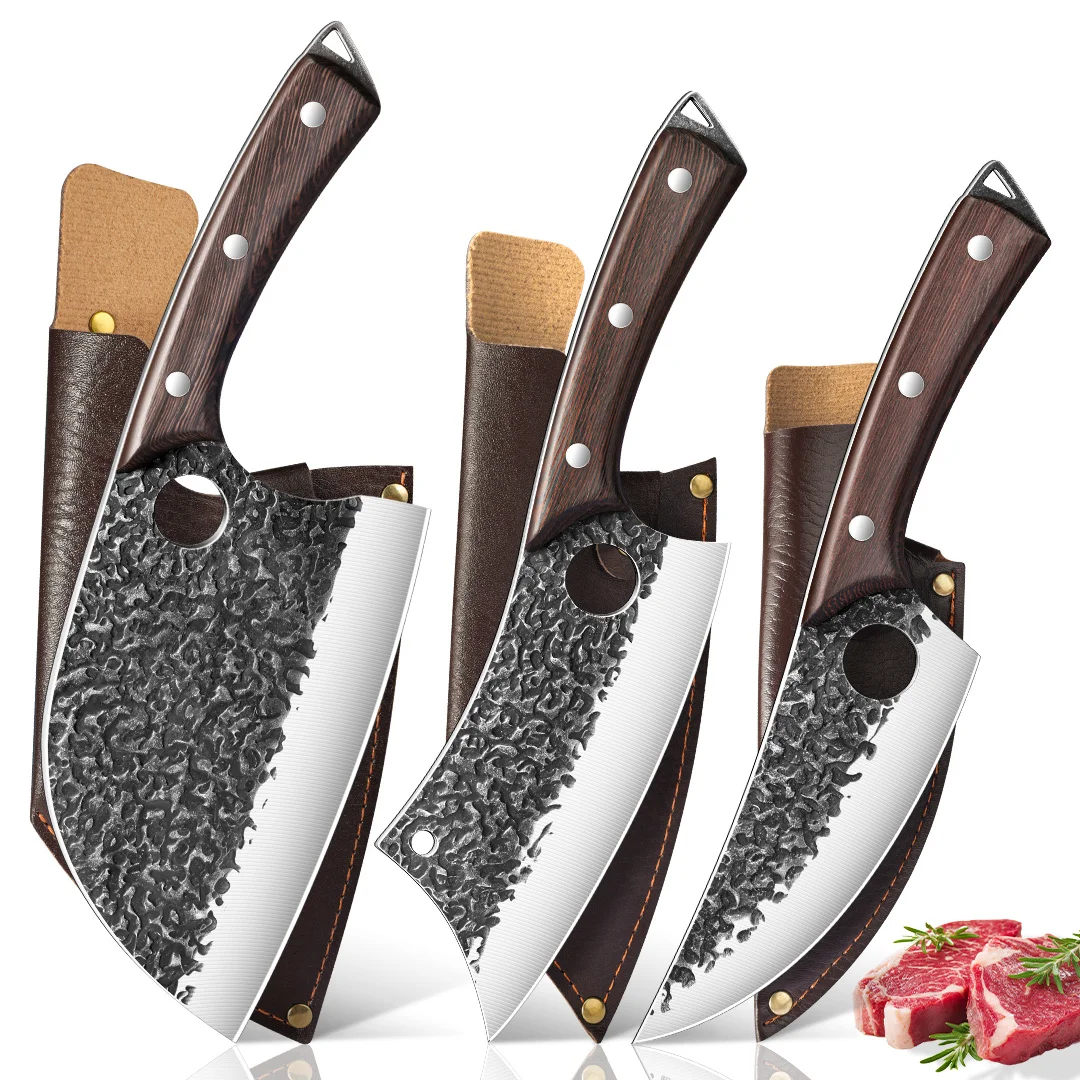
3 Pcs Forged Kitchen Cleaver Knife Set, sharp chef knife, Stainless Steel Meat Chopping Knives with Wooden Handle, Handmade
For a reliable all-rounder, consider the 3 Pcs Forged Kitchen Cleaver Knife Set, which offers sharp stainless steel blades and comfortable wooden handles at a fair price.
Frequently asked questions
Can I use a cleaver for slicing vegetables?
Absolutely. A thin, well-balanced cleaver can slice vegetables just as well as a chef’s knife. The broad blade also makes it easy to scoop up chopped ingredients.
How do I sharpen a kitchen cleaver?
Use a whetstone with a coarse grit (1000-3000) followed by a fine grit (5000-8000). Hold the blade at a 15-20 degree angle and sharpen evenly. Alternatively, use a honing rod between sharpenings to maintain the edge.
What is the best weight for a cleaver?
For most home cooks, a cleaver weighing 8-10 ounces offers a good balance of maneuverability and chopping power. Heavier cleavers (12+ ounces) are better for bone-in meats but can be tiring.
How do I care for a wooden-handled cleaver?
Hand wash with mild soap and dry immediately. Apply mineral oil or beeswax to the handle every few months to prevent drying and cracking. Never soak or put in the dishwasher.
