
Blog
The Best Kitchen Knife Set: A Buyer’s Guide for Home Cooks
Buying Guide
How to Choose the Best Kitchen Knife Set
The best kitchen knife set can transform your cooking experience, making prep work faster, safer, and more enjoyable. But with so many options, how do you pick the right one?
Why a Quality Knife Set Matters
A good kitchen knife set is the backbone of any home kitchen. Dull or poorly balanced knives can lead to frustration and even accidents. Investing in a quality set not only improves your efficiency but also enhances the joy of cooking. Think of it as a partnership: you and your knives working together to create delicious meals. Whether you’re a beginner or a seasoned cook, the right set can elevate your culinary game.
Key Factors to Consider When Buying
Blade Material
Stainless steel is common, but high-carbon stainless steel offers better edge retention. Damascus steel, known for its wavy pattern, is both beautiful and durable. For most home cooks, a balance between hardness and ease of sharpening is ideal.
Handle Comfort and Grip
Ergonomics matter. Look for handles that feel natural in your hand—whether wood, plastic, or metal. A full tang (blade extending through the handle) adds balance and strength. Try holding a few styles to see what fits your grip.
Knife Types Included
A basic set should have a chef’s knife (8-inch), a paring knife, a serrated bread knife, and maybe a utility knife. Specialty knives like a Santoku or boning knife can be nice extras. Think about what you cook most often.
Storage and Maintenance
Wood blocks, magnetic strips, or drawer inserts—each has pros and cons. A block keeps knives organized but takes counter space. Magnetic strips save space but require careful placement. Consider ease of access and safety, especially if you have kids.
Top Features of a Reliable Set
- Balance: The knife should feel neither blade-heavy nor handle-heavy.
- Edge Retention: A blade that stays sharp longer reduces frequent sharpening.
- Corrosion Resistance: Especially important in humid kitchens or for acidic foods.
- Easy to Clean: Hand washing recommended, but some sets are dishwasher-safe (though not ideal).
- Warranty: A good warranty shows manufacturer confidence.
Common Mistakes to Avoid
Don’t buy based solely on price or looks. A cheap set might dull quickly or break. Also, avoid sets with too many knives you’ll never use—stick to essentials. Another mistake is neglecting maintenance; even the best knives need honing and occasional sharpening.
Caring for Your Knives
Hand wash with mild soap and dry immediately. Store in a block or on a magnetic strip to protect edges. Use a honing steel regularly (weekly) and sharpen professionally or with a whetstone every few months. Never put knives in the dishwasher—it dulls blades and damages handles.
Our Recommendation for a Complete Set
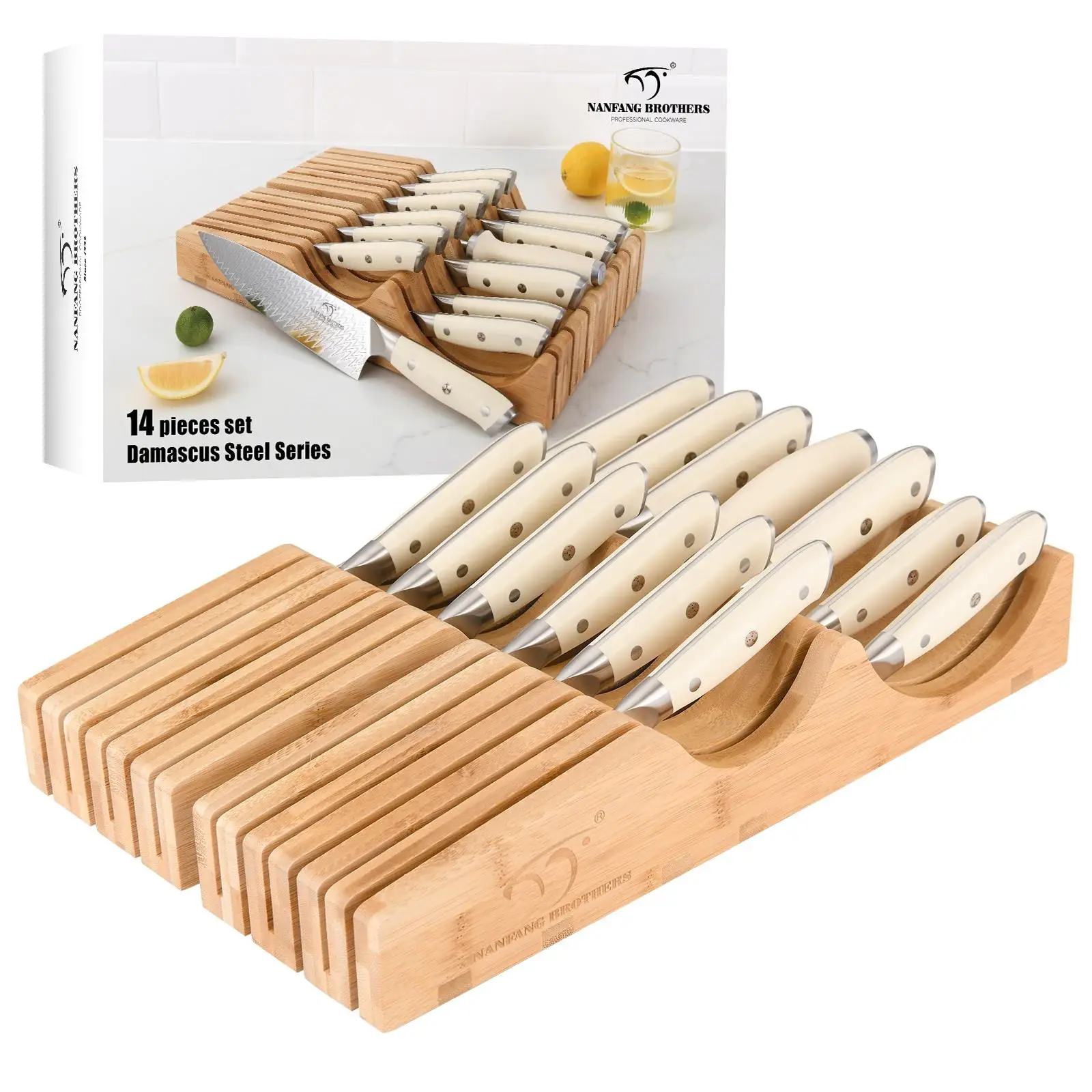
For those seeking a versatile and durable option, consider the Brand New Damascus Non-Stick Chef Butcher Knife Set With Bamboo Drawer Block,14 PCS Kitchen Knife Set with ABS Handle. It includes a range of essential knives, a bamboo block that fits in a drawer, and non-stick blades that resist rust and staining. The Damascus pattern isn’t just for looks—it indicates layered steel that holds an edge well. This set offers great value for home cooks who want quality without complexity.
Brand New Damascus Non-Stick Chef Butcher Knife Set With Bamboo Drawer Block,14 PCS Kitchen Knife Set with ABS Handle
For a balanced, durable set that covers all bases, the Brand New Damascus Non-Stick Chef Butcher Knife Set With Bamboo Drawer Block is a thoughtful choice that combines style with function.
Frequently asked questions
What is the most important knife in a kitchen set?
The chef’s knife is the most versatile and used knife in most kitchens. An 8-inch chef’s knife can handle chopping, slicing, and dicing for most tasks.
How often should I sharpen my kitchen knives?
Hone your knives weekly with a steel to maintain the edge. Sharpen them every 2-3 months, or when you notice they struggle to cut through a tomato skin cleanly.
Are expensive knife sets worth the investment?
Not always. Mid-range sets often offer the best value for home cooks, with good steel and comfortable handles. High-end sets are for professionals or enthusiasts who demand the best edge retention and balance.
Can I put my knives in the dishwasher?
It’s not recommended. Dishwashers can dull blades, damage handles, and cause rust. Hand washing and drying immediately is best for longevity.
