
Blog
The Best Kitchen Knife Set: A Practical Guide
Knife Guide
How to Choose the Best Kitchen Knife Set
The best kitchen knife set isn’t about the fanciest brand—it’s about what fits your hand and cooking style. Here’s how to find yours without the hype.
What Makes a Kitchen Knife Set Great?
A great knife set balances sharpness, durability, and comfort. You want blades that hold an edge, handles that feel natural, and a selection that covers your daily tasks without extras you’ll never use. Think of it as a tool kit, not a collection.
Blade Materials: Carbon vs. Stainless vs. Damascus
Carbon steel takes a razor edge but rusts easily. Stainless is low maintenance but can be harder to sharpen. Damascus steel, like the VG10 core in many premium sets, offers a hard, corrosion-resistant blade with a beautiful pattern. For most home cooks, high-carbon stainless or VG10 is the sweet spot.
- Carbon steel: sharp, needs care
- Stainless steel: easy, less edge retention
- Damascus VG10: best of both worlds
Handle Matters: Comfort and Grip
You’ll hold these knives for years—choose handles that feel like an extension of your hand. Pakka wood (layered hardwood) is warm, durable, and ages beautifully. Synthetic handles like polypropylene are slip-resistant but can feel cheap. Always hold a knife before buying if possible.
Essential Knives in a Good Set
Don’t pay for 20 pieces you’ll never use. A 4- to 6-piece set covers most needs: chef’s knife (8-inch), paring knife, serrated bread knife, and maybe a utility or Santoku. That’s enough for everything from dicing onions to slicing tomatoes.
Chef’s Knife
The workhorse. 8-inch is versatile for most hands. Look for a full tang (blade extends into handle) for balance.
Paring Knife
For peeling and detail work. A 3.5-inch blade is standard.
Serrated Knife
For bread, tomatoes, and soft fruits. A 8-inch curved blade works best.
Maintenance: Keep Them Sharp
Even the best set needs care. Use a honing steel weekly to realign the edge, and sharpen on whetstones or send out professionally once or twice a year. Never put good knives in the dishwasher—hand wash and dry immediately.
Budget vs. Value: What to Spend
A decent starter set costs $50–$100, but a high-quality set with VG10 steel and Pakka wood handles runs $150–$300. That’s a one-time investment for daily use. Cheap sets dull quickly and can be dangerous (more force means more slips).
Our Pick: Professional Cook Tools 4-Piece Damascus Set
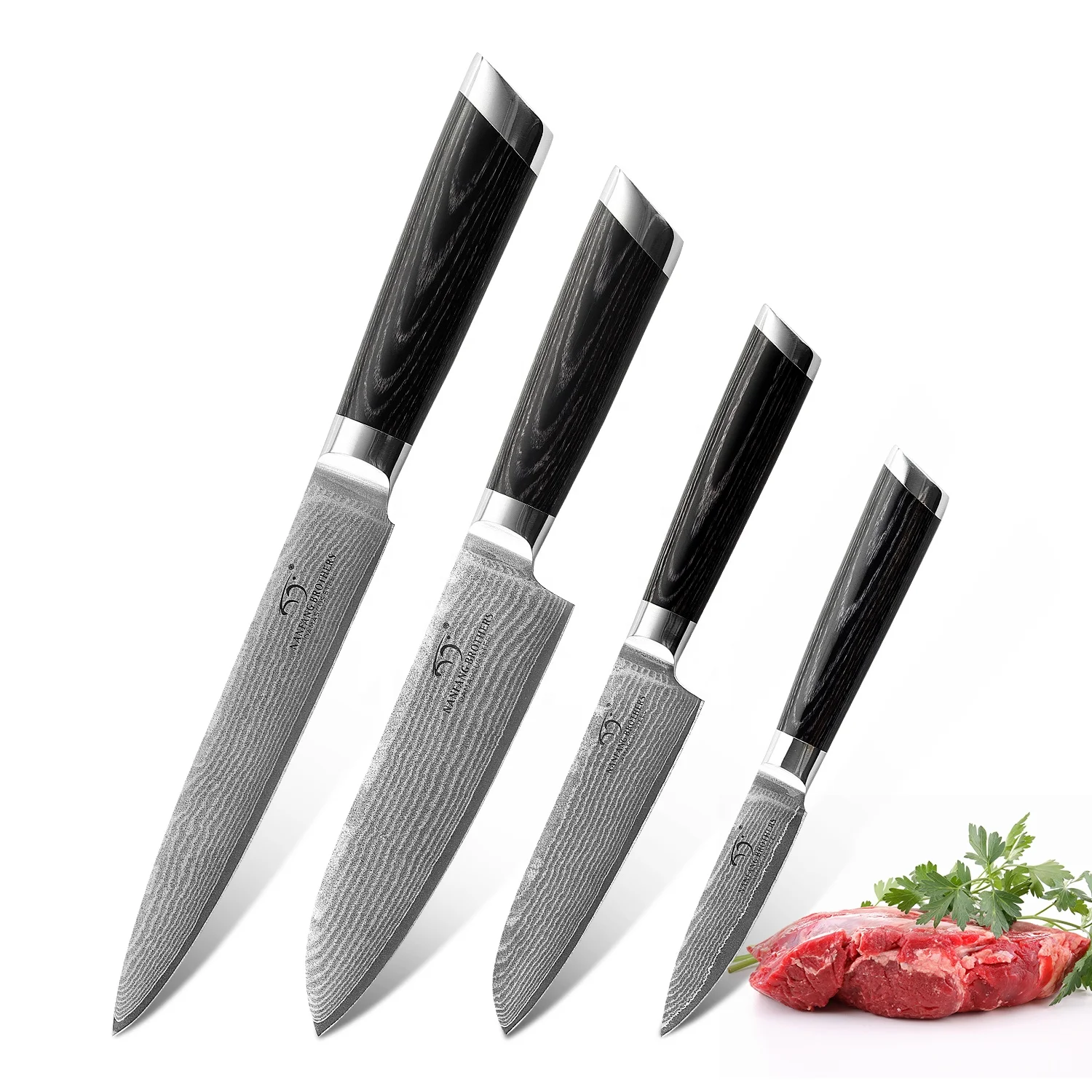
If you want a set that balances performance and beauty without breaking the bank, consider the Professional Cook Tools 4 Pieces Damascus Steel VG10 Chef Kitchen Knife Set with Pakka Wood Handle. It covers the essentials, stays sharp, and feels great in hand.
Final Tips Before You Buy
Read reviews from home cooks, not just pros. Check the return policy. And remember: a knife block takes up counter space—a magnetic strip or in-drawer organizer might suit you better. Choose what fits your kitchen and your hands.
Professional Cook Tools 4 Pieces Damascus Steel VG10 Chef Kitchen Knife Set with Pakka Wood Handle
If you’re looking for a reliable, beautiful set that covers the basics without the fluff, the Professional Cook Tools 4 Pieces Damascus Steel VG10 Chef Kitchen Knife Set with Pakka Wood Handle is a solid choice.
Frequently asked questions
How many knives do I really need in a set?
Most home cooks do fine with 3 to 5 knives: a chef’s knife, paring knife, serrated bread knife, and optionally a utility or Santoku knife. Avoid large sets with specialty knives you rarely use.
What is the best blade material for a kitchen knife set?
High-carbon stainless steel (like VG10) offers excellent edge retention and corrosion resistance. Damascus steel is a layered version that’s both functional and visually striking. Avoid cheap stainless that dulls quickly.
How should I care for my knives to make them last?
Hand wash with mild soap and dry immediately. Use a honing steel before each use to maintain the edge. Sharpen on a whetstone or by a professional every 6-12 months. Never put them in the dishwasher.
What handle material is best for comfort and durability?
Pakka wood (compressed hardwood) is comfortable, durable, and moisture-resistant. Synthetic handles like polypropylene are also good but less elegant. Avoid hollow handles or those that feel unbalanced.
