
Blog
The Best Kitchen Knife Set for Everyday Cooking
Buying Guide
Find Your Best Kitchen Knife Set
Looking for the best kitchen knife set can feel overwhelming, but a few key details make all the difference. Whether you’re a home cook or a weekend chef, the right knives transform your time in the kitchen.
Why a Good Knife Set Matters
A quality knife set is the backbone of any kitchen. Dull or poorly balanced knives make prep work frustrating and even dangerous. A well-chosen set saves time, reduces effort, and improves your results. You don’t need a dozen pieces—just a few well-made ones that feel right in your hand.
Key Features to Look For
When shopping for a set, consider these factors:
- Blade steel: High-carbon stainless steel holds an edge well and resists rust. Damascus steel, with its layered construction, offers both beauty and durability.
- Handle: Look for ergonomic designs with a secure grip. Materials like resin-stabilized wood provide comfort and longevity.
- Balance: A knife should feel balanced between blade and handle. Test it if possible.
- Edge retention: A harder steel stays sharp longer but may be more brittle. Softer steels are easier to sharpen but need more frequent maintenance.
Choosing the Right Knife Types
Most sets include an 8-inch chef’s knife for chopping, a paring knife for detail work, and a serrated bread knife. Some add a utility knife or steak knives. Consider what you cook most. A set with versatile pieces—like a chef’s knife, paring knife, and serrated knife—covers nearly all tasks.
Steak Knives: A Handy Addition
If you often serve meat, a set of steak knives is a practical upgrade. They should be sharp enough to cut through cooked steak cleanly without tearing. A 5-inch blade is a good size for most steaks.
Handle Materials and Comfort
Handles come in wood, plastic, metal, or composites. Wood offers warmth and grip but requires care. Resin-stabilized burl wood combines beauty with durability, resisting moisture and wear. Ergonomic handles reduce fatigue during long prep sessions.
Maintenance and Care
To keep your knives in top shape: hand wash and dry immediately; store in a block, magnetic strip, or sheath; hone regularly with a steel; sharpen professionally when needed. Avoid dishwashers and cutting on glass or stone.
Budget vs. Quality
You can find decent sets for under $100, but investing a bit more often yields better steel, fit, and finish. A good set can last decades with proper care. Look for full tang construction (blade extends through the handle) for strength and balance.
Our Recommendation
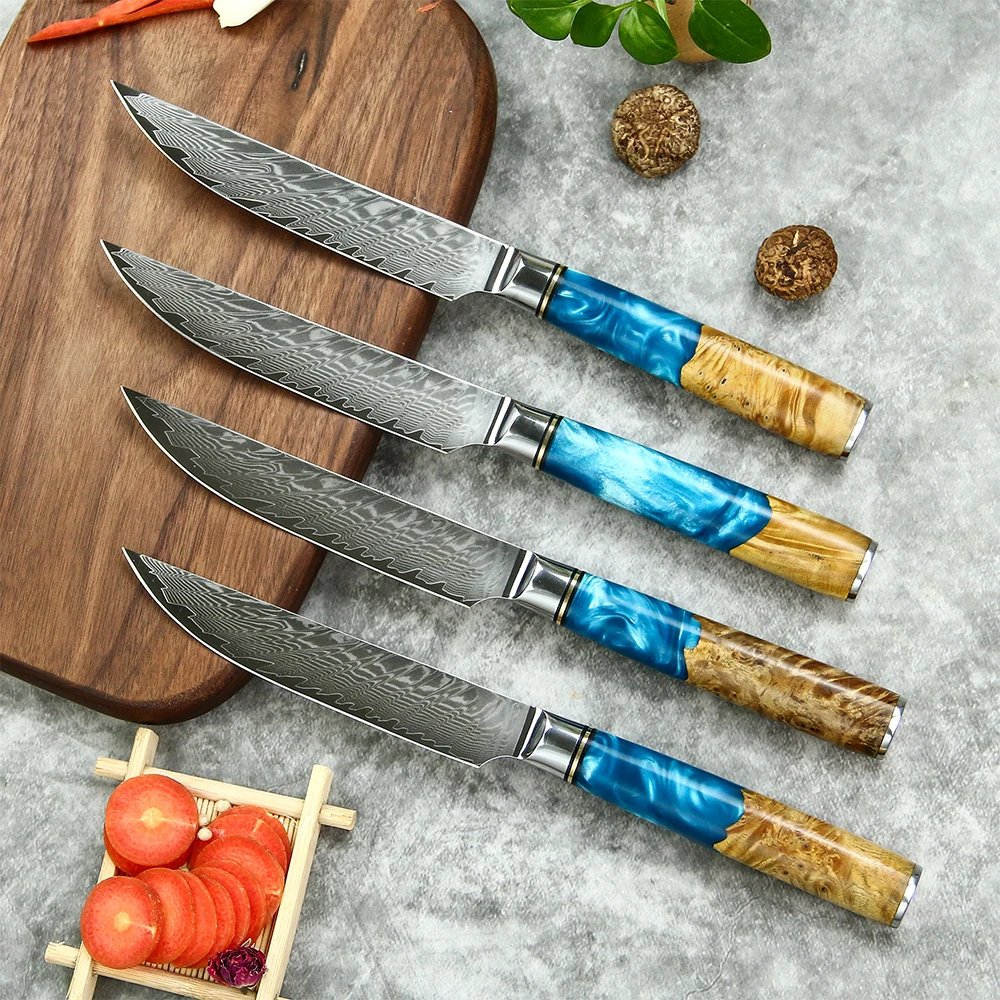
For a reliable set that balances performance and beauty, consider the Amber 67-layer Damascus Steel 4pcs 5-inch Steak Kitchen Knife Set. Its resin and burl wood handle feels comfortable, and the Damascus steel blade holds a sharp edge. A subtle but thoughtful choice for your kitchen.
Amber 67-layer Damascus Steel 4pcs 5-inch Steak Kitchen Knife Set kitchen tool Resin with burl wood Handle Sharp Tools
For a set that combines artisan craftsmanship with everyday functionality, the Amber 67-layer Damascus Steel 4pcs 5-inch Steak Kitchen Knife Set features a sharp Damascus blade and a comfortable resin-stabilized burl wood handle.
Frequently asked questions
How many knives do I really need in a set?
A basic set of three to five knives covers most tasks: an 8-inch chef’s knife, a paring knife, and a serrated bread knife. Add a utility knife and steak knives if you often prepare meat or need a mid-size blade.
What is the best steel for kitchen knives?
High-carbon stainless steel is a popular choice for its balance of sharpness, edge retention, and rust resistance. Damascus steel, made by layering different steels, offers similar performance with a distinctive pattern.
Are expensive knife sets worth the money?
Higher-priced sets often use better materials and construction, leading to longer life and better performance. However, many mid-range sets offer excellent value. Focus on blade steel, handle comfort, and balance rather than price alone.
How should I store my knives?
Store knives in a block, on a magnetic strip, or in individual sheaths. Avoid loose drawers where blades can dull or cause injury. Proper storage also protects the edge and keeps them accessible.
