
Blog
The Best Kitchen Knife Set for Home Cooks in 2024
Kitchen Guide
Finding the Best Kitchen Knife Set for Your Home
Looking for the best kitchen knife set can feel overwhelming with so many options. But with a little guidance, you can find a set that feels like an extension of your hand and makes cooking a joy.
What Makes a Great Kitchen Knife Set?
A great knife set balances sharpness, durability, comfort, and value. You want blades that hold an edge, handles that fit your grip, and a variety of knives for different tasks. The best set for you depends on your cooking style—whether you’re chopping vegetables daily or carving roasts occasionally.
Blade Materials: Stainless vs. Carbon Steel
The blade is the heart of any knife. Two common materials are stainless steel and carbon steel. Stainless steel is rust-resistant and easy to maintain, ideal for everyday use. Carbon steel can take a sharper edge but requires more care to prevent rust. For most home cooks, high-carbon stainless steel offers the best of both worlds.
- Stainless steel: Low maintenance, durable, good edge retention.
- Carbon steel: Superior sharpness, needs oiling and immediate drying.
- High-carbon stainless: Combines sharpness with rust resistance.
Handle Types and Ergonomics
Your knife handle determines comfort and control. Common materials include wood, plastic, and metal. Wood handles feel warm but require oiling. Plastic handles are durable and easy to grip when wet. Metal handles can be slippery unless textured. Look for a handle that fits your hand size and feels balanced with the blade.
Full Tang vs. Partial Tang
A full tang means the blade metal extends through the entire handle, providing better balance and strength. Partial tangs are lighter but less durable. For heavy use, choose full tang.
Essential Knives in a Set
A well-rounded set usually includes an 8-inch chef’s knife, a paring knife, and a serrated bread knife. Some sets add a utility knife, boning knife, or steak knives. Consider what you cook most. If you bake, a bread knife is crucial. If you prep veggies, a good chef’s knife is key.
- Chef’s knife (8-10 inches): The workhorse for chopping, slicing, and dicing.
- Paring knife (3-4 inches): For peeling and small tasks.
- Serrated knife: For bread and tomatoes.
- Utility knife: A mid-size all-rounder.
How to Test a Knife’s Sharpness
The best test is slicing a ripe tomato or paper. A sharp knife cuts cleanly without crushing. If you have to saw or press hard, the blade is dull. Remember that even the best knives need regular honing and occasional sharpening.
Knife Storage Options
Proper storage protects blades and your hands. Wooden blocks keep knives organized but can harbor bacteria if not cleaned. Magnetic strips save counter space and allow knives to dry fully. Drawer inserts are good if you have limited counter space. Avoid loose drawers where blades can knock together.
Caring for Your Knife Set
Hand wash with mild soap and dry immediately—never put good knives in the dishwasher. Use a honing steel weekly to realign the edge. Sharpen with a whetstone or professional service every few months. With care, a quality set can last decades.
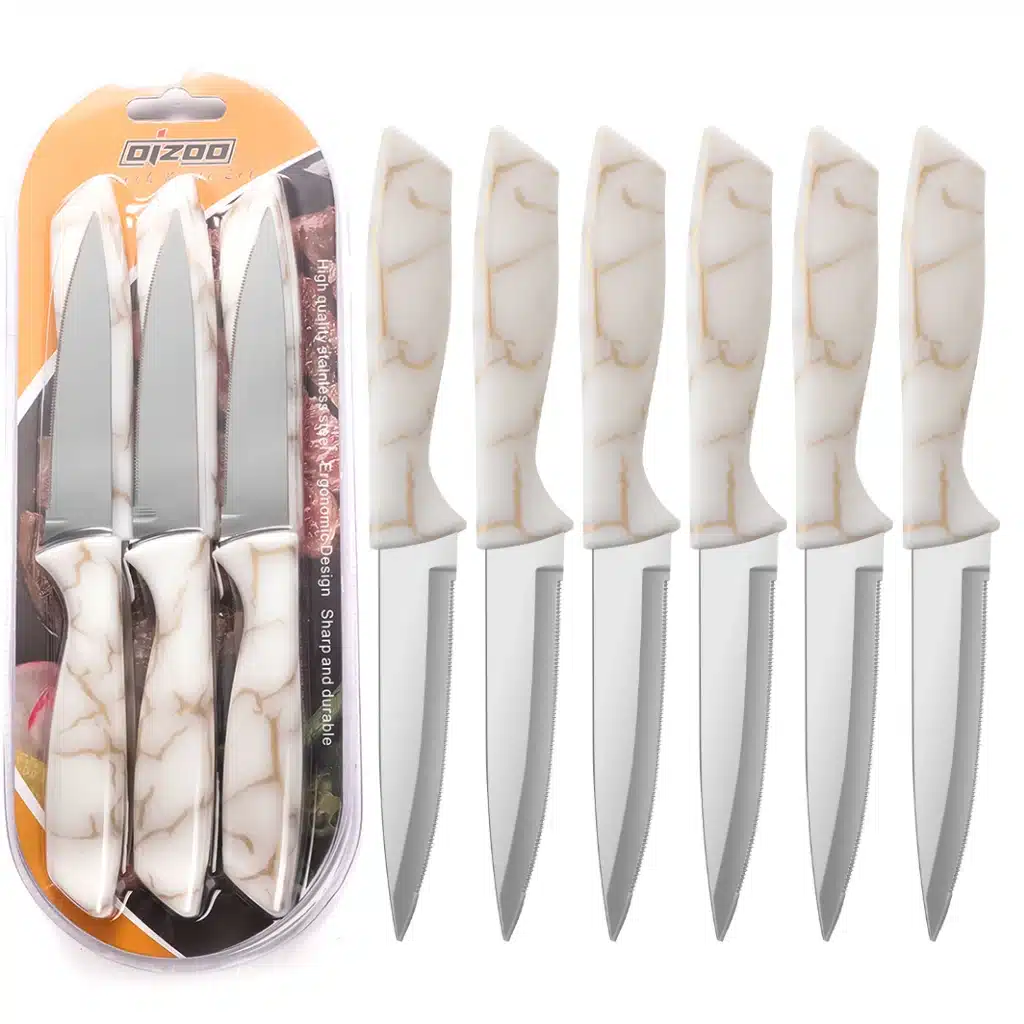
If you’re after a set that combines practicality with a unique look, the LONSDOW 3cr13 Stainless Steel Blade Beaf Kitchen Knife Set Hollow Marble Pattern ABS Plastic Handle Steak Knife Set offers a solid balance of performance and style for everyday cooking.
LONSDOW 3cr13 Stainless Steel Blade Beaf Kitchen Knife Set Hollow Marble Pattern ABS Plastic Handle Steak Knife Set
For an affordable yet reliable option, the LONSDOW 3cr13 Stainless Steel Blade Beaf Kitchen Knife Set Hollow Marble Pattern ABS Plastic Handle Steak Knife Set delivers good edge retention and a comfortable grip for everyday use.
Frequently asked questions
What is the best material for kitchen knife blades?
High-carbon stainless steel is widely considered the best for home cooks. It offers excellent sharpness, edge retention, and rust resistance with minimal maintenance.
How many knives do I really need in a set?
A basic set of three—chef’s knife, paring knife, and serrated knife—covers most tasks. Larger sets add specialty knives, but quality over quantity is key.
How often should I sharpen my kitchen knives?
Hone with a steel weekly, and sharpen with a whetstone or professional service every 3-6 months, depending on use. Dull knives are dangerous.
Is a full tang knife better than a partial tang?
Yes, full tang provides better balance, strength, and durability. It’s preferred for heavy-duty tasks and longer knife life.
