
Blog
The Best Kitchen Knife Set for Home Cooks in 2025
Buying Guide
How to Choose the Perfect Kitchen Knife Set
A great kitchen knife set can transform your cooking experience. Whether you’re a beginner or a seasoned home cook, the right blades make prep work faster, safer, and more enjoyable.
Why a Good Kitchen Knife Set Matters
Imagine chopping an onion without tears—not from the onion, but from a dull blade. A quality kitchen knife set does more than cut; it makes cooking joyful. You move through prep with confidence, each slice clean and precise. For home cooks, a set of six to eight knives covers most tasks: a chef’s knife for chopping, a paring knife for detail work, a bread knife for crusty loaves, and perhaps a utility knife for sandwiches. But beyond the count, it’s about how they feel in your hand and how long they stay sharp. Let’s look at what truly matters.
Blade Materials: Stainless vs. Carbon Steel
The blade is the heart of any knife. Most kitchen knife sets use stainless steel, which resists rust and requires minimal upkeep. High-carbon stainless steel offers the best of both worlds: easy sharpening and stain resistance. Ceramic blades are ultra-sharp but brittle—avoid them for heavy tasks. For everyday home use, a good stainless steel blade with a hardness of 56-58 HRC strikes the right balance. It holds an edge reasonably well and is forgiving to sharpen. Avoid mystery steels; reputable brands list their steel type. If you see “German stainless” or “Japanese AUS-8,” you’re on solid ground.
Handle Comfort and Balance
A knife can have a perfect blade but be unusable if the handle doesn’t fit. Look for a full tang (the blade extends through the handle) for balance and strength. Handles come in wood, plastic, or metal. Wood feels warm but needs oiling; synthetic handles like polypropylene are durable and grippy. The handle shape should fill your palm without slipping. Try holding a few styles if you can. A heavy handle can tire your wrist, while a light one may feel cheap. The best kitchen knife set feels like an extension of your arm.
Knife Types You Actually Need
Don’t be lured by 20-piece sets with steak knives you’ll rarely use. A practical kitchen knife set includes: an 8-inch chef’s knife (your workhorse), a 3.5-inch paring knife (for peeling and trimming), an 8-inch bread knife (serrated), a 5-inch utility knife (for smaller tasks), and maybe a Santoku or carving knife. A honing rod is essential for maintenance. Some sets include kitchen shears and a peeler—handy extras. Focus on the knives you’ll reach for daily.
Sharpness and Edge Retention
A sharp knife is a safe knife. Most kitchen knife sets come pre-sharpened, but how long does that last? Look for blades with a hardness of 58-60 HRC; they’ll hold an edge for weeks of regular use. Softer steel (52-55 HRC) dulls quickly but is easier to sharpen. Harder steel (60+) stays sharp longer but can be brittle. For home cooks, a mid-range hardness is ideal. You’ll also need a honing rod for weekly touch-ups and a sharpening stone or pull-through sharpener for when it’s truly dull.
Build Quality and Warranty
Examine the fit and finish. Are the rivets flush? Is the blade centered? Does the knife feel solid? A good kitchen knife set should last years, so check the warranty. Many reputable brands offer a lifetime warranty against defects. Beware of sets that feel flimsy or have loose handles. The weight should be evenly distributed. Read reviews for long-term experiences. A set that costs a bit more upfront saves you money on replacements.
Storage and Organization
How you store your knives affects their lifespan. A wooden block keeps them organized and protects edges, but can collect crumbs. Magnetic strips save counter space and show off your set, but require wall mounting. In-drawer organizers are great for minimalist kitchens. Some kitchen knife sets come with a block or roll. Consider your counter space and preference. Avoid tossing knives loose in a drawer—it dulls blades and is dangerous.
Matching Your Cooking Style
Think about what you cook. If you’re a vegetarian, you’ll use a chef’s knife and paring knife heavily. If you bake, a bread knife is crucial. If you cook meat often, a carving knife and boning knife help. A versatile kitchen knife set covers these bases. For occasional cooks, a smaller set with fewer pieces is fine. For daily home chefs, invest in quality. The right set makes you look forward to meal prep.
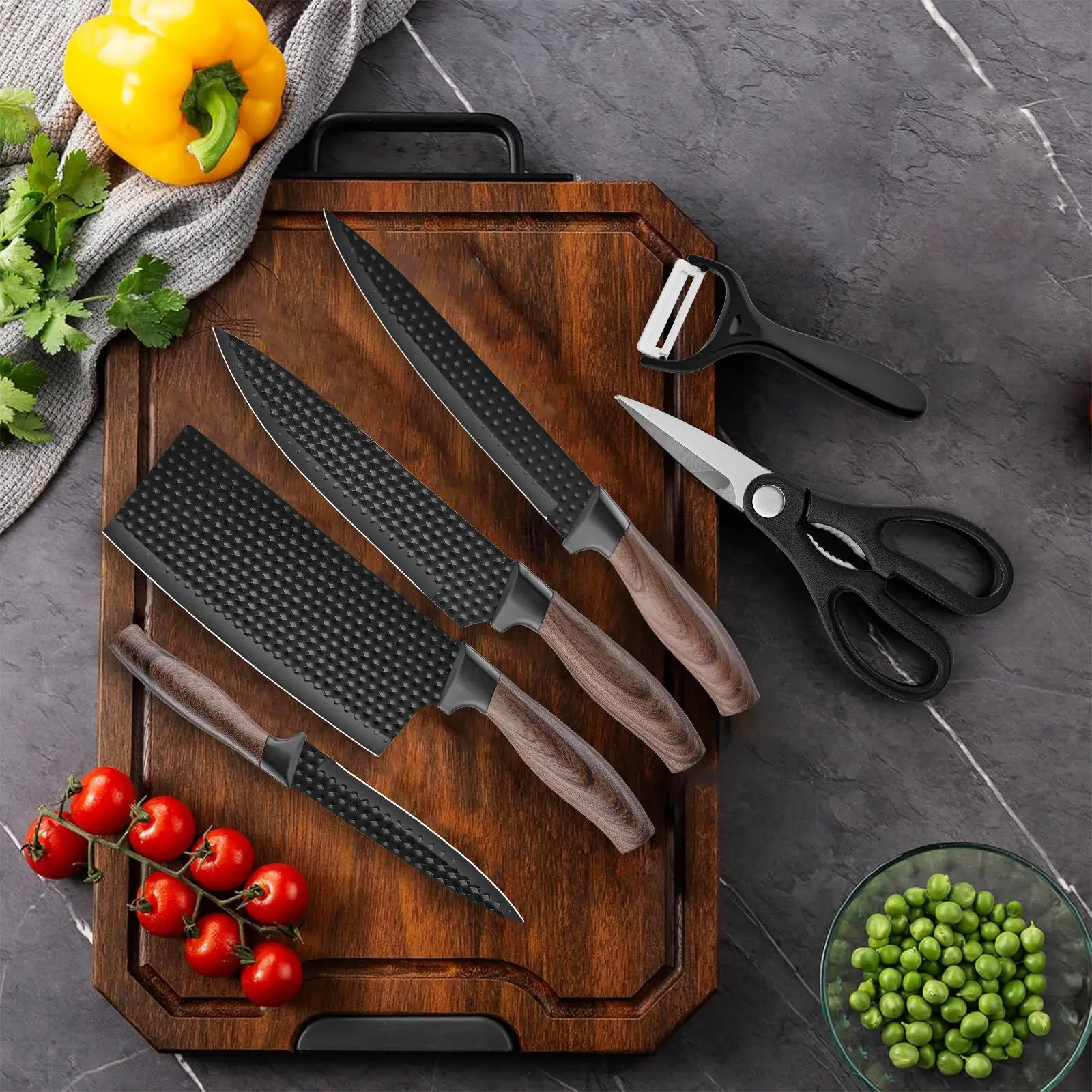
Professional Household Stainless Steel Kitchen Knife Set Six-Piece Chef Knife Set with Scissors Peeler
For a balanced and durable option, consider the Professional Household Stainless Steel Kitchen Knife Set Six-Piece Chef Knife Set with Scissors Peeler, which offers sharp blades and comfortable handles at a reasonable price.
Frequently asked questions
How many knives do I really need in a kitchen knife set?
A basic set of 6-8 knives covers most home cooking needs: chef’s knife, paring knife, bread knife, utility knife, and perhaps a Santoku or carving knife. Avoid oversized sets with redundant pieces.
What is the best material for kitchen knife blades?
High-carbon stainless steel is ideal for home cooks—it resists rust, holds an edge well, and is easy to sharpen. Avoid low-quality stainless steel that dulls quickly.
How do I maintain my kitchen knife set?
Hand wash and dry immediately. Use a honing rod weekly to realign the edge. Sharpen on a whetstone or pull-through sharpener every few months. Store in a block or on a magnetic strip.
Is it worth buying an expensive kitchen knife set?
A mid-range set from a reputable brand offers excellent value. You don’t need to spend a fortune, but very cheap sets often have poor steel and uncomfortable handles. Invest in a set that feels good and stays sharp.
