
Blog
The Best Kitchen Knife Set for Home Cooks in 2025
Buying Guide
Find the Best Kitchen Knife Set for Your Kitchen
Choosing the best kitchen knife set can transform your cooking experience, making prep work faster and more enjoyable. But with so many options, where do you start?
Why a Good Knife Set Matters
A quality knife set is the backbone of any kitchen. Dull, unbalanced knives slow you down and increase the risk of accidents. A well-chosen set, on the other hand, makes slicing, dicing, and chopping effortless. Whether you’re a weekend cook or a daily meal prepper, investing in the right knives pays off in both safety and joy.
Key Features to Look For
Blade Material
Stainless steel is common, but high-carbon stainless steel offers better edge retention. Damascus steel, with its layered construction, provides both beauty and durability. For most home cooks, a hardness of 58-60 HRC is ideal—hard enough to stay sharp, yet easy to maintain.
Handle Design
Ergonomics matter. Look for handles that fit your grip—whether you prefer a full tang (metal extending through the handle) for balance, or a contoured synthetic handle for comfort. Materials like Micarta or Pakkawood offer excellent grip and longevity.
Knife Types Included
A basic set should include: an 8-inch chef’s knife, a paring knife, a serrated bread knife, and perhaps a utility knife. Some sets add a santoku or a carving knife. Avoid sets with too many redundant pieces; focus on quality over quantity.
How to Choose the Right Set for You
Consider your cooking habits. Do you chop vegetables daily? A chef’s knife with a curved blade is best. Love baking? A long serrated knife is essential. If storage space is tight, opt for a set with a compact block or a magnetic strip. Also, think about maintenance—some blades require honing after each use, while others stay sharp longer.
Budget Considerations
You don’t need to spend a fortune. Good entry-level sets start around $50, but mid-range options ($100–$200) often offer better steel and handles. High-end sets can exceed $500, but for most home cooks, a well-made mid-range set is plenty. Remember, a sharp knife is safer than a dull one, so prioritize edge retention.
Care Tips to Extend Knife Life
- Hand wash only—dishwashers damage blades and handles.
- Use a cutting board (wood or plastic) to avoid dulling.
- Hone regularly with a steel, and sharpen a few times a year.
- Store in a block, magnetic strip, or blade guards.
Our Top Pick for Most Home Cooks
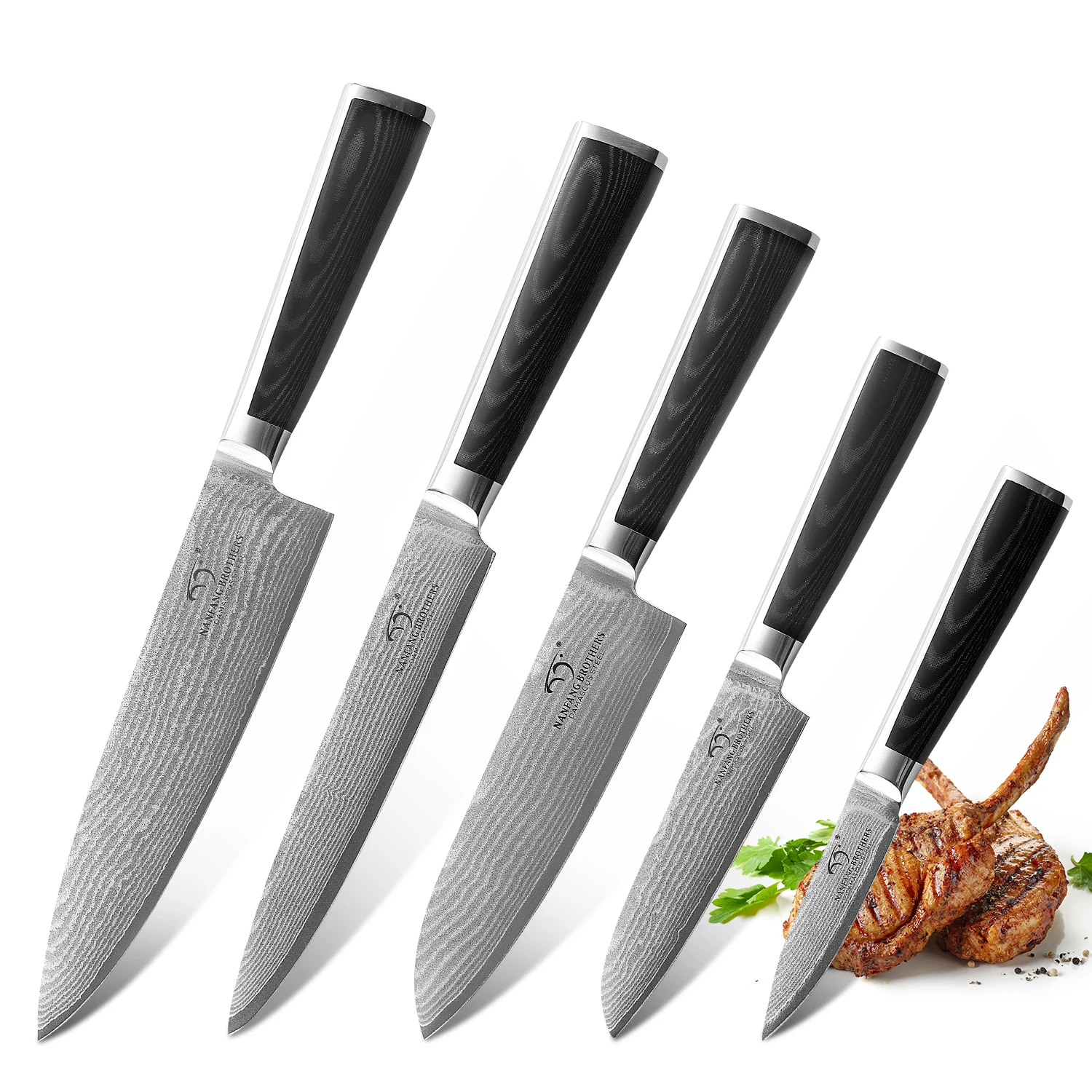
After testing dozens of sets, one stands out for its balance of performance, durability, and value. The Most Popular VG10 Damascus Steel 5 Pieces Chief Kitchen Knife Set with Micarta Handle combines a razor-sharp VG10 core with stunning Damascus cladding, all wrapped in comfortable Micarta handles. It’s a set that feels premium without the premium price tag.
Most Popular VG10 Damascus Steel 5 Pieces Chief Kitchen Knife Set with Micarta Handle
For a balance of performance and craftsmanship, consider the Most Popular VG10 Damascus Steel 5 Pieces Chief Kitchen Knife Set with Micarta Handle—it’s a set that delivers on both form and function.
Frequently asked questions
What is the best knife material for a kitchen knife set?
High-carbon stainless steel is a great balance of sharpness and durability. Damascus steel offers similar performance with added beauty. For most home cooks, VG10 or similar high-carbon steels are ideal.
How many knives do I really need in a set?
A core set of 3-5 knives—chef’s knife, paring knife, serrated bread knife, and optionally a utility or santoku—covers 95% of kitchen tasks. Avoid sets with many specialized knives you’ll rarely use.
What is the difference between forged and stamped knives?
Forged knives are cut from a single piece of steel, heated, and shaped, making them heavier and more durable. Stamped knives are cut from a sheet of steel, lighter, and more affordable. Forged sets typically last longer.
How often should I sharpen my kitchen knives?
Hone the blade with a steel before each use to maintain the edge. Sharpen with a whetstone or professional service every 6-12 months, depending on usage.
