
Blog
The Best Kitchen Knife Set: Our Honest Guide
Buying Guide
How to Choose the Best Kitchen Knife Set
A good kitchen knife set can transform your cooking experience, making prep faster, safer, and more enjoyable. But with so many options, how do you pick the best kitchen knife set for your needs?
Understanding Knife Set Components
A typical kitchen knife set includes a chef’s knife, a paring knife, a serrated bread knife, and often a utility or Santoku knife. The chef’s knife (8-10 inches) is your workhorse for chopping, slicing, and dicing. The paring knife (3-4 inches) handles intricate tasks like peeling and trimming. A bread knife’s serrated edge cuts through crusty loaves without crushing them. Santoku knives, with a shorter, wider blade, excel at slicing, dicing, and mincing—especially for vegetables and fish. Some sets also include a carving knife, honing steel, or kitchen shears. Consider what you cook most: if you bake often, prioritize a good bread knife; if you prep lots of veggies, a Santoku may be your favorite.
Blade Materials: Stainless vs. High-Carbon
Blade material dictates sharpness, durability, and maintenance. Stainless steel (like German X50CrMoV15) is rust-resistant, easy to care for, and holds a decent edge. High-carbon stainless steel (e.g., Japanese VG-10) offers superior edge retention and sharpness but can be more brittle and requires occasional oiling. Carbon steel knives are ultra-sharp and easy to sharpen but rust quickly—not ideal for most home cooks. For everyday use, a high-carbon stainless steel blade strikes the best balance: it stays sharp longer and resists corrosion. Many quality sets use a combination of materials—a softer stainless core for flexibility and a harder outer layer for edge retention. Always check the Rockwell hardness rating (HRC): 56-58 is good, 58-60 is better, above 60 is excellent but may chip if mishandled.
Handle Design and Ergonomics
Your knife handle should feel like a natural extension of your hand. Common materials include wood, plastic, and stainless steel. Wood handles (walnut, rosewood) look beautiful and absorb shock, but require oiling and can crack if left wet. Plastic or polypropylene handles are durable, dishwasher-safe (though hand washing is recommended), and offer good grip. Stainless steel handles are sleek and hygienic but can be slippery when wet. Look for a full tang (the blade extends through the handle) with three rivets for balance and strength. Ergonomic contours, like a curved bolster or finger guard, reduce fatigue during long prep sessions. Try holding the knife: it should feel balanced (not blade-heavy or handle-heavy) and secure. Some sets offer handles with a textured finish or rubberized inserts for extra grip.
Edge Retention and Sharpening
A sharp knife is safer than a dull one—it cuts with less force. Edge retention depends on blade steel and heat treatment. High-carbon stainless steel holds an edge longer than standard stainless. To maintain sharpness, use a honing steel (rod) weekly to realign the edge, and sharpen with a whetstone or pull-through sharpener every few months. Avoid electric sharpeners that remove too much metal. Some sets include a honing steel or a sharpening stone, which adds value. For ease, consider a set that comes with a knife block that has a built-in sharpener—but these often don’t sharpen evenly. A better approach: invest in a quality whetstone (1000/6000 grit) and learn the angle (15-20 degrees per side). Japanese knives typically have a sharper angle (15 degrees) while German knives are 20 degrees.
Knife Storage Options
Proper storage protects blades and your hands. Common options: wooden knife blocks (classic, but can collect crumbs and bacteria), magnetic strips (space-saving and blade-friendly, but require wall mounting), in-drawer organizers (keep counters clear but need drawer space), and blade guards (portable, but inconvenient for daily use). A good knife block should have slots that are wide enough to avoid scratching blades and allow airflow. Magnetic strips should be strong enough to hold knives securely but not so strong that you struggle to remove them. Consider a block with a slot for each knife to prevent dulling from rattling. Some sets come with a bamboo block that resists moisture and looks warm. If you have limited counter space, a magnetic strip is a sleek alternative.
Our Top Pick: A Balanced Performer
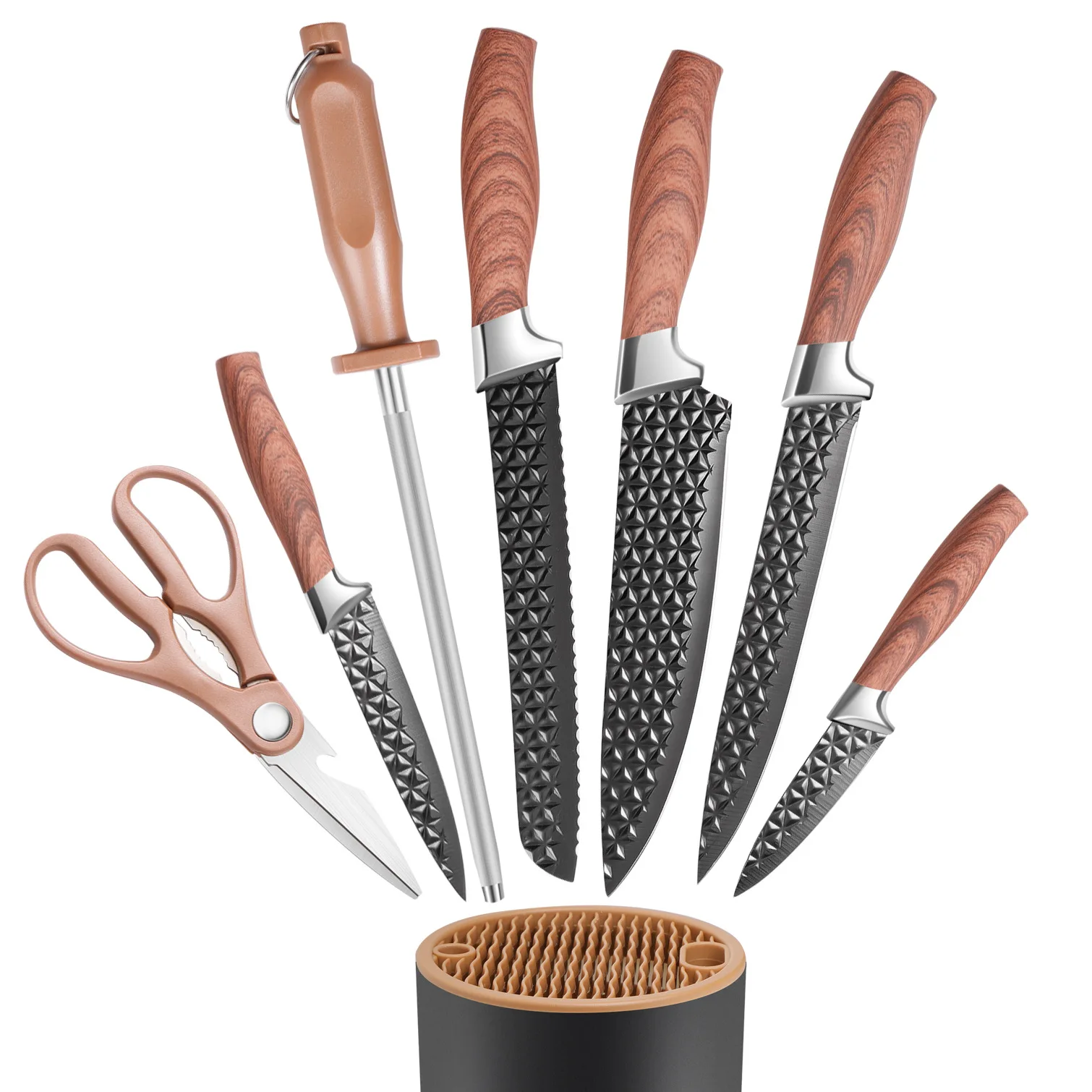
After testing dozens of sets, we found one that checks all the boxes for home cooks: the IOKO Chef Slicing Sushi Steak Santoku Knife Set Chef’s Vegetable Fruit JapaneseStyle 7 PCS Kitchen Knife Set. It includes a Santoku knife, chef’s knife, bread knife, utility knife, paring knife, shears, and a sharpening rod—all with high-carbon stainless steel blades and ergonomic handles. The set covers all essential tasks, from slicing sushi to chopping vegetables, and the blades hold an edge well with regular honing. It’s a practical, no-fuss choice that won’t break the bank.
Maintenance Tips for Longevity
To keep your knives performing for years, follow these simple rules: hand wash with mild soap and dry immediately—never leave them soaking or put them in the dishwasher (the heat and detergent dull blades and damage handles). Store them in a block or on a magnetic strip, not loose in a drawer. Use a cutting board made of wood or soft plastic—glass, stone, or ceramic boards will dull your edge quickly. Oil wooden handles every few months with mineral oil to prevent drying. Sharpen when you feel resistance while cutting (usually every 2-3 months for home use). A little care goes a long way: a well-maintained knife set can last decades.
Final Thoughts
Choosing the best kitchen knife set comes down to matching the tools to your cooking style and preferences. Focus on blade material, handle comfort, and the right components for your tasks. A set like the one we highlighted offers a solid foundation without unnecessary extras. Remember: a sharp knife is a joy to use, so invest in maintenance tools and techniques. Happy cooking!
IOKO Chef Slicing Sushi Steak Santoku Knife Set Chef’s Vegetable Fruit JapaneseStyle 7 PCS Kitchen Knife Set
We recommend the IOKO Chef Slicing Sushi Steak Santoku Knife Set Chef’s Vegetable Fruit JapaneseStyle 7 PCS Kitchen Knife Set for its balanced performance and value.
Frequently asked questions
How many knives do I really need in a set?
A basic set of 5-7 pieces (chef’s, paring, bread, utility, Santoku, shears, and a honing rod) covers most home cooking needs. Avoid large sets with specialty knives you’ll rarely use.
What is the best blade material for a kitchen knife set?
High-carbon stainless steel (like VG-10 or X50CrMoV15) offers the best balance of sharpness, edge retention, and rust resistance for most home cooks.
How often should I sharpen my knives?
Hone weekly with a steel rod and sharpen with a whetstone every 2-3 months, or when you notice the knife struggling to cut through a tomato skin.
Is a Santoku knife better than a chef’s knife?
It depends on your preference. Santoku knives are lighter and better for slicing and dicing vegetables, while chef’s knives are more versatile for heavy chopping and meat. Many sets include both.
