
Blog
The Complete Guide to Stainless Steel Cooking Utensils
Kitchen Essentials
Why Stainless Steel Cooking Utensils Win
Whether you’re a seasoned chef or a home cook, stainless steel cooking utensils offer the perfect balance of durability and performance. Here’s everything you need to know before buying.
Why Choose Stainless Steel Over Other Materials?
Stainless steel is a favorite among professional and home cooks for good reason. Unlike plastic or silicone, it won’t melt or warp under high heat. Wooden utensils can absorb moisture and harbor bacteria, while stainless steel is non-porous and naturally antimicrobial. Plus, it’s incredibly durable—a good set can last decades with proper care.
Key Features to Look For
Not all stainless steel utensils are created equal. Here’s what to check before you buy:
- Grade: Look for 18/10 or 18/8 stainless steel for the best corrosion resistance.
- Weight: Heavier utensils feel more substantial and don’t flex under pressure.
- Handle Design: Solid handles without rivets are easier to clean. Some have silicone grips for comfort.
- Finish: A brushed or matte finish hides scratches better than a mirror polish.
Essential Utensils for Your Kitchen
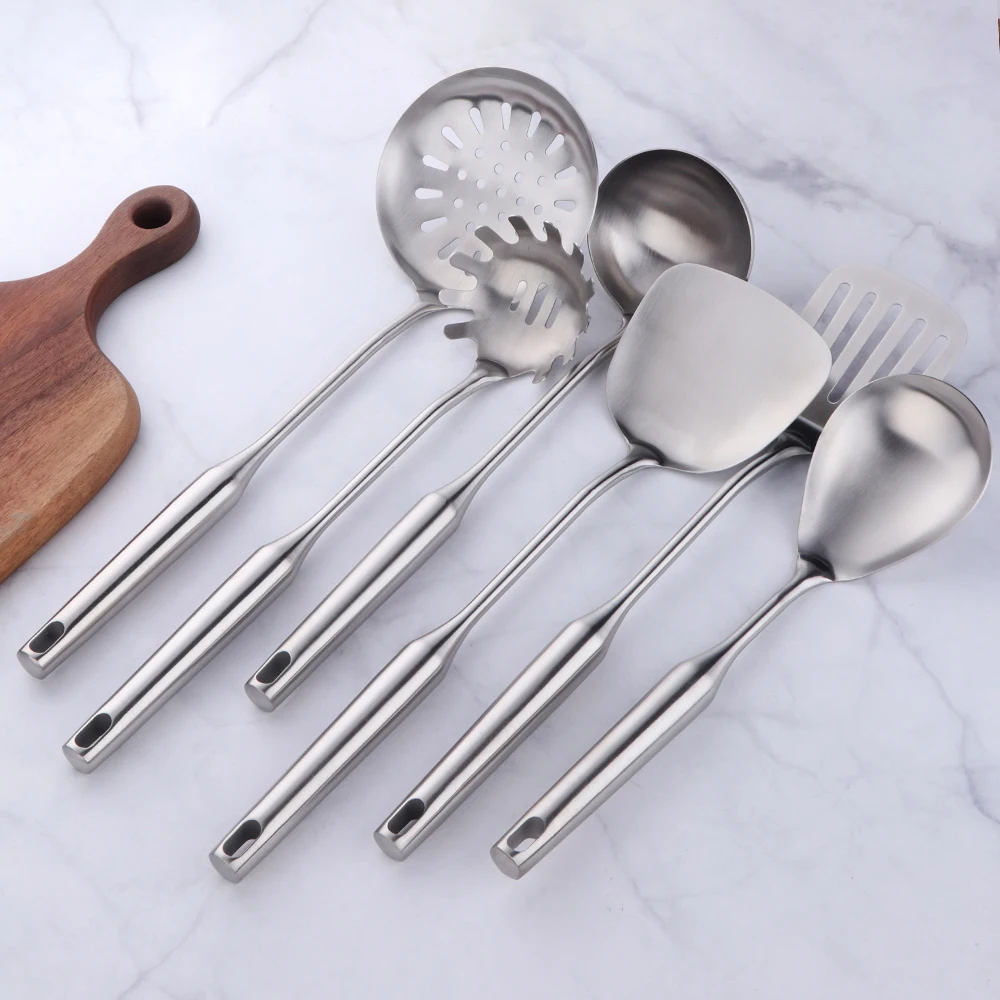
Start with these basics: a slotted spoon for draining pasta, a solid turner for flipping pancakes, a ladle for soups, and a colander for rinsing. Many sets include a spaghetti server or a skimmer, which are nice-to-haves. Aim for at least 5-7 core pieces to cover most cooking tasks.
Slotted Spoon
Perfect for lifting foods out of liquid while leaving the broth behind. Use it for poached eggs, boiled potatoes, or blanched vegetables.
Solid Turner
Essential for non-stick pans (though be gentle to avoid scratching). Great for eggs, fish, and stir-fries.
Ladle
Choose one with a deep bowl and a sharp pouring lip. Ideal for soups, stews, and sauces.
How to Care for Stainless Steel Utensils
To keep them looking new, wash with warm soapy water and dry immediately to avoid water spots. Avoid abrasive scrubbers that can scratch the surface. For stubborn grease, use a paste of baking soda and water. Never leave them soaking in salt water for long periods, as it can cause pitting.
Common Myths Debunked
Myth: Stainless steel scratches non-stick pans. Actually, the edges of stainless steel utensils are usually rounded, so they’re safe for most non-stick coatings as long as you use gentle pressure.
Myth: They’re too heavy. While heavier than plastic, modern designs are well-balanced. You’ll get used to the weight quickly.
When to Replace Your Utensils
Stainless steel is tough, but it’s not indestructible. Replace any utensil that develops sharp burrs, cracks, or loose handles. Also, if you notice rust spots (though rare with quality steel), it’s time for a new set.
Budgeting for Quality
You don’t need to spend a fortune. A mid-range set from a reputable brand will serve you well. Avoid ultra-cheap options that may be made from lower-grade steel and can discolor or rust. Investing in a good set saves money in the long run.
1/7/10Pcs Kitchen Utensils Cooking tools Stainless Steel Shovels Turner Ladle Soup Spoon Colander Filter Silver for Restaurant
For a reliable starter set, consider the 1/7/10Pcs Kitchen Utensils set in stainless steel—it covers all the basics without breaking the bank.
Frequently asked questions
Can stainless steel utensils be used with non-stick pans?
Yes, most stainless steel utensils have rounded edges that won’t scratch non-stick coatings. However, use gentle pressure to avoid damage.
Are stainless steel utensils dishwasher safe?
Generally yes, but hand washing is recommended to prevent water spots and maintain the finish. If using a dishwasher, dry immediately after the cycle.
What is the difference between 18/10 and 18/0 stainless steel?
18/10 contains 18% chromium and 10% nickel, offering superior corrosion resistance and shine. 18/0 has no nickel, is less shiny, but is still durable and often magnetic.
How do I remove rust from stainless steel utensils?
Make a paste of baking soda and water, apply to the rust spot, let sit for 15 minutes, then scrub gently with a soft cloth. Rinse and dry thoroughly.
