
Blog
The Ultimate Cast Iron Frying Pan Buying Guide
Kitchen Essentials
Find Your Perfect Cast Iron Frying Pan
A cast iron frying pan is a kitchen workhorse that can last for generations if you choose wisely. Whether you’re searing steaks or frying eggs, the right pan makes all the difference.
Why Choose a Cast Iron Frying Pan?
Cast iron pans offer unmatched heat retention and even cooking. They can go from stovetop to oven, making them ideal for searing, baking, and frying. With proper care, a cast iron pan becomes naturally non-stick and can last a lifetime.
Key Factors to Consider
Size Matters
The most common sizes are 24 cm, 26 cm, and 28 cm. A 24 cm pan is great for single servings or small meals, while 28 cm is perfect for family cooking. Consider your typical portion sizes and stovetop burner size.
Weight and Handle
Cast iron is heavy. Look for a pan with a comfortable, heat-resistant handle. Some models have an anti-scald handle or a helper handle for easier lifting.
Surface and Seasoning
A smooth cooking surface is easier to season and clean. Pre-seasoned pans save time, but you can always add your own seasoning layer.
How to Season Your Cast Iron Pan
Seasoning creates a natural non-stick coating. Apply a thin layer of vegetable oil to the pan, then bake it upside down at 450°F for an hour. Repeat several times for a durable finish. Over time, cooking with oil will further build the seasoning.
Cooking Tips for Cast Iron
- Preheat the pan slowly to avoid warping.
- Use medium heat – cast iron retains heat well.
- Avoid cooking acidic foods for long periods, as they can strip seasoning.
- Use metal utensils once the seasoning is well-established.
Cleaning and Maintenance
Clean your pan while it’s still warm with hot water and a stiff brush. Avoid soap – it can remove seasoning. Dry thoroughly and apply a light coat of oil to prevent rust. For stuck-on food, scrub with coarse salt and oil.
Common Mistakes to Avoid
- Don’t soak the pan in water.
- Don’t put it in the dishwasher.
- Don’t use high heat – it can damage the seasoning.
- Don’t store food in the pan.
Our Recommended Pick
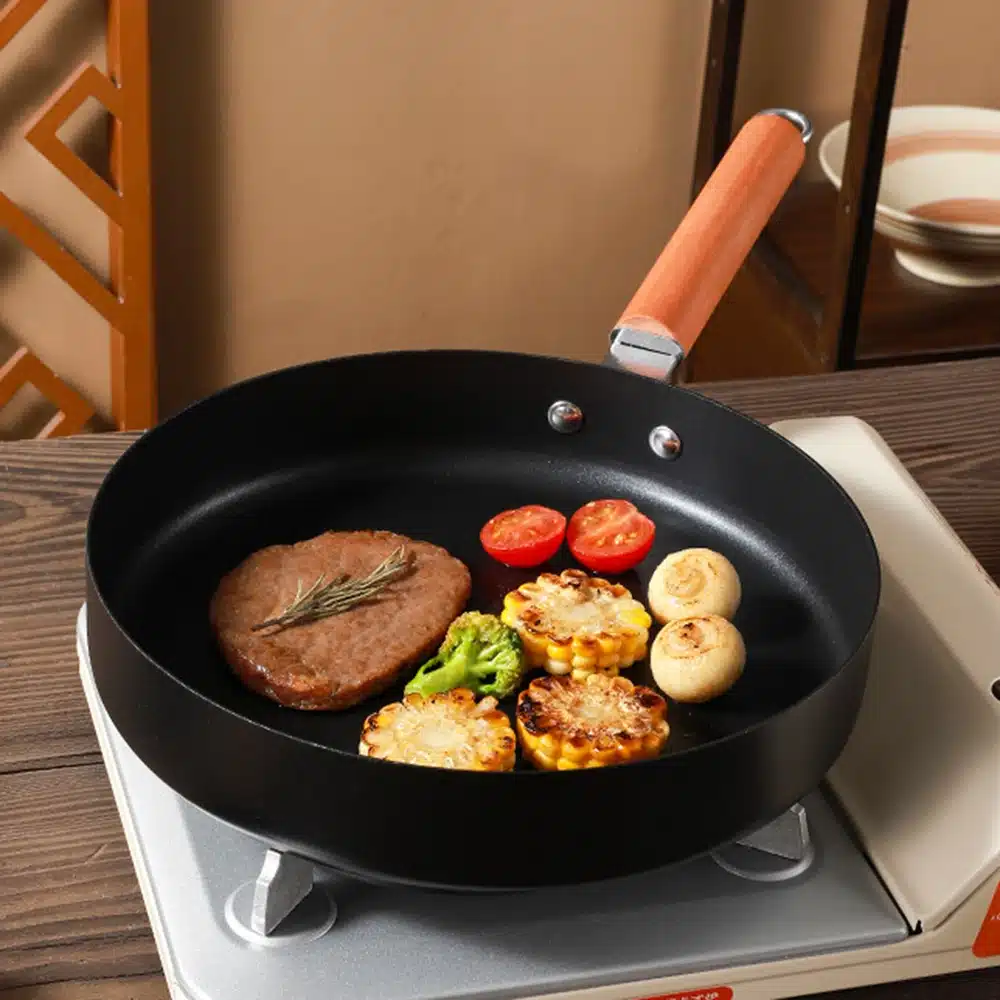
If you’re looking for a versatile and reliable option, consider a flat-bottomed cast iron frying pan with a non-stick surface and anti-scald handle, available in 24, 26, and 28 cm sizes. It’s perfect for eggs, steaks, and everyday cooking.
24/26/28 cm xNon-stick Flat-bottomed Frying Pan Cast Iron Egg Steak Frying Pans Kitchen Cookware Anti-scald Handle Cooking Pot
Our 24/26/28 cm non-stick flat-bottomed cast iron frying pan with anti-scald handle offers a balanced blend of traditional durability and modern convenience.
Frequently asked questions
Can I use a cast iron pan on an induction cooktop?
Yes, most cast iron pans work on induction cooktops because they are magnetic. Just make sure the bottom is flat for good contact.
How do I remove rust from my cast iron pan?
Scrub rust with steel wool and soap, then dry and re-season the pan immediately. Apply oil and bake to restore the non-stick surface.
Is it safe to cook acidic foods in cast iron?
Occasional acidic cooking is fine, but prolonged exposure can leach iron into food and damage seasoning. Use enameled cast iron for frequent acidic dishes.
How often should I season my cast iron pan?
Season when food starts sticking or the surface looks dry. For daily use, re-season every few months or as needed.
