
Blog
The Ultimate Guide to Choosing a Nakiri Knife
Knife Guide
Your Essential Guide to the Nakiri Knife
The nakiri knife is a versatile Japanese vegetable knife that excels at chopping, slicing, and dicing. In this guide, we’ll help you find the right one for your kitchen.
What Makes a Nakiri Knife Special?
The nakiri knife, with its rectangular blade and flat edge, is purpose-built for vegetable preparation. Unlike a chef’s knife, its straight blade makes contact with the cutting board along its entire length, allowing for clean, precise cuts without the rocking motion. This design reduces wrist fatigue and gives you exceptional control over your ingredients.
Blade Materials: Carbon vs. Stainless Steel
Nakiri knives come in various steels. Carbon steel takes an incredibly sharp edge and is easy to sharpen, but it requires immediate drying after use to prevent rust. Stainless steel is more forgiving, resists corrosion, and needs less maintenance. Some knives combine materials: a stainless outer layer protects a high-carbon core, offering the best of both worlds.
Layered Construction
Many traditional nakiri knives are forged with multiple layers of steel. This technique, known as san-mai, creates a blade that’s both durable and sharp. The layers can also produce a beautiful pattern on the blade’s surface.
Handle Types and Comfort
Japanese handles (wa) are typically octagonal or D-shaped, made from magnolia or pakka wood. They’re lighter and allow for a pinch grip. Western handles (yo) are heavier and more familiar to those used to European knives. Choose based on your comfort and grip style.
- Octagonal (hakkaku): Balanced and comfortable for most hands.
- D-shaped: Ergonomically designed for right-handed users (lefty versions exist).
- Western: Full tang with rivets, often heavier.
Blade Length and Weight
Standard nakiri blades range from 6 to 7 inches. A 6.5-inch blade is a versatile sweet spot, long enough to slice large cabbages but nimble enough for precise work. Heavier blades (around 7-8 oz) help power through dense vegetables, while lighter blades offer agility.
Edge Geometry: Double vs. Single Bevel
Most nakiri knives are double-beveled (symmetrical edge), making them easier for both right- and left-handed cooks. Single-bevel knives (typically right-handed) offer a sharper edge but require more skill to use. For most home cooks, a double-bevel is the practical choice.
Caring for Your Nakiri Knife
To keep your nakiri performing its best, hand wash and dry immediately after use. Avoid dishwashers and hard cutting boards (glass, stone). Use a wooden or plastic board. Regular honing with a ceramic rod and occasional sharpening on whetstones will maintain the edge.
- Store in a knife block, magnetic strip, or blade guard.
- Never use on bones or frozen foods.
- Oil carbon steel blades occasionally to prevent rust.
Choosing the Right Nakiri for You
Consider your cooking habits: if you prep lots of vegetables daily, a nakiri is invaluable. Look for a comfortable handle, a blade length that suits your hand size, and a steel type that matches your maintenance preferences. A well-chosen nakiri will become your go-to tool for salads, stir-fries, and soups.
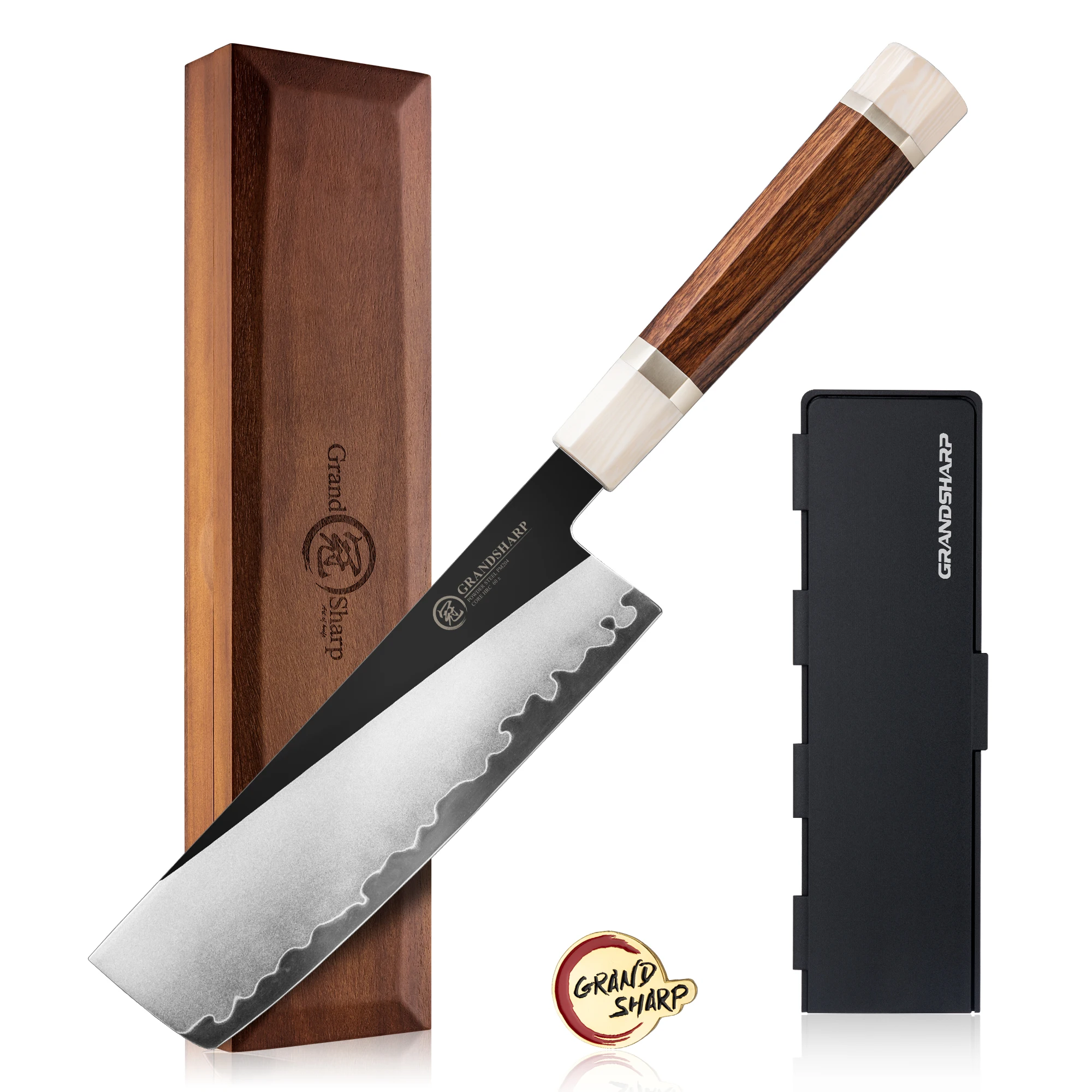
Grandsharp Professional 6.5”Nakiri Knife Steel Core 3 Layer Composite with Mkuruti Wood Handle Japanese Style Chef Knife
For a reliable everyday companion, consider the Grandsharp Professional 6.5” Nakiri Knife: its steel core and layered composite construction offer lasting sharpness with a comfortable Mkuruti wood handle.
Frequently asked questions
Can a nakiri knife be used for meat?
While a nakiri is designed for vegetables, its flat blade can slice boneless meat or fish. However, it’s not ideal for cutting through bones or dense proteins. A gyuto or chef’s knife would be better for heavy meat work.
What’s the difference between a nakiri and a usuba?
Both are Japanese vegetable knives, but a usuba is single-beveled (typically for right-handed users) and thinner, used for precise decorative cuts. A nakiri is double-beveled, more versatile, and easier for beginners.
How often should I sharpen my nakiri knife?
Depending on use, honing with a rod weekly helps maintain the edge. Sharpening on whetstones every few months (or when it feels dull) is recommended. If you use it daily, you might need to sharpen more often.
What is the best cutting board for a nakiri knife?
Wooden or soft plastic boards are best. They are gentle on the edge and reduce wear. Avoid glass, marble, or bamboo boards, as they are hard and can dull the blade quickly.
