
Blog
The Ultimate Stainless Steel Kitchen Knife Buying Guide
Knife Guide
Your Perfect Stainless Steel Kitchen Knife Awaits
Choosing a stainless steel kitchen knife can transform your cooking experience, but with so many options, it’s easy to feel overwhelmed. This guide will help you find the right blade for your needs.
Why Stainless Steel?
Stainless steel knives offer a great balance of durability, rust resistance, and ease of maintenance. Unlike carbon steel, they don’t require special care to prevent staining or rusting, making them ideal for home cooks. The chromium content forms a protective layer, ensuring the blade stays sharp and corrosion-free with minimal effort.
Key Steel Types
Not all stainless steel is equal. Here’s what to look for:
- German Steel (e.g., X50CrMoV15): Known for toughness and easy sharpening, but slightly less edge retention.
- Japanese Steel (e.g., VG-10, AUS-8): Harder, holds an edge longer, but can be more brittle. Often used in high-end chef knives.
- High-Carbon Stainless: Combines the best of both worlds: edge retention of carbon steel with rust resistance of stainless.
Blade Hardness and Edge Retention
Hardness is measured on the Rockwell scale (HRC). For kitchen knives, 56-58 HRC is standard; 60+ HRC offers superior edge retention but requires careful handling. A harder blade stays sharp longer but may chip if misused. For most home cooks, 58-60 HRC is the sweet spot.
What Does HRC Mean for You?
A higher HRC means less frequent sharpening, but you’ll need a quality sharpener to maintain the edge. Lower HRC knives are easier to sharpen but need more frequent touch-ups.
Knife Shapes and Their Uses
Different tasks call for different blade shapes:
- Chef’s Knife (8-10 inches): The workhorse for chopping, slicing, and dicing.
- Santoku (5-7 inches): A versatile Japanese blade excellent for meat, fish, and vegetables with a flatter edge.
- Paring Knife (3-4 inches): For intricate work like peeling and trimming.
- Boning/Fillet Knife: For deboning meat and filleting fish.
Handle and Ergonomics
A comfortable, secure grip is essential. Look for full tang (blade extends through handle) for balance. Handle materials include:
- Wood: Classic and comfortable, but requires more care.
- Synthetic (e.g., Pakkawood, G-10): Durable, moisture-resistant, and easy to clean.
- Stainless Steel: Hygienic but can be slippery when wet.
Choose a handle that fits your hand size and feels balanced in your grip.
Maintenance and Sharpening
To keep your knife performing, follow these tips:
- Hand wash with mild soap and dry immediately—avoid dishwashers.
- Use a honing rod weekly to realign the edge.
- Sharpen with a whetstone or quality sharpener when dull (every few months with regular use).
- Store in a knife block, magnetic strip, or blade guard to protect the edge.
Budget and Value
You don’t need to spend a fortune. Good stainless steel knives start around $30-50 for a reliable chef’s knife. Mid-range ($60-120) offers better steel and construction. High-end ($150+) often features premium materials and craftsmanship. Consider your cooking frequency and skill level.
For a top-tier option that balances quality and value, look for a Japanese-style chef knife with high-carbon stainless steel, full tang, and a comfortable handle.
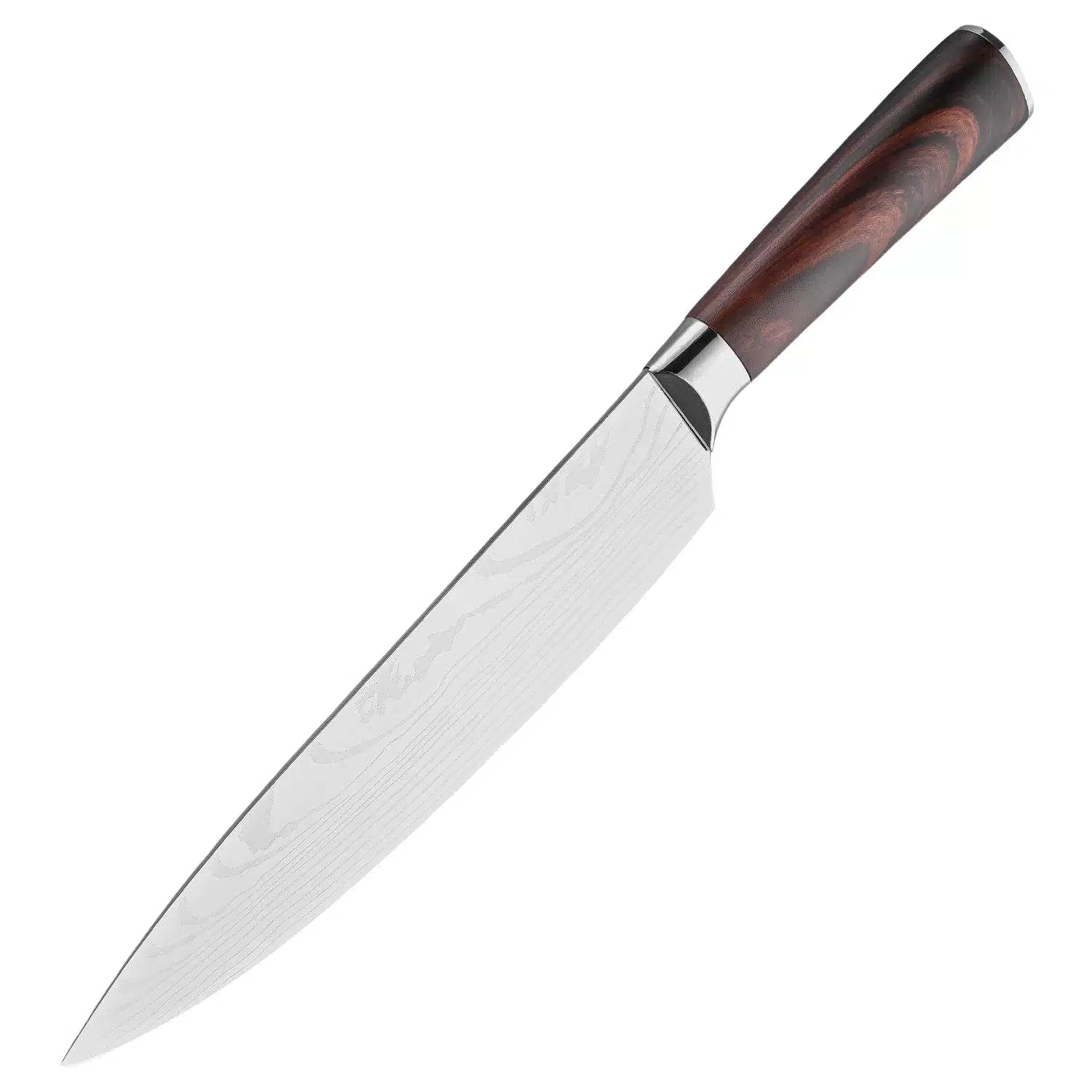
High Quality Stainless Steel Japanese Chef Knife Sharp 8 Inch Kitchen Santoku Knife
For a reliable and sharp blade that excels in everyday tasks, consider the High Quality Stainless Steel Japanese Chef Knife Sharp 8 Inch Kitchen Santoku Knife—it’s a versatile choice that won’t disappoint.
Frequently asked questions
What is the best stainless steel for kitchen knives?
The best stainless steel depends on your needs. For home cooks, VG-10 or AUS-8 offer excellent edge retention and rust resistance. German steels like X50CrMoV15 are tougher and easier to sharpen. High-carbon stainless (e.g., 14C28N) combines the best of both.
How often should I sharpen my stainless steel knife?
With regular use, sharpen every 2-3 months. Use a honing rod weekly to maintain the edge. Signs it’s time: the knife slips when cutting tomatoes or requires more pressure.
Can I put stainless steel knives in the dishwasher?
No. Dishwashers can dull the blade, damage the handle, and cause corrosion over time. Always hand wash and dry immediately to preserve your knife.
What is the difference between a chef’s knife and a Santoku?
A chef’s knife (typically 8 inches) has a curved blade for rocking cuts. A Santoku (5-7 inches) has a flatter edge, ideal for push-cutting and slicing. Santoku knives are lighter and often have a sheepsfoot tip for precision.
