
Blog
The Ultimate Stainless Steel Knife Set Buying Guide
Kitchen Essentials
How to Choose a Stainless Steel Knife Set
Choosing the right stainless steel knife set can transform your cooking experience. Whether you’re a home cook or a professional, the right knives make all the difference.
Why Stainless Steel?
Stainless steel is the most popular material for kitchen knives because it resists rust and corrosion while maintaining a sharp edge. Unlike carbon steel, it doesn’t require special care and is dishwasher safe (though hand washing is recommended). High-carbon stainless steel offers the best of both worlds: edge retention of carbon steel and corrosion resistance of stainless.
Key Features to Look For
When shopping for a knife set, focus on these critical elements:
- Blade Material: Look for high-carbon stainless steel (e.g., X50CrMoV15) for durability and sharpness.
- Hardness: Measured on the Rockwell scale (HRC). Aim for 56-58 HRC for a balance of edge retention and ease of sharpening.
- Handle Comfort: Ergonomically designed handles reduce fatigue. Materials like Pakkawood, polypropylene, or stainless steel with rubberized grips are common.
- Full Tang: A blade that extends through the handle provides balance and strength.
Essential Knives in a Set
A good set covers basic tasks without unnecessary extras. Typically, include:
- Chef’s Knife (8-inch): The workhorse for chopping, slicing, and dicing.
- Paring Knife (3-4 inch): For peeling and small detail work.
- Bread Knife (8-10 inch): Serrated edge for bread and tomatoes.
- Utility Knife (5-7 inch): Versatile for sandwiches or fruit.
- Steak Knives: For serving meat.
- Kitchen Shears: For cutting herbs, opening packages, or trimming poultry.
Some sets also include a honing steel and a storage block or magnetic strip.
Handle Materials and Ergonomics
The handle affects comfort and control. Common materials:
- Wood (e.g., Pakkawood): Warm, comfortable, but requires maintenance to avoid cracking.
- Plastic/Rubber: Durable, slip-resistant, and dishwasher safe (check manufacturer).
- Stainless Steel: Modern look but can be slippery when wet; often combined with textured grips.
An ergonomic handle with a full tang ensures a secure grip and reduces wrist strain.
Caring for Your Knife Set
Proper maintenance extends the life of your knives:
- Hand wash with mild soap and dry immediately; avoid dishwasher (detergents and high heat can damage blades and handles).
- Hone regularly with a honing steel (weekly) to realign the edge.
- Sharpen occasionally with a whetstone or professional service (every 6-12 months).
- Store safely in a knife block, magnetic strip, or blade guards to prevent dulling and accidents.
Never cut on glass, stone, or metal surfaces—use wood or plastic cutting boards.
Storage Options
Knife blocks are convenient but can harbor bacteria; look for open designs or magnetic blocks. Magnetic strips save counter space but require sturdy mounting. For travel or small kitchens, blade guards or rolls are ideal. A wooden stand not only looks elegant but also protects blades.
Budget Considerations
You don’t need to spend a fortune. Quality stainless steel sets range from $50 to $200 for home use. Focus on blade construction and comfort rather than brand names. Avoid sets with many unnecessary knives; a 6-8 piece set usually suffices. Remember, a sharp, well-balanced knife is safer than a dull one.
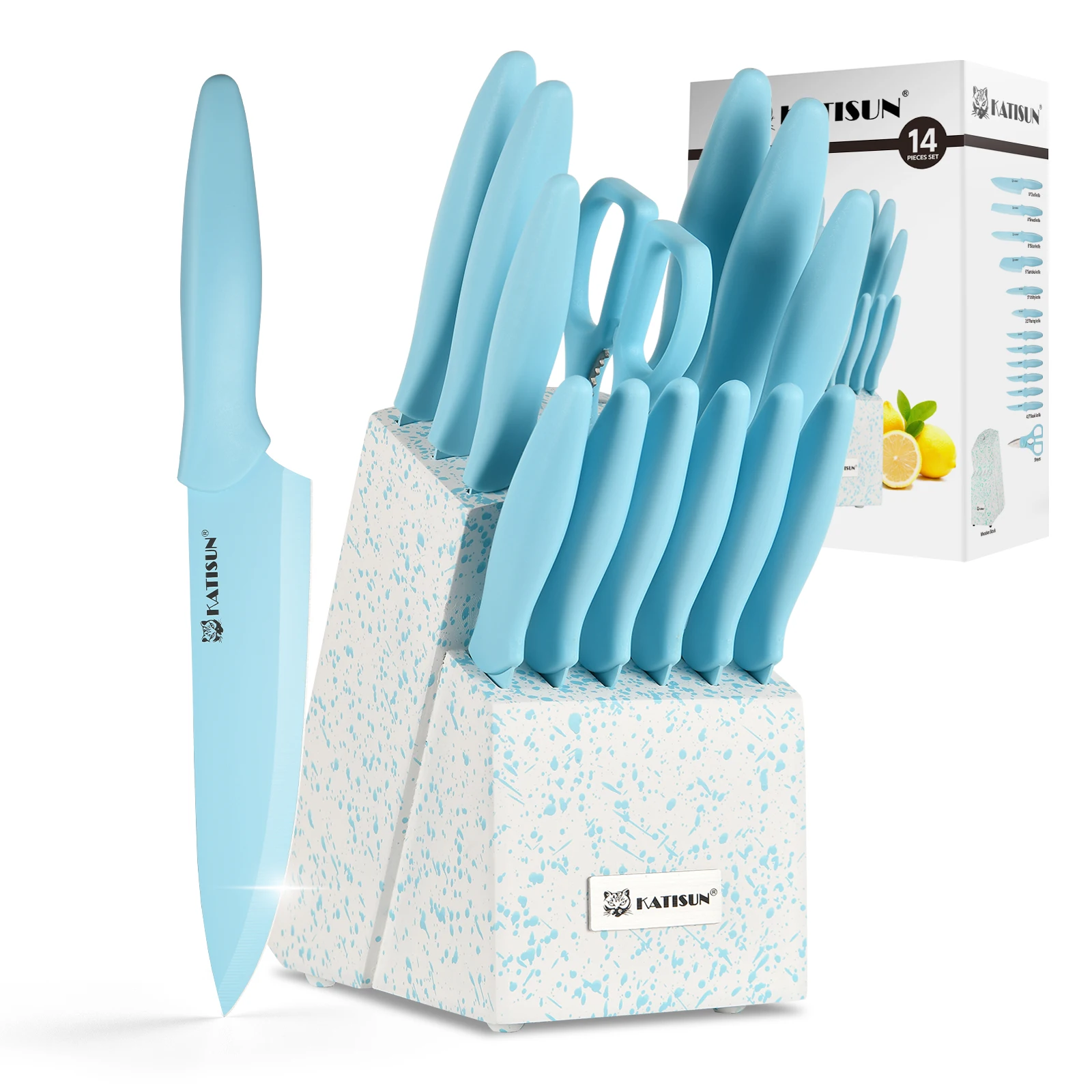
No Rust 14 Pieces Blue Stainless Steel Blade Kitchen Knife Set with Wooden Stand Kitchen Scissors
For a reliable starter set that balances quality and value, consider the No Rust 14 Pieces Blue Stainless Steel Blade Kitchen Knife Set with Wooden Stand Kitchen Scissors.
Frequently asked questions
What is the best stainless steel for knives?
High-carbon stainless steel (like X50CrMoV15) is ideal because it combines rust resistance with good edge retention and ease of sharpening.
How many knives do I really need in a set?
A 6-8 piece set with chef’s, paring, bread, utility, and steak knives plus shears covers most tasks. Avoid bloated sets with redundant knives.
Can I put stainless steel knives in the dishwasher?
Technically yes, but hand washing is recommended. Dishwasher detergents and high heat can dull blades, damage handles, and cause pitting over time.
How often should I sharpen my knives?
Hone weekly with a steel. Sharpen with a whetstone every 6-12 months, or when the knife struggles to cut through a tomato cleanly.
