
Blog
The Ultimate Wooden Cutting Board Buying Guide
Buying Guide · Kitchen
Wooden Cutting BoardsCutting How to Choose the Best One
A wooden cutting board is more than a kitchen tool—it’s a surface that can last decades with proper care. Whether you’re a home cook or a professional, choosing the right board matters.
Why Wooden Cutting Boards?
Wooden cutting boards are gentle on knives, naturally antimicrobial, and develop a beautiful patina over time. Unlike plastic or glass, wood absorbs impact, reducing blade dulling and preventing slips. Plus, they add warmth to your kitchen.
Wood Types Explained
Hard Maple
Hard maple is dense, tight-grained, and resists moisture absorption. It’s a top choice for durability and knife-friendliness. Look for American hard maple for the best quality.
Walnut
Walnut is softer than maple but still durable. Its rich chocolate color adds elegance. It’s slightly more porous, so oiling is essential.
Cherry
Cherry wood is medium-hard with a reddish hue that darkens over time. It’s gentle on knives but may show knife marks more readily.
Teak
Teak is naturally water-resistant and very hard. It’s excellent for heavy use but can be tough on knife edges. Ensure it’s food-safe and untreated.
Grain: Edge Grain vs End Grain
Edge grain boards have the wood grain running parallel to the surface. They are durable, easy to maintain, and less expensive. End grain boards feature the wood fibers facing up, forming a butcher-block style. They are extremely knife-friendly as the fibers seal cuts. End grain boards require more oil and care but last longer.
Size and Thickness
Choose a board at least 1.5 inches thick to prevent warping. For everyday use, a 12×18 inch board is versatile. Larger boards (18×24) are great for meal prep. Consider your counter space and storage.
Features to Look For
- Juice groove: A channel around the edge catches juices from meat or fruit, preventing messes.
- Handles: Cutouts or handles make lifting easier, especially for large boards.
- Feet: Rubber or silicone feet keep the board stable and allow air circulation underneath.
- Finish: Look for boards treated with food-grade mineral oil or beeswax.
Caring for Your Wooden Board
Never soak or put in dishwasher. Wash with warm water and mild soap, then dry immediately. Apply food-grade mineral oil monthly to prevent drying and cracking. For deeper conditioning, use a beeswax and oil blend.
Avoiding Common Mistakes
- Don’t use olive or vegetable oils—they can go rancid.
- Avoid cutting raw meat on the same side as vegetables without cleaning in between.
- Don’t leave in direct sunlight or near heat sources.
Budget and Value
Quality wooden boards range from $30 to $200+. A mid-range board ($50-$100) often offers the best balance of durability and cost. Thicker, end-grain boards cost more but last decades.
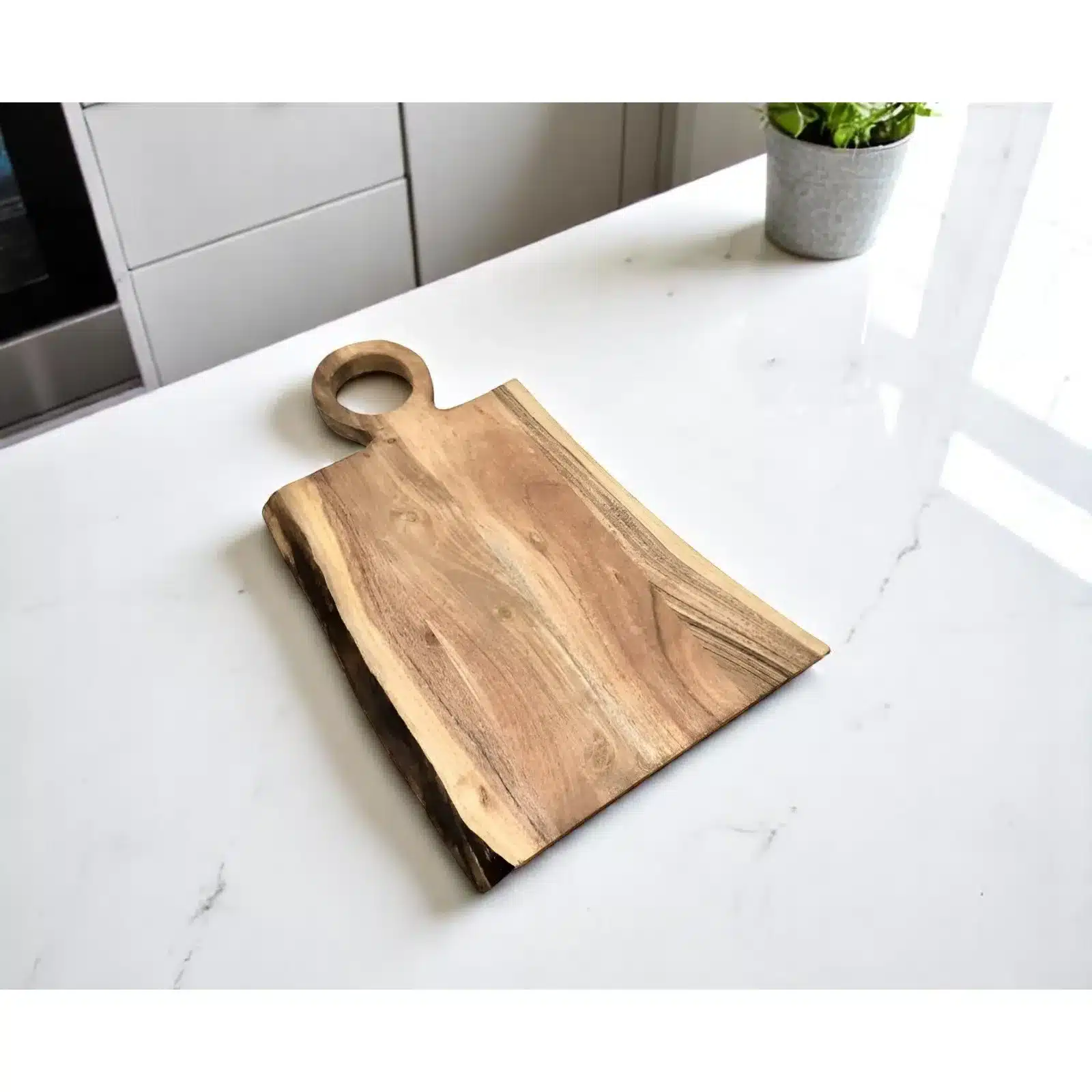
22″ Brown Live Edge Solid Wood Cutting Board
For a stunning, durable option, consider the 22″ Brown Live Edge Solid Wood Cutting Board—its unique live edge and thick walnut construction blend beauty with function.
Frequently asked questions
How often should I oil my wooden cutting board?
Oil your board once a month or when the wood looks dry. In dry climates or with heavy use, oil every two weeks. Always use food-grade mineral oil.
Can I use a wooden cutting board for raw meat?
Yes, wood is naturally antimicrobial. However, clean thoroughly with hot soapy water after use. Some prefer separate boards for meat and produce.
What’s the difference between edge grain and end grain?
Edge grain has parallel grain lines; it’s durable and easy to maintain. End grain has fibers facing up, making it more knife-friendly and self-healing, but requires more oil.
How do I remove stains and odors from my board?
Sprinkle coarse salt or baking soda over the board, then rub with half a lemon. Let sit for 5 minutes, rinse, and dry. For deep stains, use a paste of hydrogen peroxide and baking soda.
