
Blog
How to Choose a Vintage Wooden Chest for Your Home
Buying Guide
The Charm of a Vintage Wooden Chest
A vintage wooden chest is more than just storage; it’s a piece of history that brings warmth and character to any room. Whether you’re a seasoned collector or a first-time buyer, this guide will help you find the perfect chest for your space.
Why Choose a Vintage Wooden Chest?
Vintage wooden chests offer a unique blend of functionality and aesthetic appeal. Unlike modern mass-produced furniture, each chest has its own story, visible in the grain of the wood, the patina of age, and the craftsmanship of its joinery. They serve as versatile storage solutions for blankets, books, or heirlooms, while doubling as a statement piece. When you bring a vintage wooden chest into your home, you’re not just buying furniture—you’re preserving a piece of the past.
Beyond storage, these chests can anchor a room’s design. A well-chosen chest adds texture and depth, contrasting with sleek modern lines or complementing a rustic interior. The key is to select a piece that resonates with your personal style while meeting practical needs.
Styles of Vintage Wooden Chests
Vintage wooden chests come in a variety of styles, each reflecting the era and region of their origin. Understanding these styles can help you narrow down your search.
Traditional Carved Chests
These often feature intricate hand-carved motifs, such as floral patterns, geometric designs, or mythological scenes. They are typical of European craftsmanship from the 18th and 19th centuries. If you love detail and history, a carved chest might be your perfect find.
Rustic Farmhouse Chests
Characterized by solid construction, simple lines, and often a distressed finish, farmhouse chests evoke a cozy, lived-in feel. They are ideal for country-style homes or adding a touch of warmth to a modern space.
Colonial and Campaign Chests
These were designed for travel, often with brass hardware and sturdy dovetail joints. Campaign chests are compact and stackable, making them practical for tight spaces. Their clean lines appeal to those who prefer understated elegance.
Painted and Decorated Chests
Some vintage chests are adorned with painted scenes, folk art, or decorative stenciling. These pieces are especially charming in eclectic or bohemian interiors. The paint may show wear, which adds to their character.
Materials and Construction Quality
The durability and beauty of a vintage wooden chest depend largely on the wood and how it was built. Common woods include oak, pine, mahogany, and walnut. Oak is sturdy and heavy, with a pronounced grain; pine is lighter and often shows knots; mahogany offers a rich, dark tone; walnut is prized for its fine grain and deep color.
Examine the joinery—dovetail joints, mortise and tenon, or pegged construction indicate quality. Avoid pieces with excessive glue or modern nails, which may signal poor restoration. Check for stability: the chest should sit flat, and the lid or drawers should open smoothly. Look for signs of woodworm or rot, especially in older pieces. A little wear is charming, but structural integrity is paramount.
For more on wood types and their properties, see this Wikipedia article on wood.
Factors to Consider Before Buying
Before you commit to a vintage wooden chest, think about where it will go and what you’ll store. Measure your space carefully—a chest that’s too large can overwhelm a room, while a small one might not serve its purpose. Consider the chest’s depth and height relative to other furniture.
Think about accessibility: if you plan to use it for daily items, a chest with drawers or a lift-top that’s easy to open is best. For seasonal storage, a heavy lid might be fine. Also, consider the chest’s weight—vintage chests can be quite heavy, so ensure your floor can support it and that you can move it into place.
Style matters too. A chest with ornate carvings might clash with minimalist decor, while a simple pine chest could look lost in a grand foyer. Let your existing furniture guide your choice, but don’t be afraid to mix eras for an eclectic look.
Where to Display Your Vintage Wooden Chest
A vintage wooden chest is versatile enough to fit in almost any room. Here are some ideas:
- Living Room: Use it as a coffee table alternative, or place it against a wall for extra seating and storage. Top it with a tray for drinks or display a lamp and books.
- Bedroom: At the foot of the bed, it can hold extra linens or out-of-season clothing. A smaller chest can serve as a nightstand with character.
- Entryway: Store shoes, umbrellas, and mail. The top can hold a bowl for keys and a vase for flowers.
- Home Office: Use it to store files or supplies, and top it with a printer or lamp.
- Hallway: A narrow chest fits perfectly in a hallway, providing storage without blocking traffic.
Remember to protect the chest from direct sunlight and extreme humidity, which can warp the wood. Use coasters and felt pads to prevent scratches.
Caring for Your Vintage Wooden Chest
Proper care will ensure your chest lasts for generations. Dust regularly with a soft cloth. Avoid harsh chemicals; instead, clean with a damp (not wet) cloth and mild soap if needed. Dry immediately. For wood that looks dull, apply a high-quality furniture wax or oil every few months. If the chest has painted surfaces, test any cleaner in an inconspicuous area first.
To prevent damage, keep the chest away from heating vents and radiators. Use felt pads on the bottom to protect floors. If the chest has metal hardware, polish it gently with a suitable cleaner. Address any loose joints or hardware promptly to avoid further damage.
Where to Find Vintage Wooden Chests
You can find vintage wooden chests at antique stores, estate sales, flea markets, and online marketplaces. Each source has its pros and cons. Antique dealers often have curated selections with known histories, but prices may be higher. Estate sales can yield bargains, but you’ll need to inspect carefully. Online shopping offers convenience, but you can’t examine the piece in person. Always ask for detailed photos and descriptions, and check return policies.
If you’re looking for a chest that combines vintage charm with modern functionality, consider pieces that have been restored or repurposed. Some sellers offer chests with added drawers or compartments, blending old-world beauty with contemporary needs.
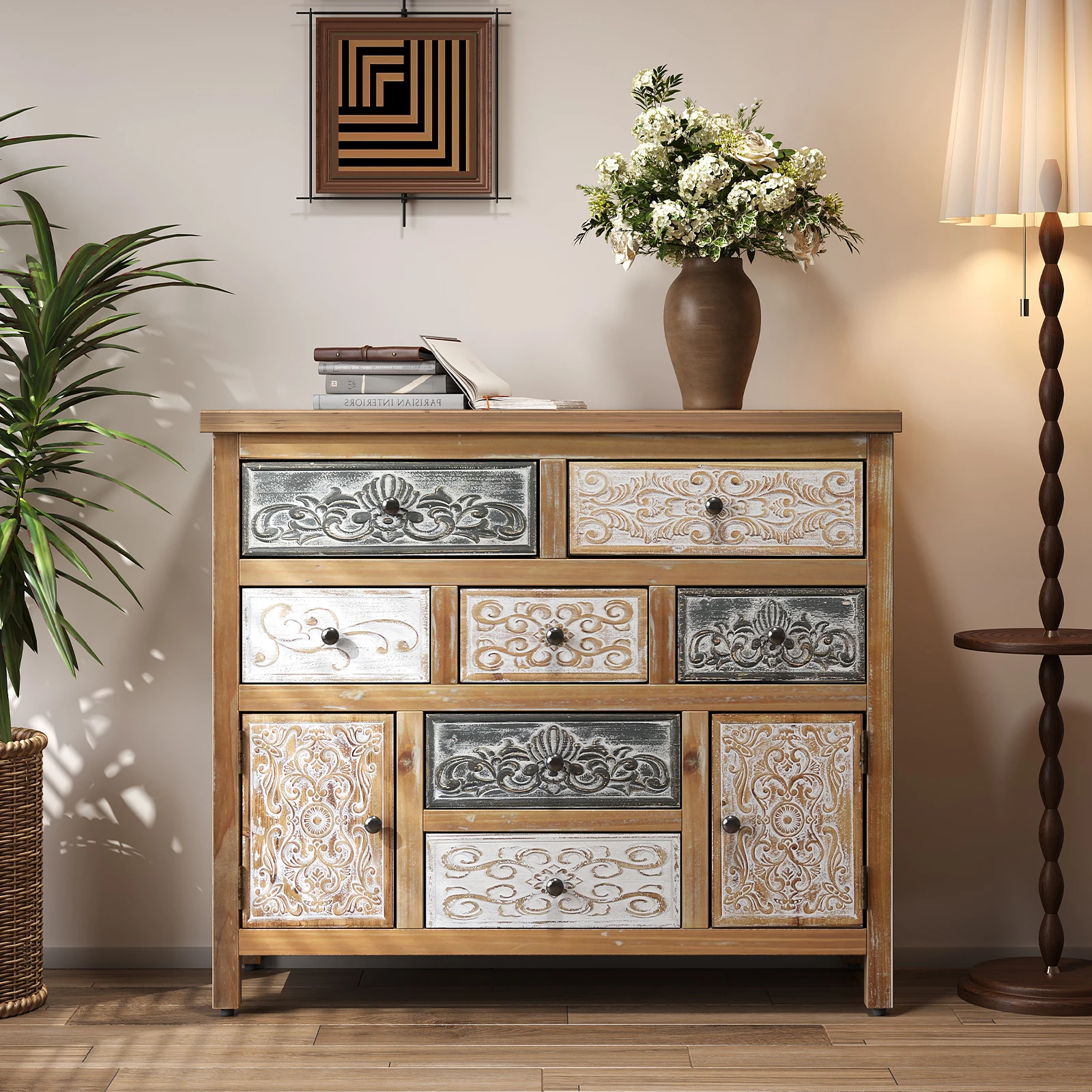
Vintage Wooden Accent Chest 7 Drawers 2 Cabinets – Rustic Multicolor Carved Storage Dresser
For those seeking a ready-to-use piece with ample storage, the Vintage Wooden Accent Chest 7 Drawers 2 Cabinets combines rustic multicolor carving with practical compartments.
Frequently asked questions
What is the best wood for a vintage wooden chest?
The best wood depends on your needs: oak for durability and prominent grain, pine for a lighter weight and rustic look, mahogany for rich color, and walnut for fine grain. All have unique beauty and characteristics.
How can I tell if a vintage wooden chest is authentic?
Look for signs of age like patina, wear on edges, and old joinery techniques (dovetail, mortise and tenon). Check for uniform wood grain, hand-cut nails or screws, and original hardware. A reputable dealer can provide provenance.
How do I clean a vintage wooden chest without damaging it?
Dust with a soft cloth regularly. For deeper cleaning, use a damp cloth with mild soap, then dry immediately. Avoid harsh chemicals or soaking. Apply furniture wax or oil periodically to maintain the wood.
Can a vintage wooden chest be used as a coffee table?
Yes, a low chest works well as a coffee table. Ensure it’s sturdy enough for drinks and books, and protect the surface with coasters. A chest with a flat top is ideal.
