
Blog
Embrace Imperfection: The Wabi Sabi Sideboard Guide
Style Guide
The Wabi Sabi Sideboard: Beauty in Imperfection
A wabi sabi sideboard is more than furniture—it’s a philosophy. Rooted in the Japanese aesthetic of finding beauty in imperfection, this piece anchors a room with quiet grace.
What Makes a Wabi Sabi Sideboard Unique?
At its core, wabi sabi celebrates the imperfect, the transient, and the incomplete. A wabi sabi sideboard embodies these principles through natural materials, asymmetrical lines, and a patina that tells a story. Unlike mass-produced furniture, each piece carries subtle variations—a knot in the wood, a hand-woven rattan panel—that make it one of a kind. This is not about flawlessness; it’s about authenticity.
The philosophy traces back to wabi-sabi in traditional Japanese tea ceremonies, where the rustic tea bowl was revered for its irregular glaze. Similarly, a wabi sabi sideboard invites you to slow down and appreciate the organic textures and natural finishes. It’s a counterpoint to the polished perfection of modern design.
Key Materials in a Wabi Sabi Sideboard
Natural materials are the soul of wabi sabi. Look for pieces crafted from solid wood, bamboo, rattan, or MDF with a matte finish that ages gracefully. The grain should be visible, the texture tactile. Rattan mesh, for instance, adds a handcrafted feel and allows the piece to breathe visually. Avoid high-gloss lacquers or synthetic veneers—they contradict the wabi sabi spirit. Instead, embrace surfaces that will develop a richer character over time with use.
For a wabi sabi sideboard, the color palette leans toward earthy neutrals: warm greys, soft beiges, muted greens, or the natural tone of unfinished wood. These hues ground the room and create a serene backdrop for your decor.
How to Style Your Wabi Sabi Sideboard
Styling a wabi sabi sideboard is about balance and intention. Start with a few ceramic vessels—perhaps a handmade vase with a single branch or a collection of stoneware bowls. Layer in natural elements like dried pampas grass, a driftwood sculpture, or a stack of linen-bound books. Keep the arrangement sparse; negative space is as important as the objects themselves.
Consider the sideboard’s location. In an entryway, it can hold a ceramic dish for keys and a small lamp. In a living room, it becomes a media console with a woven basket for remotes. The key is to let the sideboard’s texture shine—don’t overcrowd it. Soft lighting, like a warm table lamp, enhances the wabi sabi glow.
Choosing the Right Size and Placement
Before buying a wabi sabi sideboard, measure your space. Standard widths range from 40 to 70 inches. For a narrow hallway, a slim profile works best; in a spacious living room, a longer piece anchors the wall. Height matters too—the top should be at a comfortable level for displaying objects, typically around 30-35 inches.
Placement is about flow. Position the sideboard where it can be seen and appreciated, not tucked away. It can act as a room divider or a focal point opposite a sofa. Ensure there’s enough walking space around it—at least 36 inches of clearance.
Caring for a Wabi Sabi Sideboard
Maintenance is minimal. Dust regularly with a soft, dry cloth. For rattan or mesh panels, use a brush attachment on a vacuum to remove debris. Avoid harsh chemicals; a damp cloth with mild soap is sufficient. Since wabi sabi embraces aging, don’t worry about minor scratches or dents—they add character. If the finish dulls, apply a natural oil like tung oil to revive it.
Keep the sideboard away from direct sunlight and extreme humidity to prevent warping. These simple steps ensure your piece lasts for years, growing more beautiful with time.
Integrating Wabi Sabi with Other Design Styles
A wabi sabi sideboard is surprisingly versatile. It pairs beautifully with mid-century modern chairs, Scandinavian minimalism, or bohemian textiles. The key is contrast: let the rough texture of the sideboard offset sleek metal or smooth concrete. In a rustic farmhouse, it complements reclaimed wood tables. In a contemporary loft, it adds warmth to cool tones.
Don’t be afraid to mix periods. A vintage ceramic lamp on a wabi sabi sideboard creates a dialogue between old and new. The sideboard’s neutral base allows you to experiment with colorful artwork or bold plants. It’s a quiet anchor that lets other pieces shine.
Why Choose a Wabi Sabi Sideboard for Your Home
Beyond aesthetics, a wabi sabi sideboard offers practical storage. Drawers and cabinets hide clutter while the open shelves display treasures. It’s a piece that works in any room: dining room for tableware, bedroom for linens, office for files. The wabi sabi philosophy also encourages mindful consumption—invest in one quality piece rather than multiple disposable ones.
This is furniture with a story. Each knot, weave, and imperfection is a reminder that beauty doesn’t require perfection. A wabi sabi sideboard invites you to live more authentically, surrounded by objects that age gracefully.
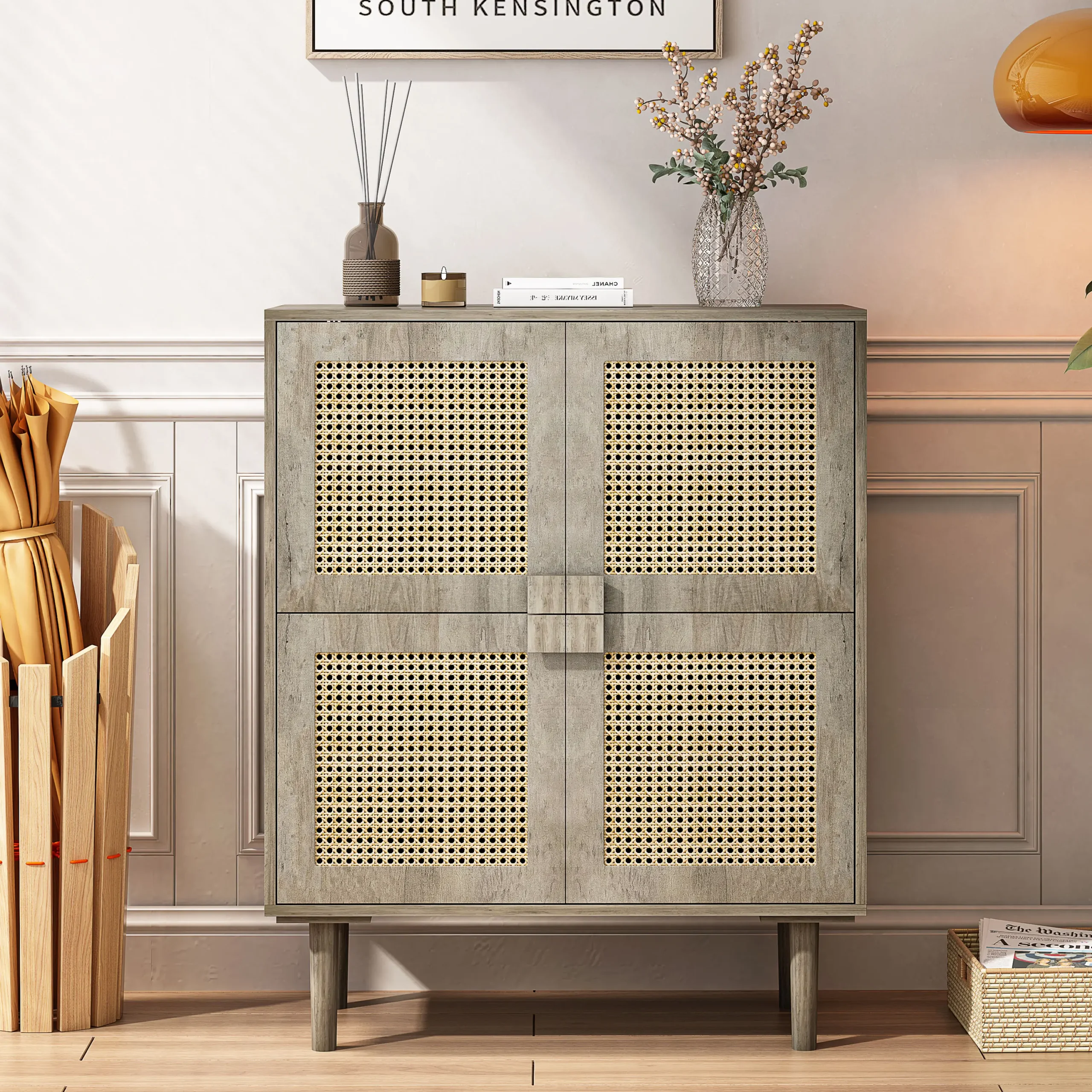
4-Doors Wabi-Sabi Style MDF Rattan Mesh Storage Cabinet Eight Storage Spaces Sideboard for Entryway Living Room Hallway (Grey)
For a piece that captures this essence, consider the 4-Doors Wabi-Sabi Style MDF Rattan Mesh Storage Cabinet with eight storage spaces—a subtle addition to any entryway or living room.
Frequently asked questions
What is a wabi sabi sideboard?
A wabi sabi sideboard is a storage cabinet that embodies the Japanese aesthetic of wabi sabi, which finds beauty in imperfection, impermanence, and natural materials. It typically features handcrafted details, organic textures like rattan or wood, and a matte, earthy finish.
How is a wabi sabi sideboard different from a regular sideboard?
Unlike regular sideboards that often have glossy, flawless finishes, a wabi sabi sideboard celebrates natural variations, asymmetry, and a rustic look. It uses materials like solid wood and rattan, and its design emphasizes authenticity over uniformity.
What materials are commonly used in wabi sabi sideboards?
Common materials include solid wood (like oak or walnut), MDF with a matte finish, bamboo, rattan, and natural fibers. These materials age gracefully and develop a patina over time.
Can a wabi sabi sideboard fit into a modern home?
Yes, a wabi sabi sideboard complements modern interiors by adding warmth and texture. It works well with minimalist, Scandinavian, or mid-century modern decor, creating a balanced contrast with sleek surfaces.