
Blog
The Perfect Walnut Console Table for Your Entryway
Buying Guide
Find Your Ideal Walnut Console Table
A walnut console table is more than just furniture—it’s an anchor for your entryway. Whether you need a slim piece for a narrow hall or a statement surface for decor, choosing the right one makes all the difference.
Why Choose a Walnut Console Table?
Walnut wood brings warmth and sophistication to any room. Its rich, dark grain adds depth without overpowering a space. A walnut console table works beautifully in entryways, living rooms, or behind a sofa—offering both style and function. Unlike lighter woods, walnut hides daily scuffs and patinas gracefully over time.
Key Considerations Before Buying
Size and Proportion
Measure your space first. A console table typically ranges from 30 to 50 inches wide. For tight entryways, a slim depth (12 inches or less) keeps traffic flowing. Height matters too—most consoles are 30-32 inches tall, pairing well with mirrors or art above.
Wood Quality and Construction
Solid wood trumps veneer for durability. Look for kiln-dried hardwoods like walnut or rubberwood—they resist warping. Dovetail joints and sturdy legs indicate lasting craftsmanship. A walnut console table with a natural finish showcases the wood’s character best.
Style and Design Options
Mid-century modern designs feature tapered legs and clean lines, while farmhouse styles offer turned legs and distressed surfaces. For a contemporary look, choose a flat panel with subtle grain. The beauty of a walnut console table is its versatility—it complements both minimalist and eclectic decor.
Placement and Styling Tips
In an entryway, pair your console with a large mirror and a tray for keys. Add a lamp for ambient light and a small plant for life. In a living room, use it as a media console or display shelf. Keep the surface curated—less is more. A walnut console table becomes a focal point when styled with contrasting textures like metal or glass.
Maintenance and Longevity
Dust regularly with a soft cloth. Use coasters to prevent water rings, and avoid direct sunlight to prevent fading. Every few months, apply a wood conditioner to maintain the luster. With proper care, a walnut console table can last decades and even become an heirloom.
For more on wood furniture care, see this Wikipedia article on wood finishing.
Final Thoughts
Choosing a walnut console table is an investment in timeless design. Focus on quality materials and proportions that fit your space. Whether you lean mid-century or modern, the right piece will anchor your room for years to come.
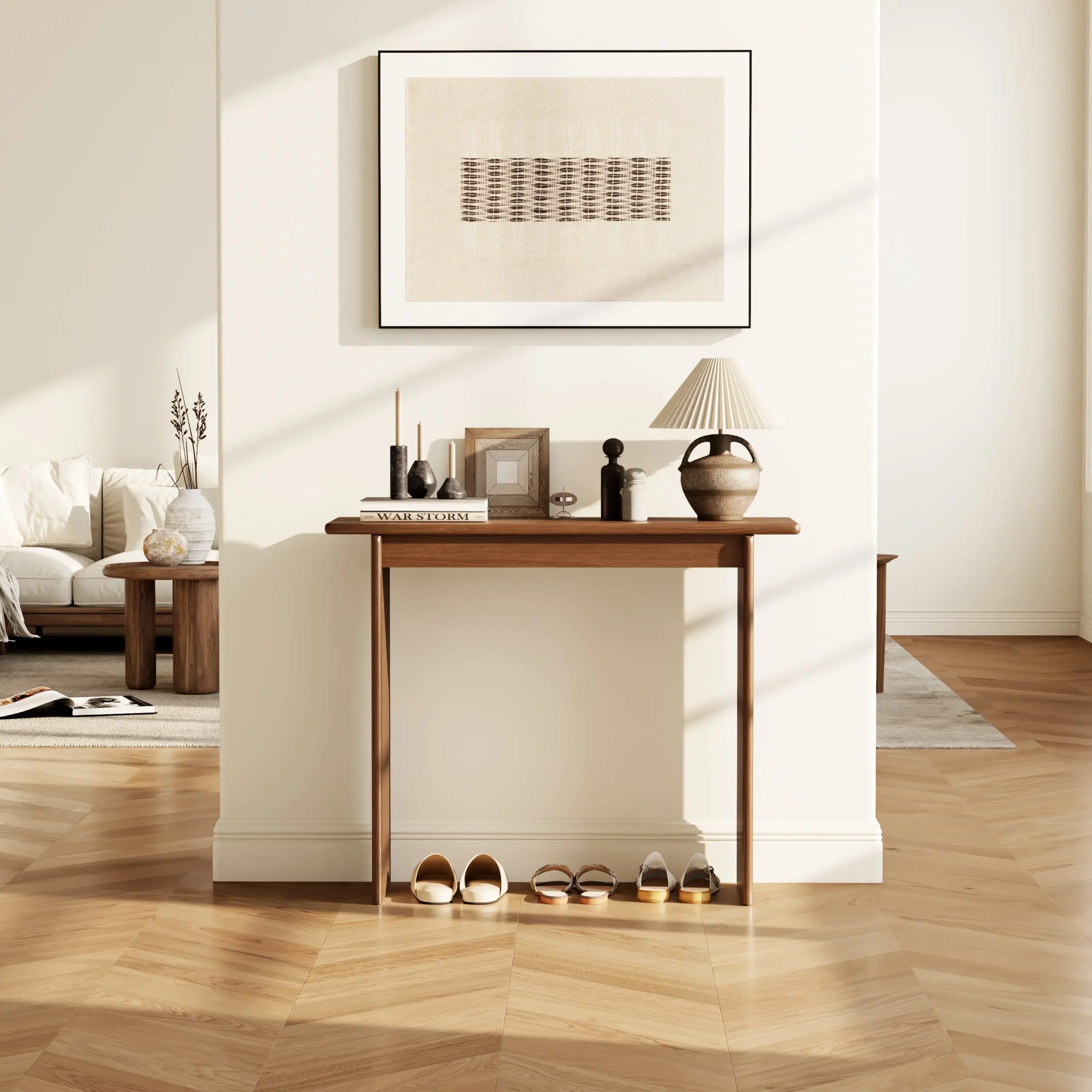
Goldoma Solid Wood Walnut Console Table—Slim Mid-Century Entryway Table with Rubberwood, 39.4″W x 11.8″D x 31.5″H
For a slim, space-saving option, the Goldoma Solid Wood Walnut Console Table combines rubberwood durability with mid-century style in a compact 39.4″W x 11.8″D size.
Frequently asked questions
What is the ideal height for a walnut console table?
The standard height is 30-32 inches, which works well with most mirrors and wall art. Measure your wall space to ensure a balanced look.
Can a walnut console table be used as a desk?
Yes, if it’s wide enough (at least 40 inches) and you don’t mind a narrow depth. For regular desk use, consider a deeper table (18+ inches) for comfort.
How do I prevent scratches on my walnut console table?
Use felt pads under objects, avoid dragging items, and clean with a soft cloth. A protective wax or polyurethane finish can also help.
Is walnut wood sustainable?
Walnut is a slow-growing hardwood, so look for FSC-certified sources. Some brands use rubberwood, a sustainable alternative, as a core with walnut veneer.