
Blog
The Ultimate Guide to Choosing a Walnut Sideboard
Buying Guide
Your Complete Walnut Sideboard Buying Guide
A walnut sideboard can anchor your dining room or living area with warmth and elegance. This guide will help you pick the right one for your space.
Why Choose a Walnut Sideboard?
Walnut is prized for its rich, chocolate-brown color and striking grain patterns. A walnut sideboard adds a touch of sophistication and durability to any room. Unlike lighter woods, walnut darkens beautifully with age, developing a patina that feels both timeless and personal. It’s a hardwood that stands up to daily use, making it an excellent investment for furniture that will last for decades.
Styles of Walnut Sideboards
From mid-century modern to rustic farmhouse, walnut sideboards come in a range of styles to suit your decor. Mid-century designs often feature tapered legs and clean lines, while traditional styles may include ornate details and turned legs. Consider the overall aesthetic of your home when choosing. A sleek, minimalist walnut sideboard works well in contemporary spaces, whereas a more carved piece can complement a classic interior.
Mid-Century Modern
Characterized by simplicity and functionality, mid-century walnut sideboards often have angled legs and smooth fronts. They pair beautifully with neutral tones and organic materials.
Rustic and Farmhouse
These sideboards emphasize natural wood texture with visible grain and sometimes distressed finishes. They bring a cozy, lived-in feel to a room.
Size and Placement
Before buying, measure your space carefully. A walnut sideboard typically ranges from 48 to 72 inches wide. Allow at least 36 inches of clearance in front for walking and opening doors. Consider placing it against a wall in your dining room or as a media console in your living room. The height should be comfortable for serving or displaying items—usually around 30-36 inches tall.
Storage and Functionality
Think about what you’ll store. Do you need drawers for cutlery, shelves for dishes, or cabinets for larger items? Many walnut sideboards offer a mix of open and closed storage. Adjustable shelves add flexibility for different-sized items. Some models include cable management holes for electronics if you plan to use it as an entertainment center.
Wood Care and Maintenance
Walnut is relatively low-maintenance but benefits from occasional dusting with a soft cloth. Avoid direct sunlight to prevent fading. Use coasters and placemats to protect the surface. For deeper cleaning, a damp cloth followed by a dry one works well. Periodically apply a quality wood conditioner to maintain its luster. For more on wood care, see Wikipedia’s guide to wood finishing.
Budget and Quality
Solid walnut sideboards are an investment. Prices vary based on craftsmanship, joinery, and design details. Look for dovetail drawers, solid wood legs, and a smooth finish. Avoid veneer if you want the true character of walnut. A well-made piece will outlast cheaper alternatives and can be refinished if needed.
Where to Use a Walnut Sideboard
Beyond the dining room, a walnut sideboard works in an entryway for storage and display, in a living room for media and decor, or even in a home office as a credenza. Its versatility makes it a staple piece. The warm tones of walnut complement both cool and warm color palettes, making it easy to integrate into existing decor.
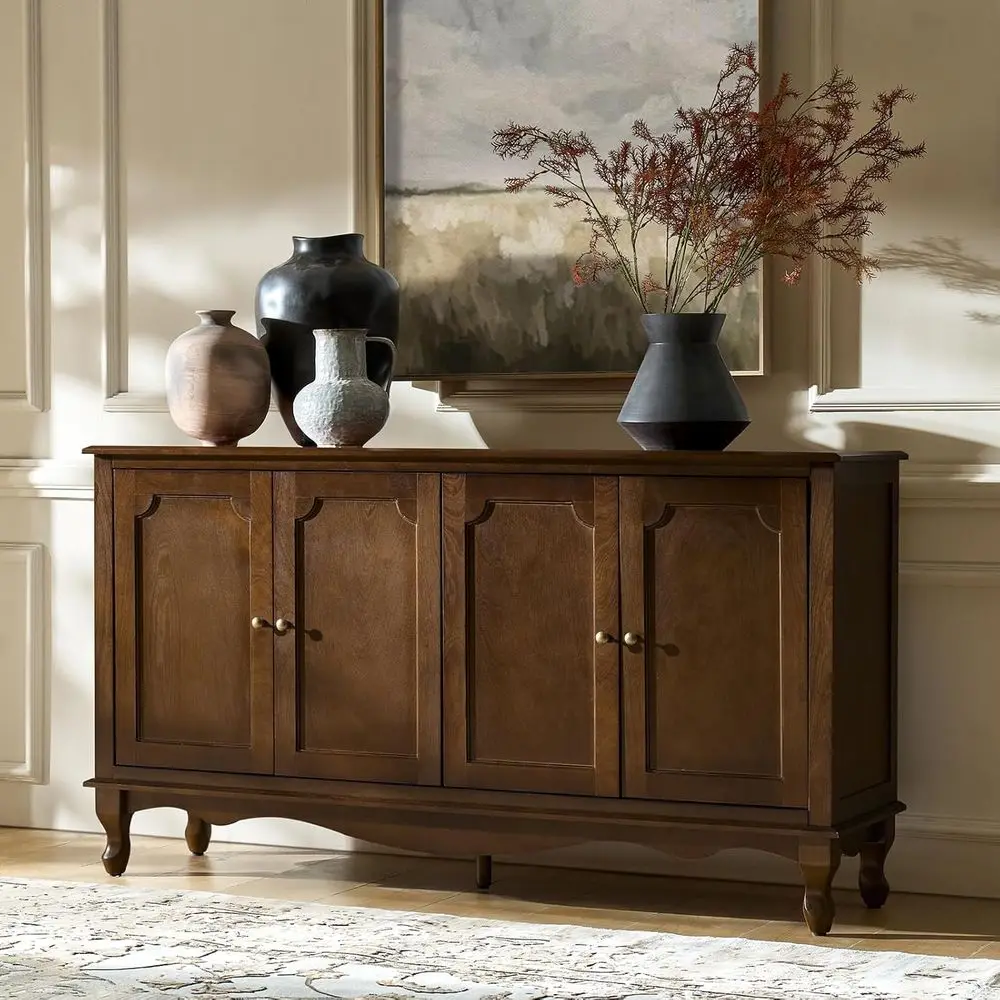
58 Kitchen Sideboard with Storage, 4 Doors & 2 Shelves, Solid Wood Legs, Walnut Finish
For a blend of style and practicality, the 58 Kitchen Sideboard with Storage, 4 Doors & 2 Shelves, Solid Wood Legs, Walnut Finish offers ample storage and a timeless look.
Frequently asked questions
What is the difference between solid walnut and walnut veneer?
Solid walnut is made entirely from walnut wood, offering durability and the ability to be refinished. Walnut veneer has a thin layer of walnut over another wood, which is more affordable but less durable and cannot be sanded down.
How do I clean a walnut sideboard?
Dust regularly with a soft, dry cloth. For spills, wipe immediately with a damp cloth and dry thoroughly. Avoid harsh chemicals; use a mild soap if needed, and always follow the grain.
Can I use a walnut sideboard as a TV stand?
Yes, many walnut sideboards are designed with media use in mind. Ensure the width accommodates your TV and that there are cable management holes. Check weight capacity if placing a heavy TV on top.
What colors go well with a walnut sideboard?
Walnut pairs beautifully with neutral tones like cream, beige, and gray, as well as with bold colors like navy, emerald, and mustard. It also complements other wood tones, but avoid mixing too many different woods in one space.