
Blog
Ultimate Guide to White Porcelain Salad Plates
Tableware Essentials
Find Your Perfect White Porcelain Salad Plates
White porcelain salad plates are a staple in any kitchen, offering both elegance and practicality. Whether you’re hosting a dinner party or enjoying a quiet meal, the right plate can elevate your dining experience.
Why Choose White Porcelain Salad Plates?
White porcelain salad plates are timeless. Their neutral color complements any table setting, from rustic to modern. Porcelain is fired at high temperatures, making it non-porous, resistant to chipping, and easy to clean. Unlike earthenware, porcelain is dense and durable, perfect for daily use or special occasions.
Key Features to Look For
When shopping for white porcelain salad plates, consider these aspects:
- Material Quality: High-quality porcelain should be translucent when held to light and have a smooth, glossy finish.
- Size and Shape: Standard salad plates are around 8-9 inches. Shapes range from round to square or irregular, like abstract designs that add visual interest.
- Weight: A good plate feels substantial but not overly heavy. Balance is key for comfortable handling.
- Microwave and Dishwasher Safe: Ensure the plates can withstand everyday use. Most porcelain is safe, but always check.
Top Use Cases for Salad Plates
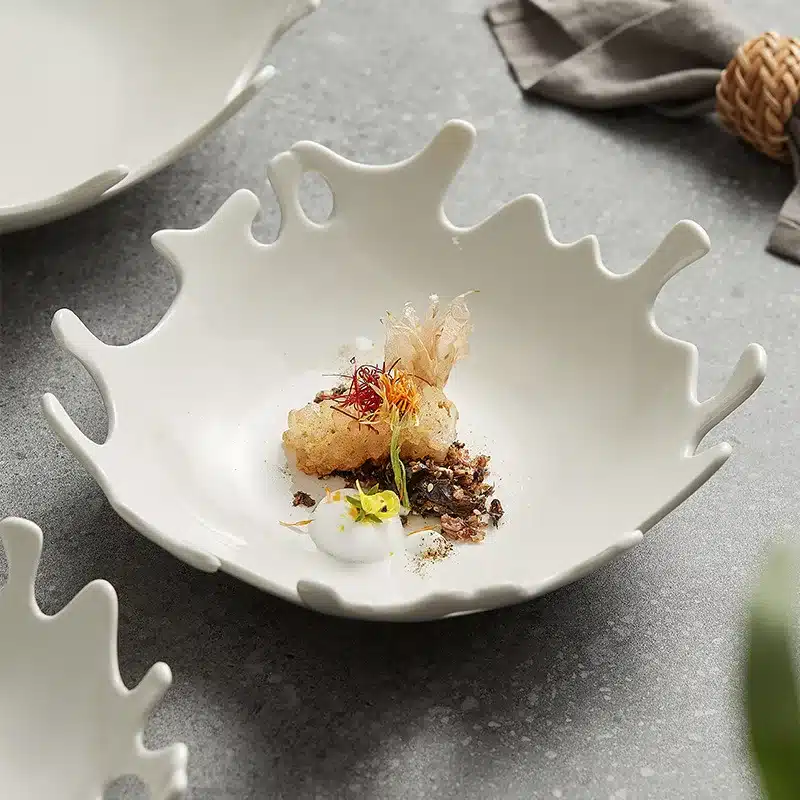
White porcelain salad plates aren’t just for salads. Use them for appetizers, desserts, or as small dinner plates for lighter meals. Their versatility makes them a smart investment. For example, an irregular abstract plate can serve as a stunning backdrop for a composed salad or a slice of quiche.
Everyday Dining vs. Formal Occasions
For daily use, opt for stackable, durable designs. For entertaining, consider plates with unique finishes or textures. White porcelain can be both practical and decorative, bridging the gap between function and art.
How to Care for Porcelain Plates
To maintain the beauty of your white porcelain salad plates:
- Avoid sudden temperature changes (e.g., placing a hot plate in cold water).
- Use non-abrasive sponges to prevent scratches.
- Store with felt pads between plates to prevent chipping.
Proper care ensures your plates last for years, maintaining their pristine white surface.
Design Trends in Salad Plates
Current trends include irregular shapes, organic edges, and subtle textures that mimic natural stone. These designs add a touch of artistry to your table. White remains dominant because it allows food colors to pop, making dishes look more appetizing.
Where to Find Quality Options
When searching for white porcelain salad plates, look for reputable brands that specialize in ceramics. You can also explore artisan-made pieces for unique character. For more on porcelain history and manufacturing, check out this Wikipedia article on porcelain.
Making Your Final Choice
Consider your personal style and how the plates will integrate with your existing tableware. A set of white porcelain salad plates is a classic addition that won’t go out of style. Whether you choose round, square, or abstract, the key is quality and versatility.
Nordic Coral Porcelain Salad Plate Abstract Irregular White Ceramic Dinner Plate Hotel Tableware Cooking Dishes Kitchen Utensils
For a unique touch, consider the Nordic Coral Porcelain Salad Plate Abstract Irregular White Ceramic Dinner Plate, which combines artistic design with everyday functionality.
Frequently asked questions
Are white porcelain salad plates microwave safe?
Most white porcelain salad plates are microwave safe, but always check the manufacturer’s label. High-quality porcelain withstands microwave heat well.
How do I remove stains from white porcelain plates?
For stubborn stains, soak the plate in a solution of baking soda and water or use a mild bleach solution. Avoid abrasive cleaners that can scratch the surface.
Can I use salad plates for main courses?
Yes, salad plates are versatile. They are ideal for smaller portions, appetizers, desserts, or light lunches.
What is the difference between porcelain and ceramic plates?
Porcelain is a type of ceramic fired at higher temperatures, making it denser, more durable, and less porous than standard ceramic.
