
Blog
The Ultimate Wooden Cutting Board Buying Guide
Kitchen Essentials
Your Perfect Wooden Cutting Board Awaits
A wooden cutting board is more than just a kitchen tool—it’s a surface that can enhance your cooking experience and last for generations if chosen wisely. In this guide, we’ll walk you through everything you need to know to find the perfect wooden cutting board for your needs.
Why Choose a Wooden Cutting Board?
Wooden cutting boards have been a staple in kitchens for centuries, and for good reason. Unlike glass or plastic, wood is gentle on knife blades, helping them stay sharp longer. Wood also has natural antimicrobial properties—studies have shown that certain woods like maple and walnut can actually kill bacteria. Plus, a well-maintained wooden cutting board can last decades, developing a beautiful patina over time.
Types of Wood for Cutting Boards
Not all wood is created equal. Here are the most common types used for cutting boards:
- Maple: Hard, tight-grained, and durable. It resists knife scars and is the most popular choice.
- Walnut: Slightly softer but rich in color and naturally antimicrobial. It adds warmth to any kitchen.
- Cherry: Medium-hard with a beautiful reddish hue. It’s gentle on knives but may show marks more easily.
- Acacia: Extremely hard and water-resistant, with a striking grain pattern. It’s an excellent choice for cheese boards as well.
- Teak: High in natural oils, making it water-resistant and ideal for outdoor use, but can be heavy.
End Grain vs. Edge Grain: What’s the Difference?
The orientation of the wood fibers matters. End grain boards are made by gluing together blocks so the end fibers face up. They are self-healing—knife cuts close up after use—making them the most knife-friendly. Edge grain boards have the fibers running parallel to the surface. They are more affordable and durable but will show knife marks over time. For heavy daily use, an end grain board is worth the investment.
How to Maintain Your Wooden Cutting Board
Proper care is essential to extend the life of your board:
- Cleaning: Wash with warm soapy water immediately after use. Never soak or put in the dishwasher—the heat and moisture can warp or crack the wood.
- Sanitizing: Wipe with vinegar or a diluted bleach solution (1 tsp bleach per quart of water) to kill bacteria. Then rinse thoroughly.
- Oiling: Apply food-grade mineral oil or beeswax regularly (once a month or when the wood looks dry) to prevent cracking and moisture absorption.
- Removing stains: Sprinkle with coarse salt and rub with half a lemon to lift stains and odors.
Size, Thickness, and Shape Considerations
Choose a board that fits your counter space and needs. A larger board (say 18×24 inches) is great for chopping multiple ingredients, while a smaller one (12×16 inches) is fine for quick tasks. Thickness matters—boards at least 1.5 inches thick are less likely to warp. Rectangular boards are versatile, but round or shaped boards can double as serving platters. Consider a board with a juice groove if you often cut meat or fruit.
When to Replace Your Wooden Cutting Board
Even with the best care, boards eventually wear out. Signs it’s time for a new one: deep grooves that are hard to clean, warping, cracking, or a musty smell despite cleaning. A well-maintained board can last 10-15 years, but if you see any of these signs, replace it to avoid bacteria buildup.
For more on wood properties, see Wikipedia’s article on wood.
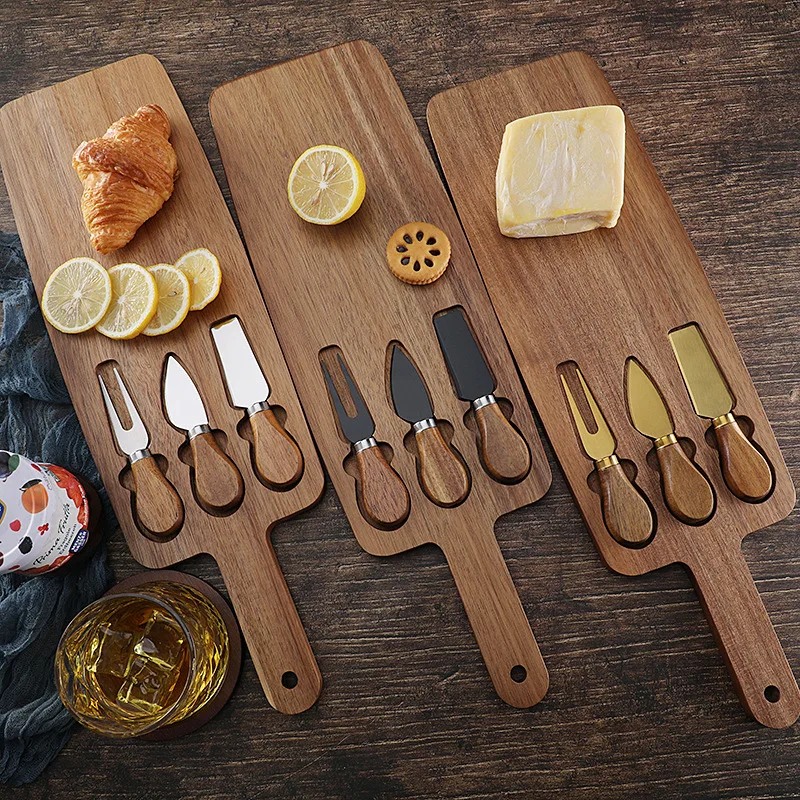
Acacia Cheese Board Set Cheese Knife Cheese Board Wooden Cutting Board Steak Knife
For a beautiful and functional option, consider our Acacia Cheese Board Set, which includes a knife and doubles as a wooden cutting board for steaks.
Frequently asked questions
Can I use a wooden cutting board for raw meat?
Yes, but it’s best to have separate boards for raw meat and produce to avoid cross-contamination. Wood’s natural antimicrobial properties help, but thorough cleaning after each use is essential.
How often should I oil my wooden cutting board?
Oil your board once a month or whenever the wood looks dry or feels rough. Apply a generous coat of food-grade mineral oil and let it soak in overnight.
Is bamboo considered a wooden cutting board?
Bamboo is a grass, not wood, but it’s often grouped with wooden cutting boards. It’s harder than most woods and sustainable, but it can be tough on knives and may splinter over time.
Can I put a wooden cutting board in the dishwasher?
No. Dishwashers expose wood to high heat and moisture, which can cause warping, cracking, and splitting. Always hand wash and dry immediately.
