
Blog
The Ultimate Outdoor Garden Bench Buying Guide
Buying Guide
Choose the Perfect Outdoor Garden Bench for Your Space
An outdoor garden bench is more than just a place to sit; it’s an invitation to pause, breathe, and enjoy the outdoors. Whether you’re looking to create a cozy reading nook or a social gathering spot, this guide will help you make an informed choice.
Why an Outdoor Garden Bench is a Worthy Investment
An outdoor garden bench serves as a versatile piece of furniture that enhances the beauty and functionality of any outdoor space. It provides a spot for relaxation, contemplation, or socializing, and can increase the value of your home. Unlike chairs, a bench invites multiple people to sit together, fostering connection and community.
Moreover, a well-chosen bench becomes a focal point in your garden, complementing the landscape and adding character. It’s a simple addition that can transform an ordinary yard into a welcoming retreat.
Key Factors to Consider Before Buying
Before you start shopping, it’s essential to consider several factors to ensure you pick the right outdoor garden bench for your needs.
Material Matters: Wood, Metal, or Recycled Plastic?
The material of your bench determines its durability, maintenance, and aesthetic. Here’s a quick breakdown:
- Wood: Classic and natural, but requires regular sealing or staining to protect against moisture and pests. Teak and cedar are popular choices for their resistance to decay.
- Metal: Sturdy and long-lasting, often featuring intricate designs. Aluminum and steel are common, with aluminum being lightweight and rust-resistant.
- Recycled Plastic: Eco-friendly and low-maintenance, but may not have the traditional look of wood or metal. It’s resistant to rot and insects.
Consider your climate and how much time you’re willing to spend on upkeep. For a balance of durability and style, many homeowners opt for cast aluminum, which offers both strength and elegance.
Size and Placement: Measure Your Space
Measure the area where you plan to place the bench. Ensure there’s enough room for people to pass by comfortably. A typical bench seats two to three people, but you can find larger sizes for bigger gatherings. Think about the view: position the bench to face a pleasant garden feature, a sunset, or a lively street scene.
Comfort: Ergonomics and Cushions
Test the bench’s comfort by checking the backrest angle and seat depth. Some benches come with contoured seats for better ergonomics. If you prefer extra comfort, consider adding cushions, but make sure they are weather-resistant or easily stored indoors.
Top Materials for Outdoor Benches: Pros and Cons
Let’s dive deeper into the pros and cons of popular bench materials to help you decide.
Wooden Benches
- Pros: Natural beauty, blends with any landscape, comfortable seating.
- Cons: Requires regular maintenance, susceptible to rot and insect damage if not treated.
Metal Benches
- Pros: Extremely durable, weather-resistant, low maintenance, often feature artistic designs.
- Cons: Can get hot in direct sunlight, may be heavy to move (unless aluminum).
Recycled Plastic Benches
- Pros: Eco-friendly, no maintenance, resistant to moisture and pests.
- Cons: May fade over time, less traditional look.
When choosing a material, consider how the bench will be used. For a low-maintenance option that still looks elegant, metal benches are a great choice, especially those made from cast aluminum.
Style and Design: Matching Your Garden Aesthetic
Your outdoor garden bench should complement your home’s architecture and landscape design. Here are some popular styles:
- Classic: Traditional wooden slats or ornate wrought iron, perfect for formal gardens.
- Modern: Clean lines, minimalistic design, often made of metal or concrete.
- Rustic: Natural wood with a rough-hewn look, ideal for cottage gardens.
- Decorative: Intricate patterns, such as floral motifs, that add a touch of artistry.
Don’t be afraid to choose a bench that stands out as a piece of art. A beautifully designed bench can become the centerpiece of your garden.
Maintenance Tips to Extend the Life of Your Bench
Proper maintenance will ensure your bench remains beautiful and functional for years. Here are some tips:
- Wood: Clean with mild soap and water, sand any rough spots, and apply a protective sealant annually.
- Metal: Wipe down with a damp cloth, touch up any scratches with matching paint, and protect from rust by keeping it dry.
- Recycled Plastic: Simply wash with soap and water, no additional treatment needed.
For metal benches, consider using covers during harsh weather or storing them indoors if possible.
Where to Place Your Bench for Maximum Enjoyment
The placement of your bench can significantly affect your enjoyment. Here are some ideas:
- Under a shade tree for a cool retreat on hot days.
- Near a flower bed to enjoy the colors and scents.
- By a pond or fountain to create a calming atmosphere.
- On a patio or deck for easy access from the house.
Consider the path of the sun throughout the day to find the perfect spot for morning coffee or evening relaxation.
Eco-Friendly Options: Sustainable Bench Choices
If you’re environmentally conscious, look for benches made from sustainable materials. Recycled plastic and reclaimed wood are excellent choices. Additionally, some manufacturers use eco-friendly production processes. For more information on sustainable materials, you can refer to sustainable furniture practices on Wikipedia.
Choosing a durable bench that lasts long also reduces waste in the long run. A well-made metal bench, for instance, can last decades with minimal care.
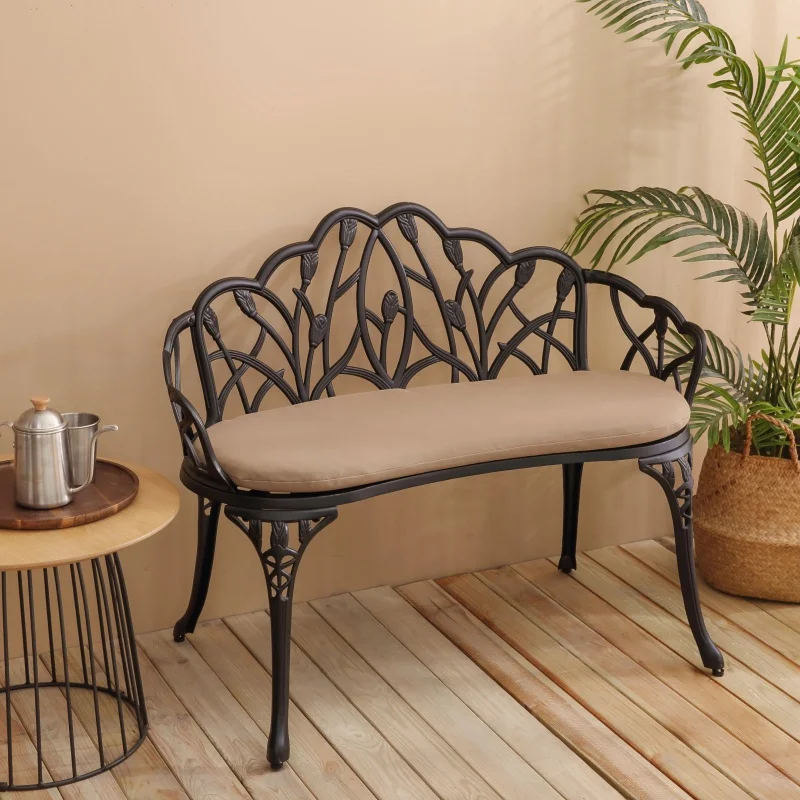
Tulip Patio Garden Bench Metal Park Bench Cast Aluminum Outdoor Furniture with Floral Rose for Patio,Park,Lawn,Black
If you’re looking for a durable and elegant option, consider the Tulip Patio Garden Bench, crafted from cast aluminum with a beautiful floral rose design—it combines strength and style effortlessly.
Frequently asked questions
What is the best material for an outdoor garden bench?
The best material depends on your priorities. Wood offers a classic look but needs maintenance, while metal (especially cast aluminum) is durable and low-maintenance. Recycled plastic is eco-friendly and easy to care for. Consider your climate and how much upkeep you’re willing to do.
How do I measure for the right bench size?
Measure the length of the space where you plan to place the bench, allowing at least 2 feet of clearance on each side. Consider the number of people you want to seat—typically, a 4-foot bench seats two, and a 6-foot bench seats three. Also, check the depth and height to ensure comfortable seating.
Can I leave my bench outside all year?
Most outdoor benches are designed to withstand the elements, but extreme weather can affect them. Metal and plastic benches are more resilient, while wood may need extra protection. Consider using a cover during harsh winters or storing it indoors if possible.
How do I clean and maintain a metal garden bench?
Clean metal benches with a mild soap and water solution, and rinse thoroughly. Dry to prevent water spots. Check for scratches and touch up with rust-resistant paint. To prevent rust, apply a protective wax or sealant periodically.
